*Important notice: This news reports on an unedited version of an accepted paper and is awaiting final editing. Therefore, the paper should not be regarded as conclusive or treated as established information.
The long-term environmental safety of using lithium slag as a mine backfill material has been assessed, with researchers finding that the backfill maintained good structural stability across different pH conditions in a 64-day laboratory leaching test.
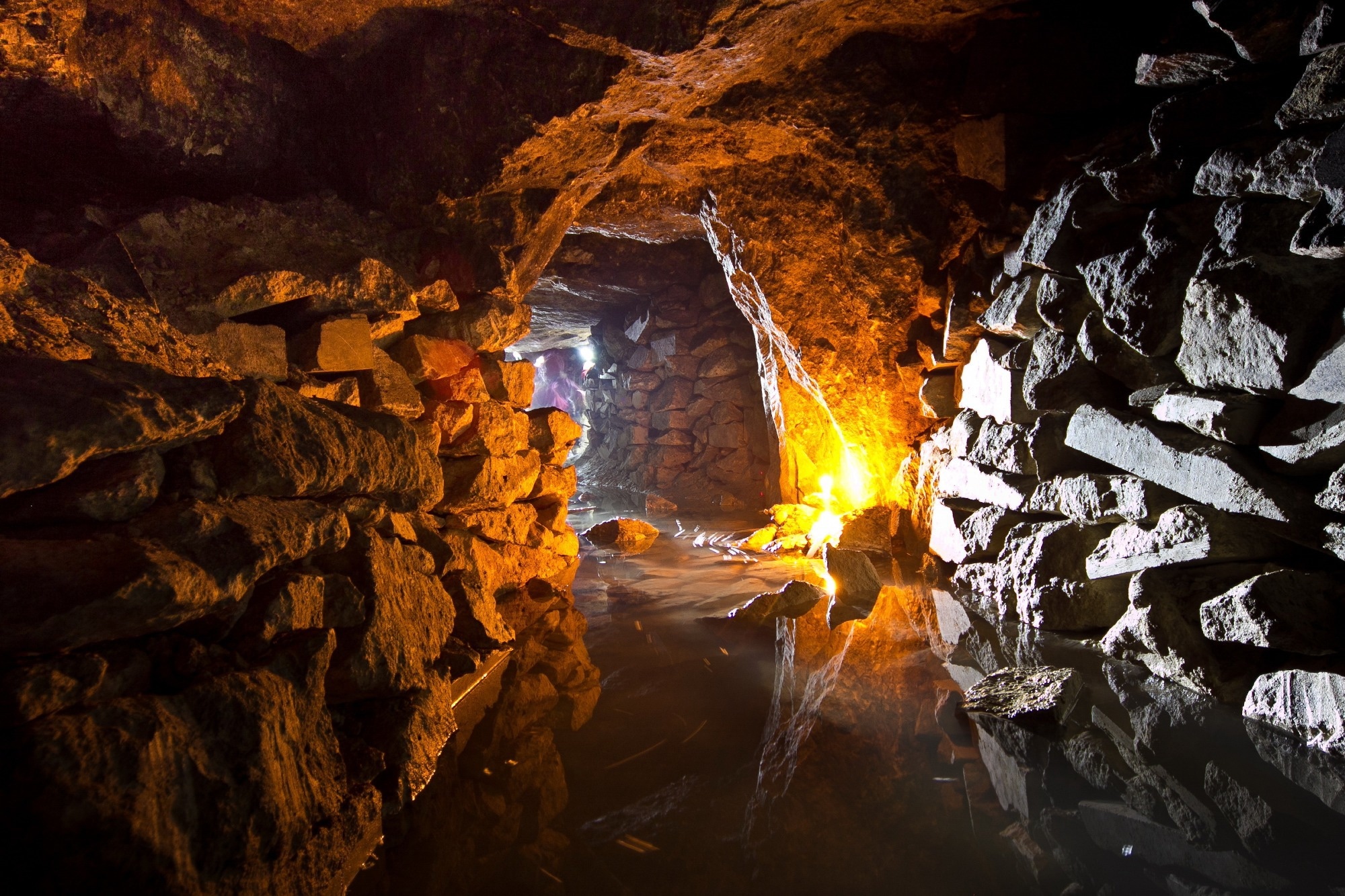 Study: Long term metal release risk of lithium slag based mine backfill under different pH conditions. Image Credit: Vladimir Mulder/Shutterstock.com
They studied how acidic, neutral, and alkaline conditions influence the release of beryllium (Be), thallium (Tl), and chromium (Cr) from lithium-slag-based backfill material (LSBM). Their results, published in Scientific Reports, found that LSBM released small amounts of the three metals.
Addressing the Environmental Risks of Lithium Slag Reuse
Mine backfilling plays an important role in modern mining as it stabilizes underground voids, reduces surface subsidence, improves ore recovery, and supports land restoration after mining.
Most backfill mixtures rely on cement, tailings, and aggregates. However, cement production is energy-intensive and contributes significantly to carbon emissions, driving interest in alternative materials made from industrial waste.
No time now? Download a PDF copy and finish this piece later.
Lithium slag is produced in large quantities during lithium extraction and processing. Its fine particle size and pozzolanic properties make it a suitable material for cement-based backfill. Reusing this industrial byproduct could reduce waste stockpiles while lowering the demand for conventional construction materials.
However, lithium slag also contains trace metals that may leach into groundwater over long periods, raising concerns about its environmental safety.
Previous studies have focused on the strength and short-term engineering performance of lithium-slag-based materials. Since mine backfill remains underground for its entire service life, understanding its long-term environmental performance is essential.
To address this gap, the researchers investigated the mechanical stability and long-term leaching behavior of LSBM. They evaluated how acidic, neutral, and alkaline conditions influence the release of Be, Tl, and Cr, while predicting metal migration over a 100-year period.
Evaluating Long-Term Metal Leaching from Mine Backfill
The researchers prepared LSBM using lithium slag, steel slag, fly ash, and Portland cement. They first characterized the raw materials using X-ray fluorescence, X-ray diffraction, particle size analysis, and scanning electron microscopy coupled with energy-dispersive spectroscopy. Then, the team prepared nine backfill formulations by varying the steel slag-to-fly ash ratio, cement content, and solid concentration.
After curing the specimens for 28 days, they measured their unconfined compressive strength. All formulations exceeded the minimum strength requirement for mine backfill, ranging from 3.46 to 4.28 MPa. Formulation Z7 was selected for further testing because it combined adequate strength with high lithium slag utilization and reduced cement consumption.
The researchers then identified Be, Tl, and Cr as the trace metals of greatest environmental concern. They exposed the selected backfill to acidic, neutral, and alkaline solutions during a 64-day semi-dynamic tank leaching test based on EPA 1315 and NEN 7375 protocols.
Additionally, the team collected 72 leachate samples and monitored pH, electrical conductivity, oxidation-reduction potential, and metal concentrations. Finally, they applied both classical and non-classical diffusion models to determine metal release mechanisms and predict contaminant migration over 10, 50, and 100 years.
Cementitious Matrix Restricts Long-Term Metal Migration
The lithium-slag-based backfill maintained good structural stability under acidic, neutral, and alkaline conditions. X-ray diffraction and microscopic analysis showed that the cementitious matrix remained dominated by calcium silicate hydrate (C-S-H).
Although acidic conditions caused minor surface roughening and localized dissolution, alkaline conditions promoted the formation of additional hydration products that helped preserve the material's structure. As a result, compressive strength declined only slightly after acidic exposure and remained largely unchanged under neutral and alkaline conditions.
The backfill also demonstrated strong chemical buffering capacity. Despite starting with solutions of different pH values, the leachates gradually stabilized between pH 9.5 and 11.0. The researchers attributed this behavior to alkaline minerals and hydration products within the backfill, which neutralized acidic solutions and maintained an alkaline environment.
All three metals followed a similar overall release pattern, with relatively rapid leaching during the initial stages followed by a much slower release rate. However, solution chemistry influenced each metal differently. Be leached most readily under acidic conditions, whereas Tl and Cr showed greater mobility in alkaline environments.
Diffusion remained the dominant mechanism controlling metal release throughout most of the experiment. Be gradually transitioned from diffusion-controlled release to depletion, while Tl continued to exhibit stable diffusion behavior. Cr retained a greater capacity for long-term migration under alkaline conditions because soluble chromium species remained more mobile.
Both diffusion models closely matched the experimental results, producing coefficients of determination between 0.957 and 0.999.
Long-term simulations also predicted limited environmental risk. Predicted cumulative leaching remained extremely low during a 100-year simulation, reaching only 0.0087% for Be, 0.0145% for Tl, and 0.1252% for Cr. Although Cr showed the highest long-term mobility, its predicted release remained well below 1% of the total Cr present in the backfill.
Advancing Sustainable Mine Backfill Materials
The study demonstrates that lithium slag could be incorporated into mine backfill, with predictions showing limited long-term metal release. The cementitious matrix plays a key role by physically encapsulating trace metals within calcium silicate hydrate (C-S-H) and other hydration products, reducing their mobility over time.
The study also highlights a practical opportunity for the mining and lithium industries. As lithium production continues to grow, larger volumes of lithium slag will require sustainable management. Converting this byproduct into mine backfill could reduce industrial waste while lowering the consumption of conventional backfill materials.
The selected formulation also required less cement, which could help reduce the embodied carbon associated with mine backfilling.
Future studies should investigate additional factors such as wetting-drying cycles, carbonation, sulfate attack, microbial activity, and long-term field performance. Overall, the study presents a comprehensive framework for evaluating both the engineering performance and environmental safety of waste-derived mine backfill materials.
Journal Reference
Guo, Y., Yang, X., et al. (2026). Long term metal release risk of lithium slag based mine backfill under different pH conditions. Scientific Reports. https://www.nature.com/articles/s41598-026-62949-7.
Disclaimer: The views expressed here are those of the author expressed in their private capacity and do not necessarily represent the views of AZoM.com Limited T/A AZoNetwork the owner and operator of this website. This disclaimer forms part of the Terms and conditions of use of this website.