*Important notice: This news reports on an unedited version of the paper which has been accepted and is awaiting final editing. Therefore, the study should not be regarded as conclusive or treated as established information.
Lithium mining may face tightening water constraints as climate change, regional demand, and extraction methods strain already-stressed U.S. basins, highlighting the need for efficient technologies and forward-looking governance planning.
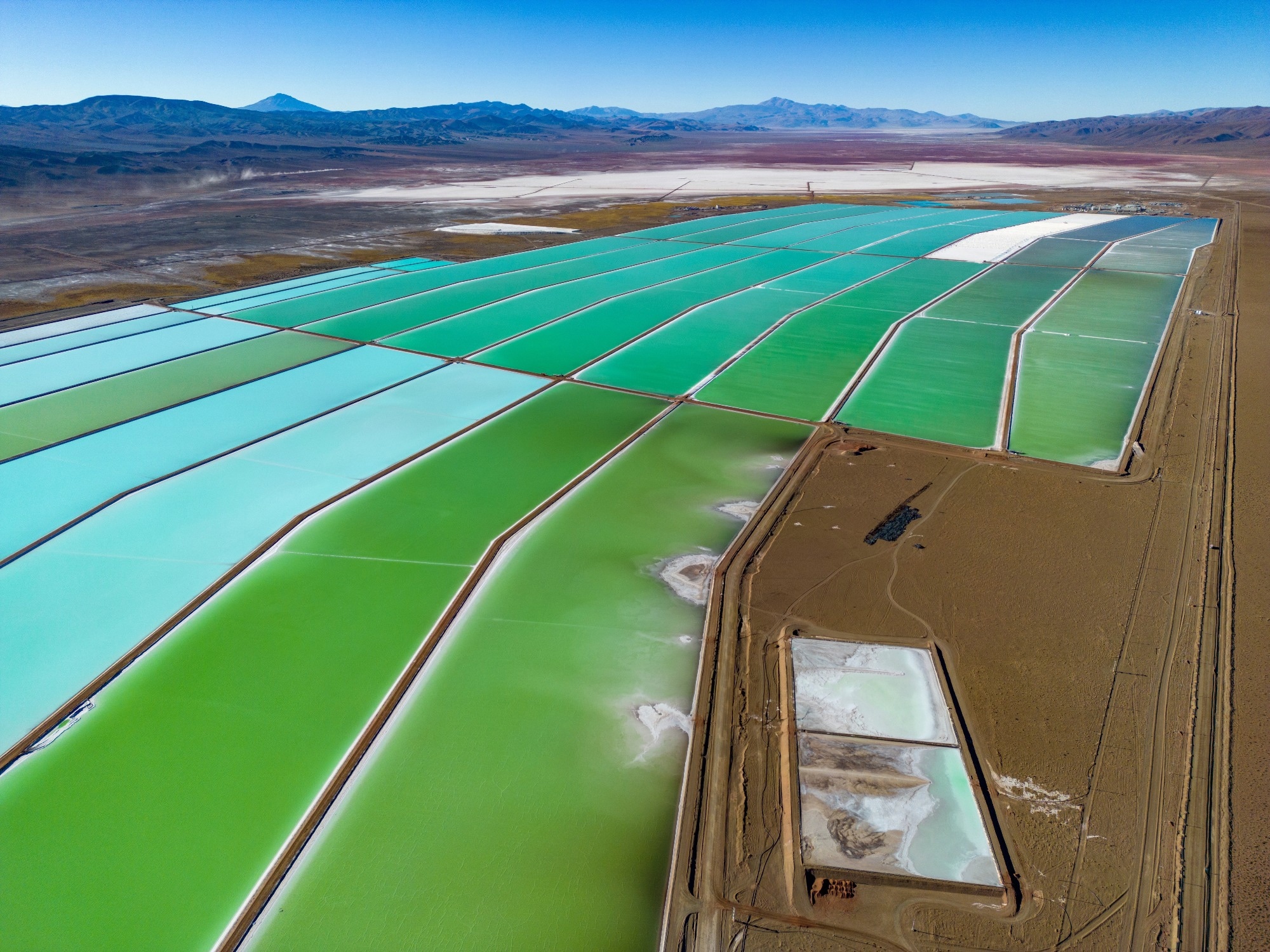 Study: Future water constraints on United States lithium mining under climate change. Image Credit: Freedom_wanted/Shutterstock
A recent study published in Communications Earth & Environment investigates how climate change could affect water availability for lithium mining across the United States. As lithium demand continues to rise due to its critical role in electric vehicles, battery storage systems, and other low-carbon technologies, concerns have emerged regarding the large volumes of water required for lithium extraction. The researchers evaluated whether future water resources would be sufficient to support one active and 22 proposed lithium mines under multiple climate and socioeconomic scenarios.
Water Challenges in the Lithium Industry
The growing adoption of electric vehicles and energy storage technologies has accelerated global demand for lithium, making it a critical mineral for the energy transition. Although the United States possesses substantial lithium resources, extracting and processing lithium requires significant amounts of water.
Water demand varies across extraction methods, with brine evaporation typically consuming the largest volumes, followed by direct lithium extraction, hard-rock mining, and clay-based processing. As a result, water availability has become an increasingly important factor in evaluating the long-term sustainability of lithium production.
Many proposed lithium projects are concentrated in the western United States, where water resources are already under pressure. Climate change is expected to intensify these challenges by increasing temperatures, altering precipitation patterns, and accelerating evaporation.
Despite widespread recognition of these concerns, few studies have quantitatively assessed how future climate conditions may affect water availability for domestic lithium production. This study addresses that gap by examining the combined influence of climate change, water demand, and mining expansion on future water resources.
Water Availability Assessment
The researchers evaluated one operating and twenty-two proposed lithium mines across the United States, covering conventional resources such as hard-rock deposits as well as emerging resources including lithium-rich clays, geothermal brines, and oil-field brines. They estimated mine water consumption using technical reports, company disclosures, and peer-reviewed studies, supplemented by production-based estimates when site-specific data were unavailable.
The study employed the Water Supply Stress Index Model (WaSSI) to assess future water availability. The study examined four socioeconomic-climate scenarios (SSP1–4.5, SSP2–8.5, SSP3–8.5, and SSP5–8.5) across five climate models. These scenarios captured variations in population growth, economic development, energy use, and greenhouse gas emissions.
The researchers calculated net water availability by comparing projected water supplies with demands from agriculture, households, industry, energy production, and lithium mining. They also applied Monte Carlo simulations to account for uncertainties in climate projections, mine production, and water consumption estimates.
Water Scarcity and Implications for Lithium Production
The analysis revealed substantial regional differences in future water availability across climate scenarios. Although all climate models projected rising temperatures, precipitation trends varied considerably among regions.
Despite these differences, most scenarios projected water shortages in several mining regions by mid-century. In many cases, existing water demands from agriculture, households, and industry already exceeded projected water supplies, even before accounting for future lithium mining activities.
The Salton Sea region emerged as the most water-constrained area in the study. Its heavy reliance on Colorado River water, combined with the high water requirements of geothermal lithium projects and direct lithium extraction technologies, resulted in some of the lowest projected water availability levels. In contrast, subbasins in the southeastern United States, including Bodcau Bayou, South Fork Catawba, and Upper Broad, generally maintained sufficient water resources due to higher precipitation and more favorable hydrological conditions.
The study identified irrigation and household consumption as the dominant contributors to regional water demand. Although lithium mining accounted for a smaller share of total water use, it increased pressure on already-stressed basins, particularly in the Ralston–Stone Cabin Valleys, the Southern Big Smoky Valley, and the Upper Quinn.
These findings suggest that future water scarcity could constrain domestic lithium production and limit the United States' ability to meet growing lithium demand. Even if all proposed mines reach full production, domestic supply would still fall short of projected future requirements.
Saving this for later? Download a PDF here.
Conclusion and Future Implications
This study highlights the growing challenge of balancing critical mineral development with sustainable water management. The results suggest that most lithium-producing regions in the United States could face potential water stress under future climate conditions. Although lithium mining accounts for a relatively small share of total water demand, its expansion could intensify competition for limited water resources in already stressed regions.
The findings emphasize the importance of improving water-use efficiency across the lithium supply chain. Advancing water-efficient extraction technologies, expanding lithium recycling infrastructure, and developing methods to recover lithium from alternative sources could help reduce pressure on freshwater resources.
The study also emphasizes the need for effective water governance and allocation strategies that balance the needs of mining, agriculture, industry, and local communities. Future research should further investigate groundwater availability, inter-basin water transfers, and long-term adaptation strategies to support resilient and sustainable lithium production in a changing climate.
Journal Reference
Trost, J. N., Nassar, N. T., et al. (2026). Future water constraints on United States lithium mining under climate change. Communications Earth & Environment. DOI: 10.1038/S43247-026-03643-4, https://www.nature.com/articles/s43247-026-03643-4
Disclaimer: The views expressed here are those of the author expressed in their private capacity and do not necessarily represent the views of AZoM.com Limited T/A AZoNetwork the owner and operator of this website. This disclaimer forms part of the Terms and conditions of use of this website.