*Important notice: This news reports on an unedited version of an accepted paper and is awaiting final editing. Therefore, the paper should not be regarded as conclusive or treated as established information.
A novel approach that integrates machine learning, cloud computing, and remote sensing has been developed to classify approximately 70,000 mining sites. The researchers found significant deforestation and biodiversity risks linked to specific commodities and regions, as reported in Nature Communications.
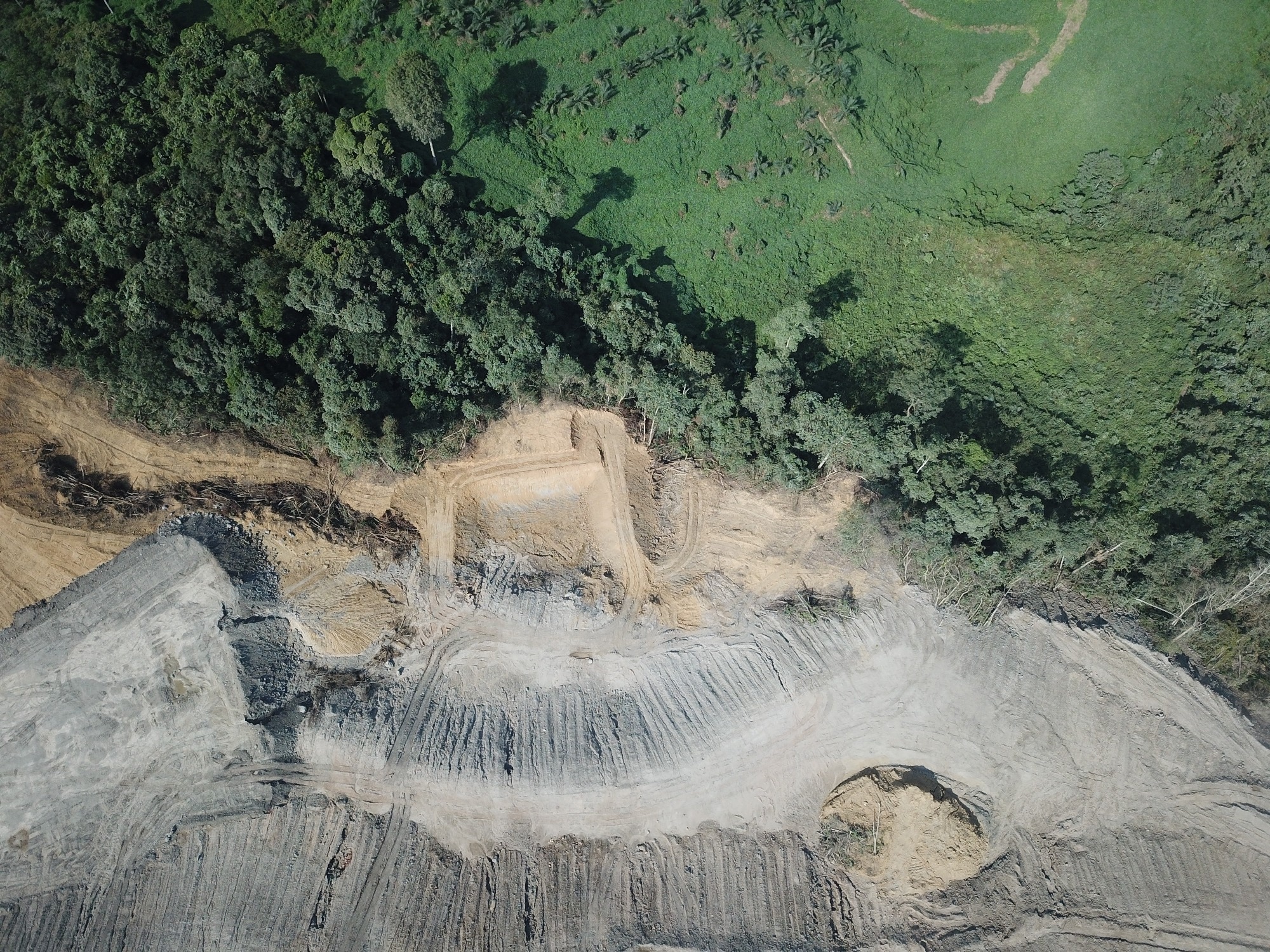 Study: Mapping global resource driven nature loss in the mining sector from 2001 to 2022. Image Credit: MikaAndri/Shutterstock.com
Mining's Global Ecological Footprint
Mining footprints are particularly impactful in forested tropical regions such as the Amazon, Southeast Asia, and the Congo Basin, where mineral deposits often lie beneath biodiverse ecosystems.
While numerous local and regional studies have documented these impacts, global-scale assessments have been limited by data constraints, a lack of commodity-specific mapping, and difficulties in accurately delineating mining land use.
Moreover, previous efforts have frequently focused either on specific regions, a few key metals, or generalized buffer zones rather than precise mining extents. Consequently, there has been an urgent need for a detailed, global-scale, commodity-level understanding of mining’s nature-loss footprint to better inform risk assessments, policy, and supply chain mitigation strategies.
By analyzing this dataset from 2001 to 2022, the study quantifies mining-induced deforestation and biodiversity risks associated with 20 mineral and metal commodities.
Want to save for later? Click here.
Commodity Classification via Remote Sensing
The core methodological innovation of this research lies in its integration of multiple advanced technologies to develop a detailed mapping of mining land use classified by commodity. The authors employed high-resolution satellite remote sensing imagery, combined with machine-learning classification algorithms, executed on cloud computing platforms.
Previous research demonstrated the value of the Advanced Spaceborne Thermal Emission and Reflection Radiometer (ASTER) and the Hyperspectral Imager Suite (HISUI) aboard the International Space Station. ASTER had identified deposits such as copper (Cu), gold (Au), and lithologic features across different countries, while HISUI provided hyperspectral data with 185 spectral bands that ranged from visible to shortwave infrared regions.
The researchers combined these remote sensing datasets with existing mining location point data obtained from commercial sources and government agencies. Then, they applied supervised machine learning classifiers trained on labeled data to assign each mining site to specific commodities. This novel classification enabled the development of spatially explicit mining footprints differentiated by mineral and metal types.
To quantify nature loss, the team overlaid these mining footprints with global forest loss data from the Global Forest Watch dataset spanning 2001 to 2022. This allowed the precise estimation of deforestation caused by mining activities over time. However, the authors noted that this data was limited as it could not distinguish between plantations and natural forests.
Additionally, they evaluated biodiversity risks using an Extinction Risk Index (ERI) derived from IUCN Red List assessments, assigning risk scores to mining sites based on their geographical overlap with threatened species habitats.
Commodity-Linked Nature Loss Patterns
The study highlights a strong geographic concentration of mining-induced forest loss in three major rainforest regions: the Amazon Basin, Southeast Asia, and the Congo Basin. Nearly half of the total deforestation is linked to mining in these areas, underscoring their vulnerability to extractive pressures.
Commodity-wise, mining of gold, coal, aluminum (bauxite), copper, and nickel-cobalt accounted for the largest shares of global mining-related deforestation, together comprising roughly half of the total forest cover lost. Particularly important hotspots were seen in tropical rainforest regions.
The deforestation impact varied widely among commodities; tin, lithium, and aluminum had relatively high deforestation-to-mining area ratios, indicating more intense or localized forest clearing associated with these minerals, whereas commodities like iron and coal mining tended to occur in less forested areas, exhibiting lower median ratios.
Temporal trends revealed an increase in mining-related deforestation from 2001 to around 2015, followed by a decline. This pattern may reflect an initial phase of horizontal mine expansion, clearing forested land, followed by a later phase of deeper excavation with reduced additional deforestation.
Beyond the extent of deforestation, biodiversity risks demonstrated spatial variability that was not always correlated with forest loss. Certain commodities, such as tungsten (W) and lithium (Li), showed higher median Extinction Risk Index values despite causing less deforestation, reflecting extraction activities in biodiversity-rich or ecologically sensitive regions.
This decoupling emphasizes that forest loss alone cannot fully capture the threat mining poses to species extinction risk.
Guiding Sustainable Mining Practices
This study provides a comprehensive global, commodity-level quantification of mining-induced nature loss from 2001 to 2022. Mining operations have caused approximately 16,000 square kilometers of forest loss worldwide, predominantly in tropical rainforest regions crucial for global biodiversity.
Half of this deforestation is attributable to the extraction of gold, coal, aluminum, nickel-cobalt, and copper, with significant hotspots in the Amazon, Southeast Asia, and Congo Basin.
Future research should extend to incorporate underground mining impacts, indirect land-use changes, and temporal dynamics in mining expansion and closure to achieve a fuller understanding of mining’s total nature footprint.
Nonetheless, this study establishes a vital baseline and methodological foundation for advancing sustainable resource management and minimizing mining’s threat to global ecosystems.
Journal Reference
Cheng Y. T., Hoang N.T., et al. (2026). Mapping global resource driven nature loss in the mining sector from 2001 to 2022. Nature Communications. https://www.nature.com/articles/s41467-026-73792-9