Governments around the world are becoming more proactive participants in the mining sector, particularly amid growing demand for critical minerals. They are transitioning from passive stakeholders into active strategists to secure critical minerals and to bolster domestic processing.1-5
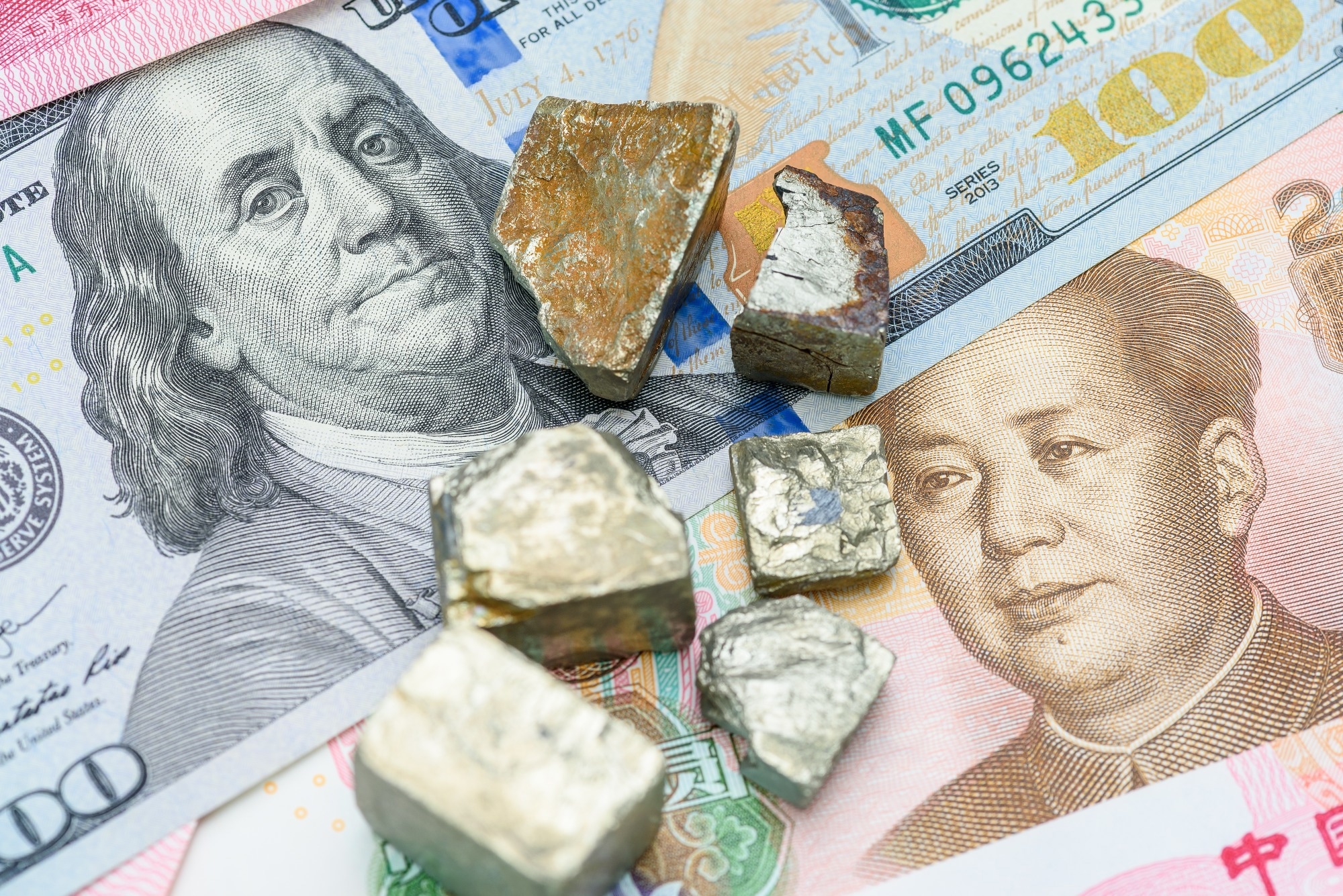
Image Credit: William Potter/Shutterstock.com
The objective is primarily to address vulnerabilities in foreign supply chains. Additionally, resource-rich countries are aiming for broader industrial and economic development by capitalizing on demand for critical minerals, which are crucial for advanced manufacturing and clean energy technologies.1-5
Efforts by the US
Latin American countries, particularly Chile, are emerging as crucial partners to the United States as it seeks to reduce its reliance on China for resources essential to modern industry, energy systems, and defense, and to ensure secure supplies of critical minerals.1,2
The two countries recently signed a joint statement to initiate formal discussions on rare earths and critical minerals. The initiative is a part of efforts made by the US administration to create alternative supply chains for critical minerals used in consumer electronics, semiconductors, and electric vehicles.2
No time now? Download a PDF of this article here.
Latin America, with approximately 60% of the global lithium (Li) reserves, is critical to this strategy. Additionally, Brazil, Argentina, and Chile possess major rare earth and copper (Cu) resources. Since January 2025, the US has invested over $1 billion in the critical minerals sector across Latin America, and the recent discussions with Chile align with the wider regional strategy.1
This development indicates the growing assertiveness of the US in securing supplies of rare earths, copper, and lithium, and a general shift in the government's approach toward mining. Critical minerals are increasingly considered strategic assets, key to energy and national security, rather than just commodities linked to the green transition.1,2
Why Latin America Is in Focus
Chile is the second-largest lithium producer and the largest copper producer in the world, making it essential for diversifying mineral supply chains. Copper will drive mining investment in Latin America due to its global demand for renewable energy, power grids, and electrification.1,2
In Chile, multiple copper projects with a combined investment of over $7 billion will begin their operations next year. Thus, the talks between the US and Chile represent the growing importance of Chile as access to rare earths, lithium, and copper has become vulnerable due to geopolitics.1,2
Projects in Argentina and Brazil have drawn interest from multilateral lenders and US agencies through equity stakes, loans, and structured offtake agreements. These offtake agreements have been designed to direct output into supply chains aligned with the US.1
For instance, the US Development Finance Corporation has proposed a $465 million investment to expand the rare earth operations of Serra Verde in Brazil’s Goiás state, while the Inter-American Development Bank approved a $100 million loan for a $2.5 billion lithium project in Argentina.1
Despite increasing US investment, governments in Latin America are continuing their ties with China as Chinese companies dominate mineral processing, particularly rare earths, with over 90% of global processing capacity.1
Initiatives by India
In 2025, the Government of India launched the National Critical Mineral Mission (NCMM) to build an effective framework for self-reliance in the critical mineral sector.3
The objectives of NCMM are to secure India's critical mineral supply chain by ensuring the availability from both foreign and domestic sources and to reinforce value chains by improving the financial, regulatory, and technological ecosystems.3
Domestic exploration projects for critical minerals aim to identify and evaluate domestic mineral reserves. Acquisition will involve investments through public sector undertakings (PSUs) and private firms in the exploration and acquisition of critical mineral assets in resource-rich nations.3
The government will support private firms and PSUs through inter-ministerial coordination, guidelines, and funding. Additionally, the government will promote public-private partnerships and ensure infrastructure support through the Ministry of External Affairs (MEA).3
In 2024, Khanij Bidesh India Ltd (KABIL) and CAMYEN SE signed an agreement for exploring lithium in an area covering 15,703 hectares. CAMYEN SE is a state-owned enterprise in Catamarca, Argentina.3
In 2022, KABIL signed a memorandum of understanding (MoU) with the Critical Mineral Office of the Department of Industry, Science and Resources, Government of Australia. Due diligence is underway to select cobalt and lithium projects in Australia for investment through offtake agreements.3
Approaches by African Governments
Recently, the Democratic Republic of Congo (DRC) classified lithium and cobalt as strategic minerals and tripled royalties. The country approved a draft decree classifying lithium as a strategic mineral and increasing royalties from 3.5% to 10% of gross revenue for producers.4
Rare earth elements, including uranium (U), tungsten (W), niobium (Nb), and tantalum (Ta), were also included in the higher-tax category. This new royalty rate functions as a production tax instead of a profit-sharing arrangement, as it applies from the top line irrespective of profitability.4
This approach seeks to exploit the growing demand for critical minerals driven by the global energy transition. It follows a consistent pattern across Africa, as Ghana also raised gold (Au) royalties to a sliding scale reaching 12%, and Angola is managing its oil windfall.4
Kazakhstan’s Industrial Strategy
Kazakhstan is focusing on a broader industrial goal of transitioning from raw-material exports to technology transfer, processing, and higher-value manufacturing, leveraging renewed US interest in critical minerals. The country has more than 9500 mineral deposits, with over 100 containing rare and rare-earth metals.5
Kazakhstan holds significant molybdenum (Mo) and tungsten deposits. It also has beryllium (Be) and lithium reserves, which are crucial for aerospace, advanced manufacturing, and defense-related industries. The country has active production or proven reserves of approximately half of the 54 minerals designated as critical by the US.5
In this light, Kazakhstan wants its critical mineral reserves to support a broader industrial strategy, including new manufacturing clusters, engineering capacity, and domestic processing, instead of meeting only foreign demand.5
The Way Forward
In mining, the evolving role of governments underscores the need for strategic policies that balance resource security, economic development, and sustainability. Countries must focus on building domestic processing capabilities, strengthening international partnerships, and encouraging innovation across mineral value chains.
A coordinated approach involving governments, industries, and global partners is crucial to ensure diversified and resilient critical mineral supply chains.
References and Further Reading
- Jamasmie, C. (2026). US pours $1B into Latin America critical minerals. [Online] Mining. Available at https://www.mining.com/us-pours-1b-into-into-latin-america-critical-minerals/. (Accessed on 19 June 2026).
- (2026). US pours $1B into Latin America critical minerals. [Online] Phoenix Refining. Available at https://www.phoenixrefining.com/blog/us-pours-1b-into-latin-america-critical-minerals (Accessed on 19 June 2026).
- Kumar, S. et al. (2025). National Critical Mineral Mission. [Online] PIB Gov. Available at https://www.pib.gov.in/PressReleasePage.aspx?PRID=2120525®=3&lang=2 (Accessed on 19 June 2026).
- (2026). Africa Rewrites the Rules on Critical Minerals. [Online] Africa.com. Available at https://africa.com/africa-rewrites-the-rules-on-critical-minerals/ (Accessed on 19 June 2026).
- Haidar, A., and Pokidaev, D. (2026). Kazakhstan Seeks More Than Extraction as U.S. Minerals Interest Grows. [Online] The Times of Central Asia. Available at https://timesca.com/kazakhstan-seeks-more-than-extraction-as-u-s-minerals-interest-grows/ (Accessed on 19 June 2026).
Disclaimer: The views expressed here are those of the author expressed in their private capacity and do not necessarily represent the views of AZoM.com Limited T/A AZoNetwork the owner and operator of this website. This disclaimer forms part of the Terms and conditions of use of this website.