*Important notice: This news reports on an unedited version of an accepted paper and is awaiting final editing. Therefore, the paper should not be regarded as conclusive or treated as established information.
To enhance mine safety in ultra-thick seam-mining conditions, researchers have investigated spontaneous combustion characteristics and developed fire-prevention technologies for the fully mechanized top-coal caving face of Gaojiapu Coal Mine. Their findings were published in Scientific Reports.
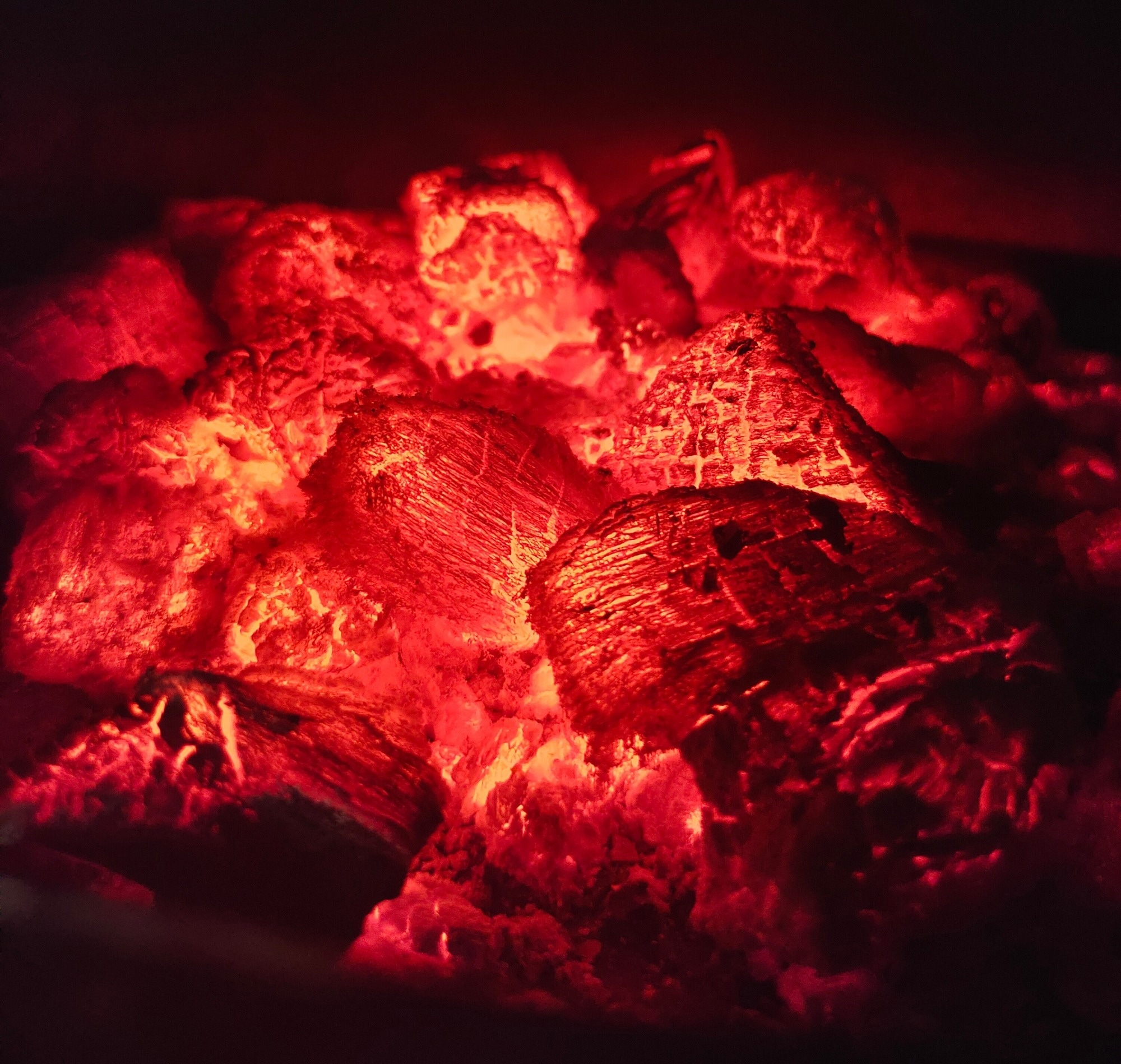 Study: Study on spontaneous combustion characteristics and fire prevention technology in the fully mechanized top-coal caving face of Gaojiapu coal mine. Image Credit: Mohammed Mudassir/Shutterstock.com
Gaojiapu Mine Context
The study addresses the escalating challenge of spontaneous combustion of residual coal in the goaf areas of fully mechanized top-coal caving mining faces, particularly under ultra-thick coal seam conditions, as encountered at the Gaojiapu Coal Mine.
The rapid advance rates and extended working face lengths in modern coal mining have intensified air leakage in goafs, amplifying oxidation and spontaneous combustion risks. This phenomenon poses significant threats to mine safety and operational continuity, often causing suspensions of mining activities and hazardous incidents.
Previous research has mainly focused on thinner seams or failed to reconcile the conflict between effective fire-prevention measures and the required advance rates restricted by rock burst hazard controls.
This work targets the 3406 fully mechanized top-coal caving face in Gaojiapu Coal Mine, employing laboratory, field, and numerical methods to characterize the "Three Zones" of spontaneous combustion - the asphyxiation zone, oxidation zone, and heat-dissipation zone - and to develop tailored fire-prevention and control technologies for ultra-thick seam mining settings.
Combustion Propensity Testing
The investigation comprised experimental, observational, and simulation techniques. Initially, coal samples from the No. 4 coal seam at the 3406 working face underwent laboratory analysis to assess spontaneous combustion propensity via oxygen absorption tests using gas chromatography in accordance with Chinese standard GB/T 20104-2006.
Temperature-programmed oxidation experiments identified key indicator gases produced during coal oxidation. In situ gas monitoring in the goaf focused on oxygen and indicator gases (notably CO and C2H4) to discern spatial and temporal patterns associated with spontaneous combustion processes.
COMSOL Multiphysics software facilitated numerical simulation of oxygen concentration fields within the goaf, enabling accurate delineation of the spatial distribution of the "Three Zones." The mining face's geological and operational parameters, including seam thickness, dip angle, roof and floor compositions, and ventilation conditions, informed the modeling.
Finally, the study proposed and implemented an integrated fire-prevention strategy that combined grouting and nitrogen injection, with real-time gas monitoring over five months to evaluate the effectiveness of suppressing spontaneous combustion under constrained advance rates mandated by rock burst safety regulations.
Three Zones Analysis
Laboratory testing characterized the coal as presenting a Class II spontaneous combustion risk with a measured oxygen absorption capacity of 0.44 cm3/g and a minimum ignition period of 39 days.
Temperature-programmed oxidation analyses identified carbon monoxide (CO) and ethylene (C2H4) as definitive indicator gases for spontaneous combustion, whereas methane (CH4) and ethane (C2H6) were excluded due to background interference.
Field measurements and numerical simulations revealed an asymmetric spatial pattern for the "Three Zones" within the goaf: the asphyxiation zone was situated 230–261 meters deep; the oxidation zone extended 12–230 meters on the return side and 70–261 meters on the intake side, with a maximum oxidation zone width of 218 meters on the intake side; and the heat-dissipation zone was constrained within 12–70 meters of the working face.
The determined theoretical safe advance rate to avoid spontaneous combustion was 6.71 m/d. However, the practical advance rate was limited by mandatory anti-rock-burst regulations, creating operational conflicts due to the residual coal's prolonged exposure to the oxidation zone.
To resolve this, the study implemented an integrated fire-prevention approach leveraging grouting to seal fissures and nitrogen injection to inert the oxidation zone, thereby reducing oxygen availability and heat accumulation.
Continuous real-time monitoring of CO and C2H4 concentrations within the oxidation zone over five months demonstrated the approach's efficacy, with CO levels consistently below the 24 ppm regulatory safety threshold and ethylene undetectable.
These findings indicate successful suppression of spontaneous combustion risk despite the lagging advance rate. The work highlights the interplay between goaf air leakage, thermal-oxidative coal behavior, and mining operational constraints, underscoring the importance of targeted, site-specific fire-prevention technologies for ultra-thick-seam, fully mechanized, top-coal caving mining.
Fire-Prevention Outcomes
This research elucidated the spontaneous combustion characteristics of residual coal in the goaf of the 3406 fully mechanized top-coal caving face at Gaojiapu Coal Mine and developed a pragmatic fire-prevention technology that accommodates mining operational restrictions posed by rock burst hazards.
Laboratory tests established CO and C2H4 as reliable indicator gases, and numerical simulations precisely mapped the “Three Zones” of spontaneous combustion within the goaf, revealing a maximum oxidation zone width of 218 meters.
This combined approach offers a valuable technical paradigm for fire control in ultra-thick coal seam fully mechanized top-coal caving mining faces, laying the foundation for improved operational safety and continuity.
Future work should refine models to incorporate complex three-dimensional goaf structures, porosity evolution, and gas interactions to further optimize fire-prevention practices.
Journal Reference
Liu H., Zheng T., et al. (2026). Study on spontaneous combustion characteristics and fire prevention technology in the fully mechanized top-coal caving face of Gaojiapu coal mine. Scientific Reports. DOI: 10.1038/s41598-026-65374-y. https://www.nature.com/articles/s41598-026-65374-y.