Modified biochar has been investigated as a way to reduce the mobility and availability of lead (Pb) in contaminated soils from coal-based solid waste dumps in China. Four modified biochars were compared, produced using hydrogen peroxide (H2O2), nitric acid (HNO3), calcium chloride (CaCl2), and potassium permanganate (KMnO4).
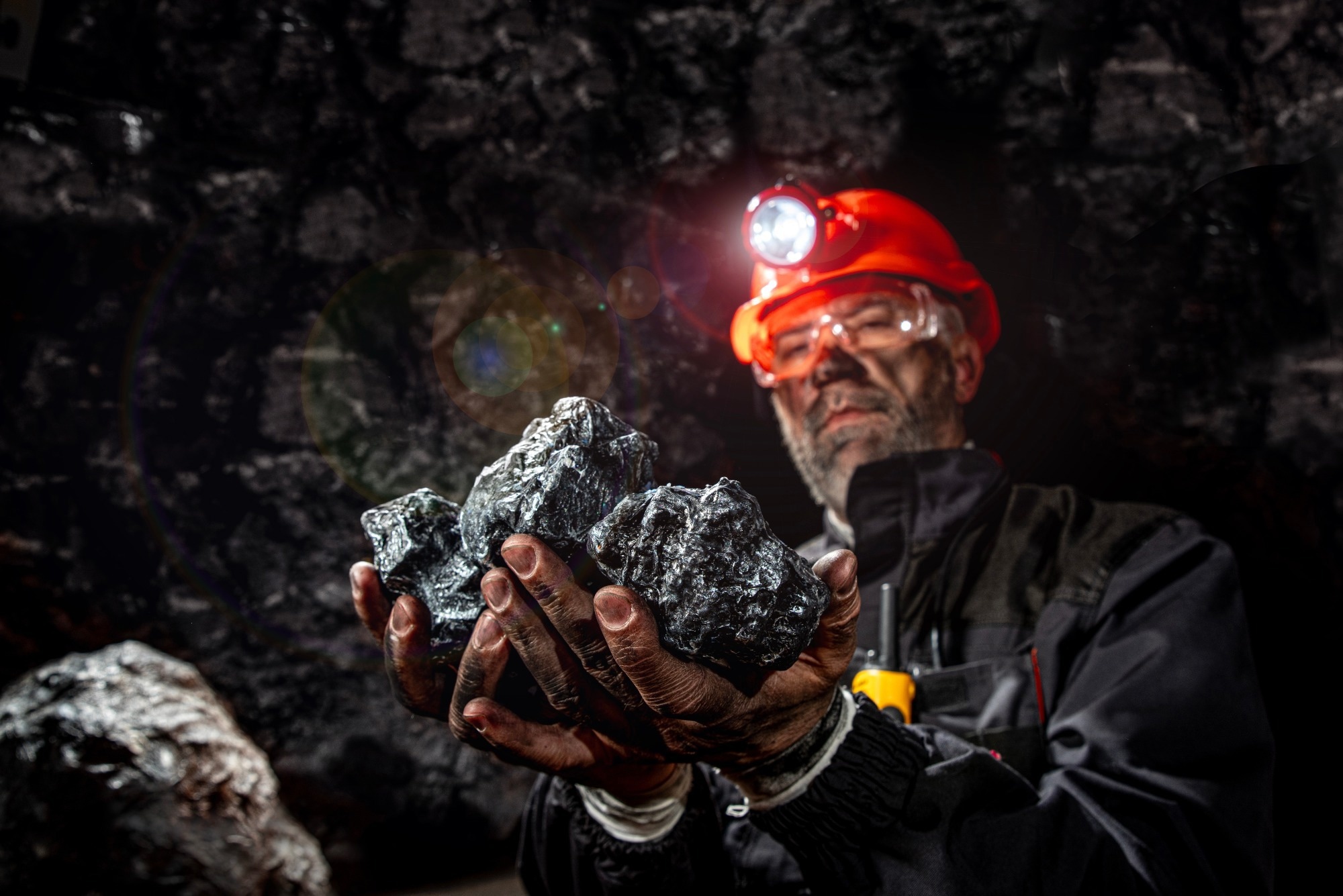 Study: Mechanisms of Pb Stabilization Using Modified Biochar in Coal Mining Areas in China. Image Credit: TSViPhoto/Shutterstock.com
The findings, published in Processes, show that HNO3-modified biochar performed best by converting mobile Pb into more stable forms through complexation.
Tackling Lead Contamination in Coal Mining Soils
Mining activities introduce heavy metals into surrounding soils and create long-term environmental risks. Lead (Pb) is particularly concerning as it often remains in soil and can become mobile as environmental conditions change.
Download a free copy of this page here!
To assess this, researchers investigated alkaline soil from a coal-based solid waste dump in China. The soil had a pH of 8.15 and contained 346.74 mg/kg of total Pb. DTPA-extractable Pb reached 182.75 mg/kg, indicating a high level of potentially available lead.
The study aimed to identify an effective modified biochar for immobilizing Pb and determine how it stabilizes the metal. The researchers compared untreated biochar with four chemically modified forms, examining changes in soil pH, cation exchange capacity (CEC), Pb fractions, and available Pb.
The research addresses an important gap in soil remediation: though biochar (BC) can immobilize heavy metals, its effectiveness depends on its surface properties and the characteristics of the contaminated soil.
Chemical modification can add functional groups and change surface charge and adsorption capacity. However, researchers still have limited understanding of how different modified biochars transform Pb into more stable forms in alkaline coal-mining soils. This study compares four modification approaches and identifies the surface properties that contribute most to Pb stabilization.
Comparing Modified Biochars for Pb Stabilization
The researchers prepared four modified biochars using H2O2, HNO3, CaCl2, and KMnO4. They characterized each material to determine how
the chemical treatments changed properties linked to Pb immobilization.
HNO3 modification introduced abundant acidic functional groups, whereas KMnO4 modification increased biochar pH and CEC and altered its surface structure. These differences gave each modified biochar distinct ways to interact with Pb in the soil.
The team mixed 0.5 kg soil samples with untreated or modified biochar at application rates of 1%, 2%, and 3%. Each treatment included three replicates. The researchers maintained the mixtures at 60% water-holding capacity and 25 °C for 50 days.
After incubation, the team measured soil pH and CEC. They determined total Pb using flame atomic absorption spectrophotometry. They also applied the BCR sequential extraction procedure to divide soil Pb into four fractions: acid-soluble, reducible, oxidizable, and residual.
The researchers also measured DTPA-extractable Pb to determine how much lead remained available in the soil. They used one-way ANOVA and the LSD post hoc test to evaluate differences between treatments. Redundancy analysis (RDA) and Pearson correlation analysis helped the team examine relationships between biochar properties, soil characteristics, and Pb fractions.
HNO3-Modified Biochar Shows Strong Pb Stabilization
The modified biochars substantially changed how Pb was distributed among the different soil fractions. Before treatment, the reducible fraction accounted for more than half of the total soil Pb; biochar amendments reduced this fraction by 8.18–29.37%. This change indicates that the treatments shifted Pb away from a relatively more mobile form towards more stable fractions.
HNO3-BC and KMnO4-BC produced the most pronounced changes. Compared with the untreated soil, KMnO4-BC reduced the acid-extractable Pb fraction by 51.54%, while HNO3-BC achieved a 55.31% reduction.
Both treatments also substantially increased the residual Pb fraction. KMnO4-BC increased it by 2.96 times, while HNO3-BC increased it by 2.46 times. Because residual Pb represents the most stable fraction, this shift suggests a lower potential for Pb mobilization.
Overall, HNO3-BC reduced available Pb by 3.59–23.80%, while KMnO4-BC achieved reductions of 15.93–26.72%. CaCl2-BC also reduced available Pb at the 1% and 2% application rates. H2O2-BC, however, did not significantly improve Pb availability compared with untreated biochar.
The researchers also found that surface chemistry played an important role in Pb stabilization. RDA showed that biochar properties and soil characteristics explained 84.93% of the variation in Pb fractions.
Lactone groups showed negative relationships with acid-extractable and available Pb but a positive relationship with residual Pb. Carboxyl and acidic functional groups also showed negative relationships with the reducible Pb fraction.
The researchers linked these properties to different stabilization mechanisms. HNO3-BC stabilized Pb through complexation with newly introduced oxygen-containing functional groups. Conversely, KMnO4-BC combined physical adsorption, cation exchange, and complexation involving lactone groups, and CaCl2-BC primarily relied on cation exchange. These mechanisms helped shift Pb from more mobile forms towards stable fractions.
Advancing Remediation of Coal-Mining Soils
The study shows that chemical modification can improve biochar’s ability to immobilize Pb in contaminated alkaline soils. Among the tested materials, HNO3-modified biochar displayed strong stabilization by introducing oxygen-containing functional groups that created additional sites for Pb binding.
This approach could support the remediation of coal-mining wastelands and areas surrounding coal-based solid waste dumps. Shifting Pb from acid-extractable and other potentially mobile fractions into the more stable residual fraction could help lower its environmental risk.
The findings also highlight the importance of selecting an appropriate biochar modification. Different chemical treatments alter surface properties and create different pathways for Pb stabilization. Acidic and lactone functional groups, along with soil pH and cation exchange capacity, can influence treatment effectiveness.
However, the study evaluated the biochar treatments under controlled laboratory conditions, so their long-term performance in real mining environments remains uncertain. Changes in weather, soil moisture, and biological activity could affect their effectiveness over time. Further field-scale research is needed to determine how well the amendments perform under practical conditions.
Overall, the findings highlight the potential of HNO3-modified biochar to stabilize Pb and support the remediation of contaminated coal-mining soils.
Journal Reference
Wang, L., Yan, J., et al. (2026). Mechanisms of Pb Stabilization Using Modified Biochar in Coal Mining Areas in China. Processes. 14(16). DOI:10.3390/PR14162615. https://www.mdpi.com/2227-9717/14/16/2615.
Disclaimer: The views expressed here are those of the author expressed in their private capacity and do not necessarily represent the views of AZoM.com Limited T/A AZoNetwork the owner and operator of this website. This disclaimer forms part of the Terms and conditions of use of this website.