The international surface mining industry is undergoing a historic shift, moving beyond its primary focus of bulk material extraction to become a highly technical and integrated component of the global energy transition. Driven by surging demand for critical minerals and dual mandates on safety and sustainability, the market in 2025 has been largely defined by massive investments in smart equipment and autonomous operations. This transformation sees the sector continue its shift from physical intensity to data-driven intelligence and digital fluency.
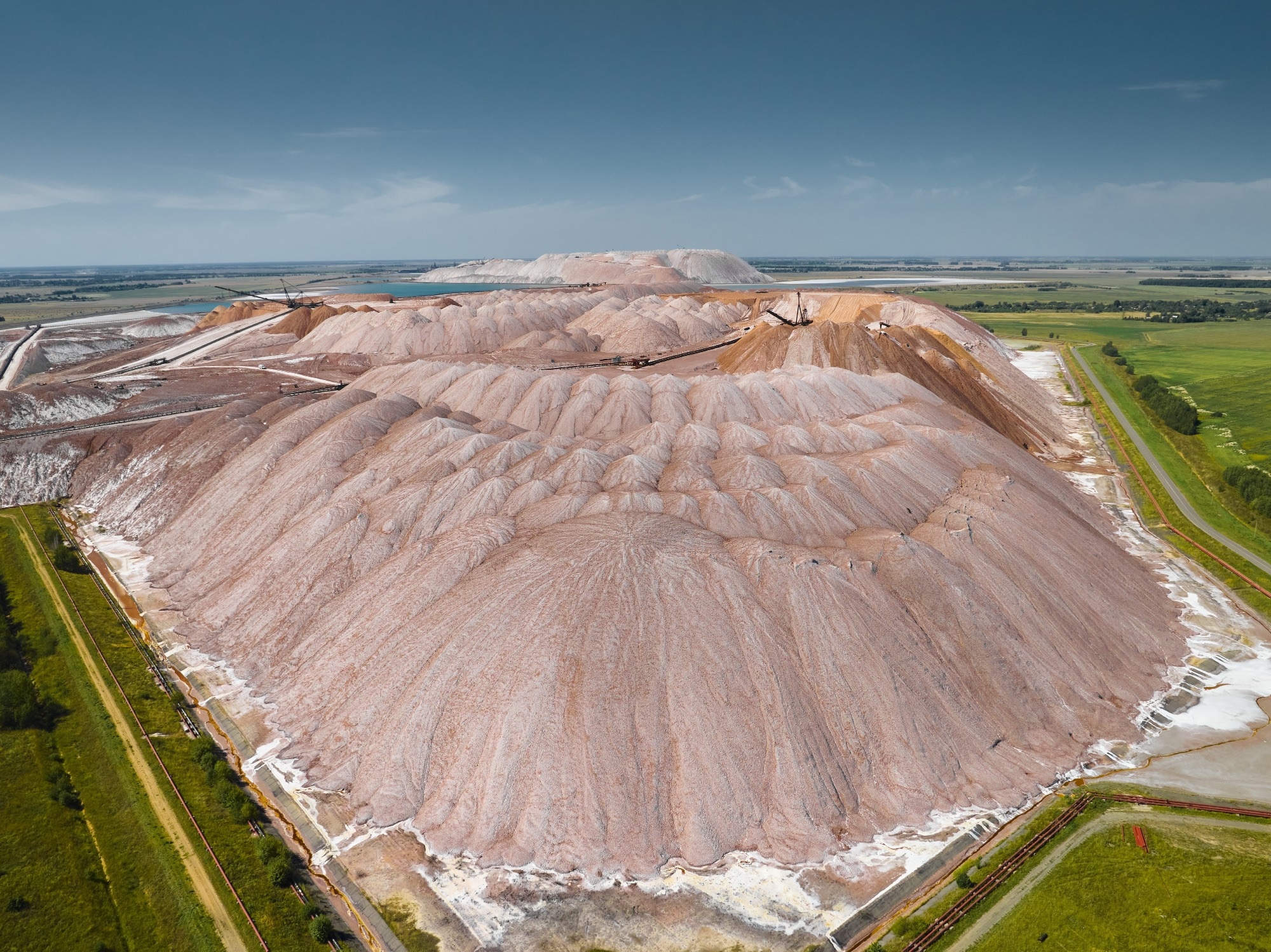
Image Credit: Nordroden/Shutterstock.com
Application Areas of Surface Mining Technology
The primary application areas of surface mining encompass the strip mining of materials such as coal and lignite, as well as the open-pit mining of essential metals like gold and copper. Operations occur all over the globe, but there were particular areas of concentration for surface mining in 2025.
In the United States, surface mining has been heavily concentrated in coal production from the western and Appalachian basins, as well as in copper mining in Arizona and Utah. In Europe, mining largely focused on quarrying for construction materials, and lignite mining in Germany and Eastern Europe.1
Recent Developments in Surface Mining
Right now, the big focus across surface mining is the push toward digitalization and automation. At the same time, there’s a growing effort to shift away from fossil fuels in favor of electrification.
Over the past year, digital technologies have continued to transform surface mining. For example, one particularly interesting area has been real-time ore classification.
Companies have been developing sensors, such as those used in the MineSense shovel bucket, to identify valuable ore for loading, as opposed to waste rock to be discarded.2 This improves operational efficiency by reducing the energy spent on processing barren rock. Another digital leap comes from Fleet Space Technologies, whose Exosphere product uses arrays of sensors and low-Earth-orbit satellites to conduct rapid, non-invasive 3D mineral exploration, dramatically speeding up the search for critical resources.3
Artificial Intelligence is increasingly being deployed to significant effect in many areas. It is used to predict equipment wear, assist with ore sorting, and optimize the chemistry of processing circuits. AI is also being used to optimize exploration. US-based KoBold Metals is using machine learning models to predict the location and composition of high-grade mineral deposits, which is evolving the exploration model.4
As the industry seeks to meet stringent environmental targets, the shift to battery electric vehicles and hybrid equipment is accelerating. It is also driving innovation. Phoenix Tailings is an American start-up developing technology to extract value from mine tailings via metallization, creating new sources of critical metals from existing operations. In October, the company announced the opening of its first metallization plant without Chinese inputs or technology.5
Click here to download a PDF copy of this page
Current Global Market for Surface Mining
The global surface mining market is showing steady, long-term growth. According to industry data, the market is valued at approximately $9.5 billion in 2025 and is forecast to reach $12.9 billion by 2035.1
North America remains one of the most technologically advanced surface mining markets, primarily focused on large-scale copper, gold, and iron ore projects. Operators based on the continent tend to be early adopters of autonomous haulage systems, digital fleet management, and a strong focus on worker safety.
Asia-Pacific represents the fastest-growing regional market for surface mining. China and India are the primary growth engines, driven by strong demand for electricity, steel, and cement. Surface coal mining is particularly important in these countries for supplying domestic power generation and steel manufacturing.
Future Directions for Surface Mining
The future of the surface mining market is being driven by innovation, the demand for energy transition materials, and sustainability concerns.
As new technologies become increasingly adopted, surface mining will become more electrified, autonomous, and data-driven in the coming years. This will gradually reduce environmental impact, increase safety, boost efficiency, and increase environmental compliance.
The demand for energy transition minerals, such as copper, lithium, and nickel, is expected to increase four to six times by 2040.6 This sustained demand will ensure high investment in surface extraction, with the pressure to decarbonize operations becoming a central focus.
When it comes to sustainability, the mining industry as a whole is shifting toward a broader role of resource stewardship. This means actively investing in technologies for recovering materials at the end of their life cycle and increasing circular practices across the entire value chain. By extracting value from tailings and adopting other circular strategies, the sector stands to unlock more than $430 billion in annual business opportunities by 2030.6
Final Thoughts
In 2025, the surface mining market continued its long march away from being a slow-moving, purely mechanical industry. Driven by the demand for energy transition and digital technologies, it continued transforming into a digitized, automated, and environmentally accountable sector.
Ongoing, collaborative adoption of smart technologies - from digitally informed ore sorting to AI-powered exploration - will be key to meeting the growing global demand for critical materials while minimizing environmental impact and promoting more sustainable practices.
References and Further Reading
- Kaitwade, N. (2025 September 9). Surface Mining Market Size and Share Forecast Outlook 2025 to 2035. Future Market Insights Inc. https://www.futuremarketinsights.com/reports/global-surface-mining-market
- Minesense. (Retrieved 2025 December 8). Shovelsense. https://minesense.com/shovelsense/
- Fleetspace. (Retrieved 2025 December 8). Mineral Exploration. https://www.fleetspace.com/mineral-exploration
- De Chant, T. (2024 October 7). KoBold Metals, which uses AI to help find critical minerals for the energy transition, raises $491M. TechCrunch. https://techcrunch.com/2024/10/07/ai-powered-critical-mineral-startup-kobold-metals-has-raised-491m-filings-reveal/
- Phoenix Tailings. (2025 October 23). Phoenix Tailings Opens Cutting-Edge U.S. Rare Earth Metallization Facility Entirely Independent From China. https://phoenixtailings.com/press/phoenix-tailings-opens-cutting-edge-u-s-rare-earth-metallization-facility-entirely-independent-from-china
- Bailey, R. et al. (2025 January). Why Mining And Metals Must Push Nature-Positive Efforts. Oliver Wyman. https://www.oliverwyman.com/our-expertise/insights/2025/jan/accelerating-nature-positive-efforts-mining-and-metals-sector.html
Disclaimer: The views expressed here are those of the author expressed in their private capacity and do not necessarily represent the views of AZoM.com Limited T/A AZoNetwork the owner and operator of this website. This disclaimer forms part of the Terms and conditions of use of this website.