The bauxite mining market is entering a phase of steady growth, fueled by rising aluminum demand, technology-driven productivity gains, and stricter environmental regulations. Because most bauxite is used to produce alumina for aluminum smelters, global demand for the mineral closely tracks aluminum consumption across major sectors such as transportation and construction.
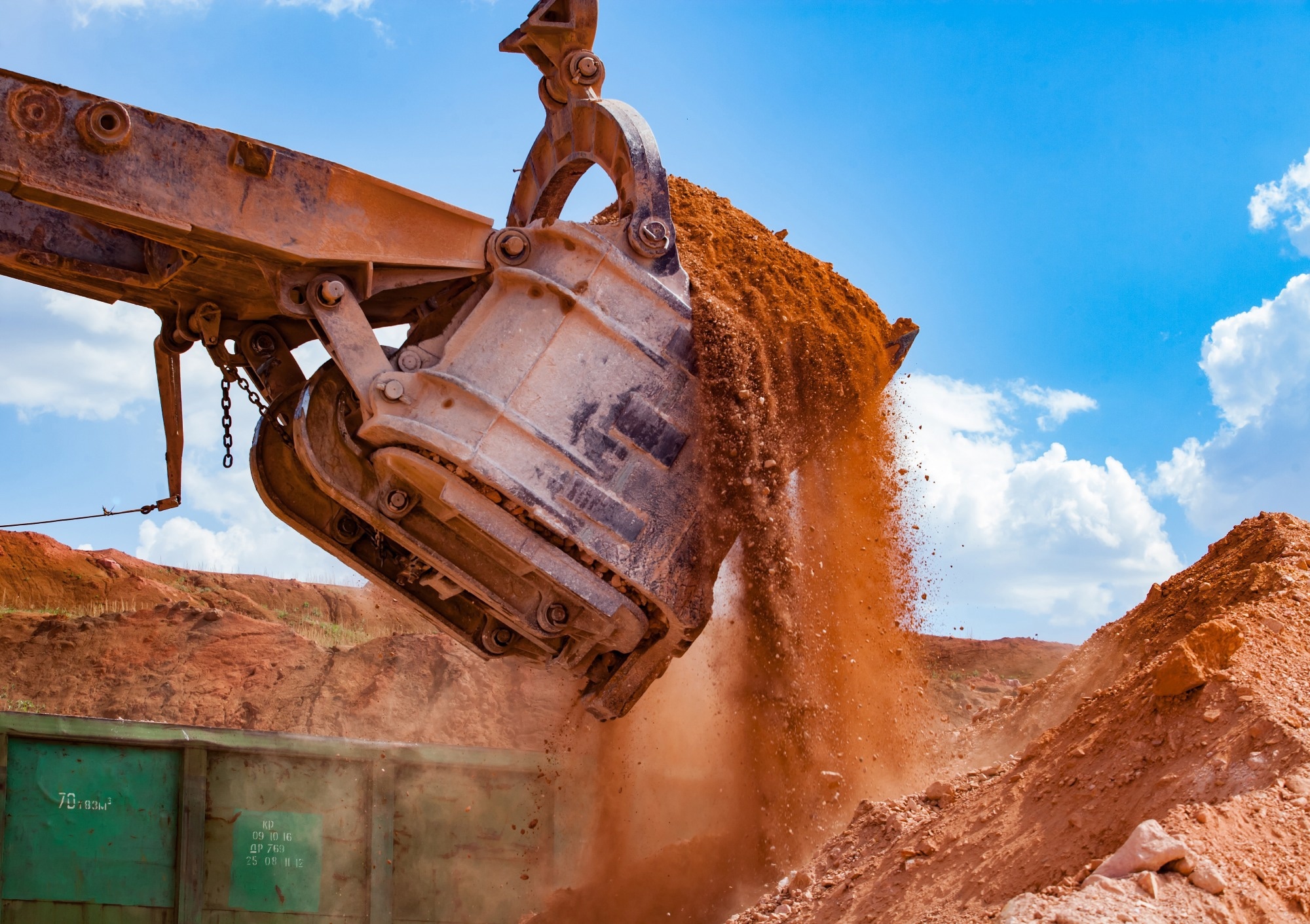
Image Credit: Alexey_Rezvykh/Shutterstock.com
At the same time, governments and local communities are calling for more sustainable land use and stronger social responsibility. These pressures are prompting mining operators to reassess how their projects are designed, financed, and monitored throughout their entire life cycles.
Bauxite Mining Market Overview
In value terms, the global bauxite mining market is projected to grow from around USD 16.2 billion in 2025 to around USD 22.9 billion by 2035, reflecting a compound annual growth rate (CAGR) of about 3.5 % over this period.
Market assessments reveal a similar trend in broader bauxite supply, predicting total demand will increase from approximately 295 million tons in 2025 to over 350 million tons by 2030.1,2
Guinea, Australia, China, Brazil, and India represent the core of global mine supply and together account for close to 90 % of primary bauxite production, which gives their regulatory and investment choices system-level importance.
Since 2000, global bauxite trades have become denser and more diversified, with significant exports from West Africa and Oceania to refining centers in China and industrialized areas.
Meanwhile, North America and Europe's dependence on bauxite and alumina imports highlights the importance of supply security and trade policies for aluminum producers in these regions.1,3,4
In the bauxite mining market, alumina production dominates application segmentation and accounts for 85 % of the total market value. Open-pit mining is the primary extraction method, contributing approximately 90 % of the mined volumes due to the accessibility of many deposits and the advantages of large-scale operations. Beyond alumina, smaller yet meaningful demand pockets arise from refractories, cement, and specialty chemicals, where high purity and specific mineral characteristics influence pricing.1,4
Key Growth Drivers and Structural Trends in Bauxite Mining
The primary driver for bauxite mining is the rising demand for aluminum, linked to trends in lightweighting, electrification, and infrastructure development. Automakers are also increasing aluminum use in vehicles to enhance fuel efficiency and extend electric vehicle range.4
Urbanization and investment in infrastructure, particularly in Asia and parts of Africa, sustain the demand for aluminum in construction and transportation.
In the Asia Pacific region, more than half of global bauxite consumption occurs, with China being the largest consumer due to its integrated aluminum and alumina production.
India is also showing increasing demand, supported by government infrastructure projects that promote aluminum usage in transport, housing, and industrial development.1,2,4
Technological integration in bauxite mining operations forms another defining trend, as companies deploy automation, remote monitoring, and digital mine planning tools to improve productivity and reduce unit costs. Advanced ore sorting and grade control systems support higher resource utilization and more consistent feed quality to refineries, reducing processing variability and helping operators comply with tighter performance specifications. In parallel, large producers are investing in data platforms that integrate geology, operations, maintenance, and logistics, leading to improved sequencing, reduced downtime, and better energy management.1,4,5
Sustainability requirements are also influencing capital allocation and operational practices, as investors, customers, and regulators focus on scope-1 and scope-2 emissions, biodiversity impacts, and community outcomes. Bauxite mines respond by formalizing rehabilitation plans, adopting progressive closure strategies, and pursuing certification under voluntary schemes for responsible mining. This shift encourages upstream partners to invest in water management, renewable energy, and greater transparency in reporting.1,4,5
Regional Dynamics and Competitive Landscape
The Asia Pacific region is the largest consumer and a key growth area for mining, refining, and smelting. While China has significant domestic mining, it still depends on imported bauxite to supply its alumina refineries, strengthening trade ties with countries like Guinea and Australia. India is anticipated to experience rapid growth in bauxite mining demand, with projections suggesting a CAGR of about 4.8 % from 2025 to 2035, driven by industrial growth and investments in aluminum production.1,3,4
In contrast, North America and Europe show moderate bauxite demand growth but heavily rely on imports due to limited domestic mining capacity. Policymakers in these regions focus on supply chain resilience and low-carbon materials, which promote secondary aluminum production and may slow primary aluminum and bauxite demand. Carbon pricing and disclosure rules also push for lower-emission bauxite and alumina production.4,5,6
The industry structure of bauxite mining remains moderately concentrated, with a few multinational companies dominating export-grade capacity, while many regional producers focus on domestic and niche markets.
Want to save this article for later? Click here.
Major players such as Rio Tinto, Alcoa, Rusal, and Norsk Hydro maintain integrated operations across bauxite, alumina, and aluminum, allowing them to align extraction and refining processes with market demands.
New entrants, particularly mid-tier miners in West Africa and Australia, target specific high-grade deposits and flexible sales agreements, which diversify global supply and foster competition with established exporters.1,4,6
Trade patterns add another layer of complexity, as long-distance seaborne shipments of bauxite grow and shipping routes adapt to new contracts and geopolitical considerations.
Research on global bauxite flows reveals rising export volumes from Guinea, as well as the development of key maritime corridors connecting African and Australian mines to Asian refineries. This intensifying interdependence between producer and consumer creates interdependencies that require careful management of logistics risks and regulatory challenges.1,3
Challenges Across the Bauxite Value Chain
Environmental and social impacts are the major challenges for bauxite mining projects, especially in areas with vulnerable ecosystems or dense populations. Open-pit mining involves land clearing and waste rock management, which can disrupt local hydrology and habitats if not properly addressed. Moreover, alumina refining generates tailings that require careful management and long-term oversight. As demands for informed consent grow, developers must allocate more resources toward community engagement, benefit sharing, and transparent environmental assessments.5,7
Market fluctuations and regulatory changes also add uncertainty to investment and planning. Aluminum prices fluctuate with macroeconomic trends, energy costs, and trade policies, while export restrictions in producing countries can shift competitiveness.
Some forecasts indicate that global bauxite production may experience limited growth, reaching about 432 million tons by 2030 with a modest CAGR of nearly 0.4 %, highlighting the impact of policy on supply.1,8
Technical and logistical constraints also shape the risk profile of the bauxite mining market. Operators must balance strip ratios, ore quality, and haul distances to preserve margins, especially where fuel prices and labor costs rise faster than aluminum prices. In some regions, limited rail, port, or power infrastructure constrains export growth, so projects depend on integrated infrastructure investments or public-private partnerships that can take years to structure and execute.1,4,5
Outlook and Strategic Implications Within the Bauxite Industry
Looking ahead to 2035, most market analyses converge on a view of steady, structurally supported growth in the bauxite mining market rather than dramatic expansion, with annual value increases of 3 to 4 percent and modest volume growth. This sector remains vital to global industrial activities, influenced by risk management, sustainability practices, and technology integration. The Asia Pacific region is expected to lead in consumption and demand, while West Africa and Australia play key roles in supply.1,2
For mining companies, maintaining a competitive advantage will depend on securing high-quality, cost-effective reserves and demonstrating disciplined operational execution, strong community engagement, and credible environmental performance.
Investments in digital mine management, autonomous machinery, and advanced ore characterization offer potential cost and safety benefits. However, successful implementation requires integrating these technologies into streamlined systems for planning, maintenance, and logistics.
Producers that focus on reducing emissions and achieving effective land rehabilitation will appeal to aluminum customers committed to decarbonization and sustainability reporting.1,3,5
For policymakers and downstream users, the bauxite mining market highlights the importance of diversified sourcing, transparency, and circularity. While increased secondary aluminum production and improved recycling rates can mitigate primary aluminum demand, new bauxite supply remains essential for infrastructure growth and emerging markets. Therefore, a strategy integrating responsible mining, efficient refining, and robust recycling offers the most resilient pathway for the broader aluminum value chain and frames the long-term evolution of the bauxite mining market.1,3,5
References and Further Reading
- Bauxite Mining Market Forecast and Outlook 2025 to 2035. (2025). Fact.MR. https://www.factmr.com/report/bauxite-mining-market
- Global Bauxite Market Forecast (2025-2030). (2025). Mordor Intelligence. https://www.mordorintelligence.com/industry-reports/bauxite-market
- Fu, Q. et al. (2025). The evolution and causality of global bauxite flow since the 21st century: Based on the resource flow field model. Journal of Transport Geography, 128, 104346. DOI:10.1016/j.jtrangeo.2025.104346. https://www.sciencedirect.com/science/article/abs/pii/S0966692325002376
- Bauxite Market Size, Share, and Growth Forecast 2026 – 2033. (2026). Persistence Market Research. https://www.persistencemarketresearch.com/market-research/bauxite-market.asp
- Landscape Report: The Role of Investors in Realising an Environmentally and Socially Responsible Mining Industry. (2024). Mining 2030. https://mining2030.org/wp-content/uploads/2024/10/Mining2030-Report-v9.pdf
- Bauxite Market (2024 - 2030). (2025). Grand View Research. https://www.grandviewresearch.com/industry-analysis/bauxite-market
- 2021 Minerals Yearbook: BAUXITE AND ALUMINA. (2021). U. S. Department of the Interior U.S. Geological Survey. https://pubs.usgs.gov/myb/vol1/2021/myb1-2021-bauxite-alumina.pdf
- Bauxite Mining to 2030. (2024). Research and Markets. https://www.researchandmarkets.com/reports/5971312/bauxite-mining-update
Disclaimer: The views expressed here are those of the author expressed in their private capacity and do not necessarily represent the views of AZoM.com Limited T/A AZoNetwork the owner and operator of this website. This disclaimer forms part of the Terms and conditions of use of this website.