As of January 2026, the mining industry has moved beyond tentative experimentation with digital tools. Over the last 12 months, artificial intelligence (AI) has transitioned from a niche luxury for Tier-1 miners to a foundational operational requirement across the global sector. The industry is leveraging machine learning, computer vision, and autonomous systems to maintain commercial viability amid the exhaustion of easy-to-reach deposits and increasing pressure to meet stringent environmental, social, and governance (ESG) standards.
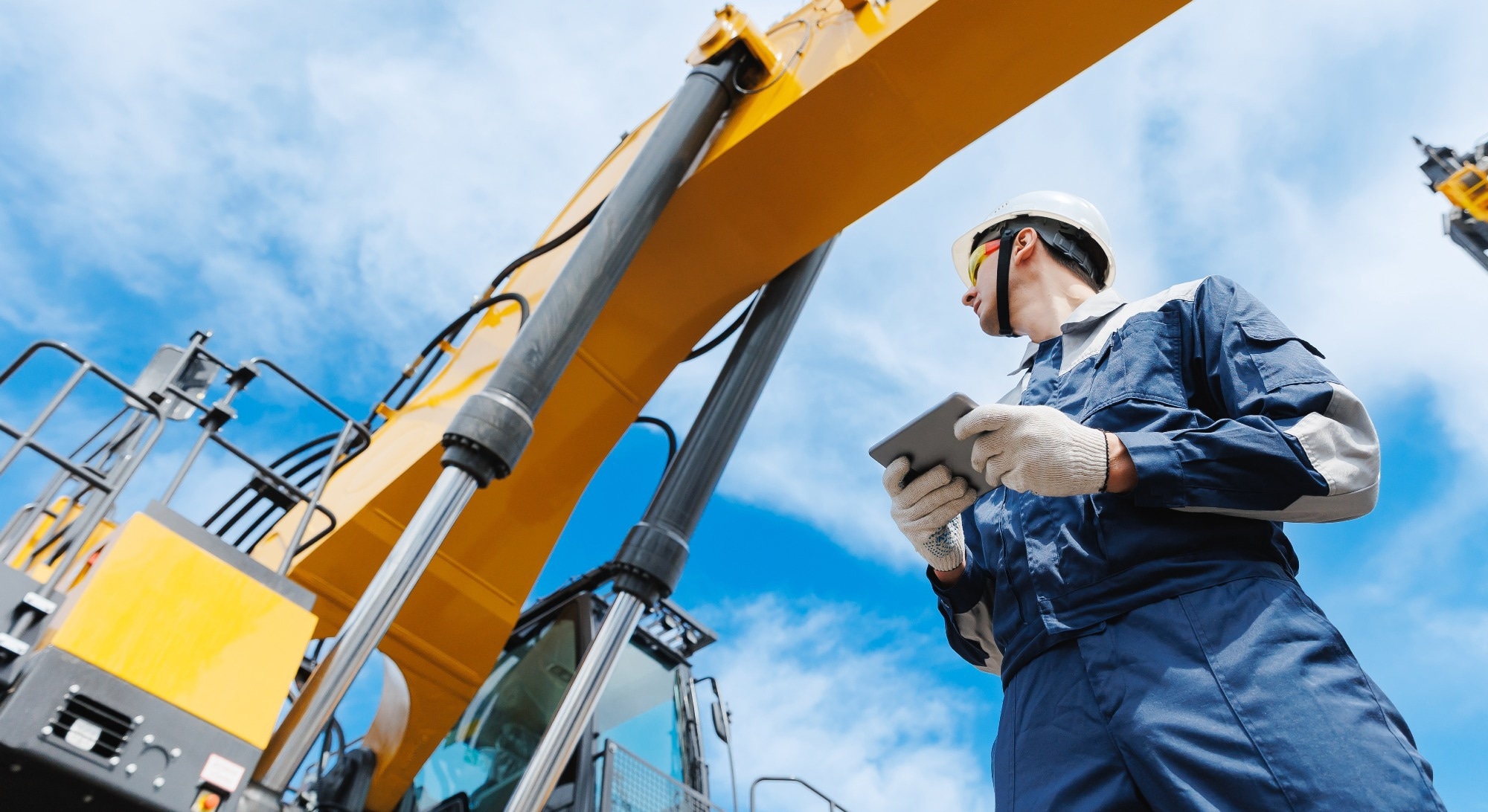
Image Credit: Parilov/Shutterstock.com
According to data from Precedence Research, the global AI in mining market was valued at approximately USD 35.47 billion in 2025. It is currently projected to reach USD 828.33 billion by 2034, representing a compound annual growth rate (CAGR) of 41.92 %.1 This significant capital inflow reflects a shift in strategy: miners are no longer simply seeking more land; they are seeking more data.
Primary Application Areas of AI in Mining
The integration of AI in mining is most visible across three primary stages of the value chain: exploration, extraction, and processing.
Mineral exploration
Exploration has historically been the industry's most significant financial gamble, with traditional discovery rates for world-class deposits sitting below 1 %. AI is narrowing these odds. Machine learning models now analyze decades of geological data, including seismic surveys, satellite imagery, and soil geochemistry, to identify subsurface anomalies that human interpretation often misses.
KoBold Metals recently utilized its proprietary AI platform to advance the Mingomba copper project in Zambia. By processing vast datasets, the company identified what is expected to be one of the highest-grade copper mines discovered in decades, significantly shortening the exploration timeline.2 The startup, backed by investors such as Bill Gates and Jeff Bezos, raised $537 million in early 2025, bringing its valuation to nearly $3 billion.3
Similarly, Earth AI, a California-based exploration company, operates a vertically integrated platform that uses predictive analytics and proprietary hardware to discover battery metals. The company has reported a 75 % success rate in identifying new prospectivity for minerals such as indium, nickel, and palladium, dramatically outperforming traditional methods that often rely on trial-and-error drilling.4
Extraction and autonomous operations
In the extraction phase, the focus has shifted toward the "connected mine". Throughout 2025, autonomous haulage systems (AHS) became standard in large-scale open-pit operations. Companies such as Rio Tinto and BHP have expanded their fleets of driverless trucks, which use LiDAR and AI-driven path-planning to operate 24/7.
Read More: Using Artificial Intelligence for Mineral Processing and Exploration
Rio Tinto’s "Mine of the Future" program in Western Australia's Pilbara region remains a primary case study. Central to this is AutoHaul, the world's first fully autonomous long-distance heavy-haul rail network, where AI systems control locomotives hauling iron ore across 1700 kilometers of track. Beyond haulage, AI-enabled drilling rigs now adjust their pressure and angle in real-time based on rock hardness.
Caterpillar has deployed its MineStar platform at sites like the Bloom Lake Mine to automate drilling and hauling, improving precision and reducing mechanical wear.5
Processing and ore sorting
Downstream, AI-driven computer vision is used to assess ore quality on conveyor belts. Modern AI sensors distinguish between high-grade ore and waste in milliseconds, allowing for "bulk ore sorting" before the material reaches the mill.
At BHP’s Escondida mine in Chile, the implementation of Azure Machine Learning (in partnership with Microsoft) has provided real-time recommendations for concentrator operations. This deployment generated an operational uplift of $18.9 million by improving copper recovery rates.6 To consolidate these gains, BHP launched its first Industry AI Hub in Singapore in May 2025 to develop predictive analytics for its entire global supply chain.1
Recent Developments and Regional Landscape of AI in Mining
The year 2025 marked several landmark developments. Shortly after BHP's hub launch, in June 2025, the Indian Ministry of Mines successfully completed its first AI-driven mineral exploration project in Rajasthan 1
From a regional perspective, the Asia-Pacific region continues to lead the market, holding a 40 % share as of early 2026. This is driven by China's massive investment in "smart coal mines" and Australia's leadership in autonomous extraction.
China produces more than 50 % of 18 minerals globally and holds significant reserves of 35 others.1 However, North America is the fastest-growing region, spurred by the urgent need for lithium, cobalt, and nickel for the energy transition and a high density of AI software providers.1,7
Want to save for later? Click here.
Key Commercial Players
The market is currently defined by a mix of traditional equipment manufacturers (OEMs) and specialized software firms:
- Equipment Manufacturers: Caterpillar Inc. and Komatsu Ltd. provide hardware-software integration for autonomous fleets. Sandvik AB and Hexagon AB focus on underground automation and digital twins. Hexagon’s HxGN MineOperate uses AI for real-time fleet analytics, while Sandvik’s AutoMine system leads in autonomous underground vehicle operation.8
- Large-Scale Miners: Tata Steel and Anglo American have integrated AI into core operations. Anglo American has deployed AI-enabled digital twins at its Quellaveco mine in Peru to optimize water usage and predict operational bottlenecks.1
Market Trends and Outlook for AI in Mining
As we look toward the 2030s, three trends are defining the market:
1. The Proliferation of the Digital Twin
Miners are increasingly creating virtual replicas of physical mines. These models are fed real-time data from sensors across the site, allowing engineers to run simulations. Newmont has implemented metallurgical digital twins at its Lihir gold plant using Metso's Geminex technology, enabling real-time process optimization and cost reduction.1
2. ESG and Sustainability Monitoring
Environmental compliance is no longer a secondary concern. AI is now the primary tool for monitoring tailings dam stability and carbon emissions. By 2030, AI-driven energy management is expected to be the standard for mining companies to reach "Net Zero" targets, as algorithms optimize energy loads between renewable grids and onsite storage.6
3. The Skills Gap and Workforce Evolution
Although AI reduces manual labor in hazardous areas, it has created a surge in demand for data scientists. Meeting net-zero targets is expected to require 700,000 new workers in the critical minerals sector by 2030 - an 88 % increase from 2022 levels.7 Companies like KoBold Metals are already hiring data scientists from big-tech backgrounds to work alongside traditional geoscientists.3
Challenges to Adoption
Despite growth, hurdles remain. The high initial capital expenditure (CapEx) required for AI infrastructure can be prohibitive for junior miners. Data silos, where information from different machines cannot be integrated, also hinder full-scale automation. Finally, cybersecurity has become a major risk; as mines become more connected, they become more vulnerable to digital disruptions, necessitating investment in industrial cyber defense.1, 2
Final Thoughts
The transition of mining from manual, experience-based decision-making to data-led, autonomous operations is a necessity for companies competing in a low-grade, high-cost environment. With a market trajectory heading toward USD 828 billion by 2034, AI is redefining the fundamental economics of the industry, turning mining into a high-tech discipline that is safer, more efficient, and increasingly aligned with global sustainability goals.
References and Further Reading
- Precedence Research. (2025). AI in Mining Market Size to Hit USD 828.33 Billion by 2034. [Online] Available at: https://www.precedenceresearch.com/ai-in-mining-market
- Metal Tech News. (2025). KoBold's AI prospecting secures billions. [Online] Available at: https://www.metaltechnews.com/story/2025/01/08/mining-tech/kobolds-ai-prospecting-secures-billions/2092.html
- Mining Technology. (2025). AI-powered mining startup KoBold Metals secures $537m in funding. [Online] Available at: https://www.mining-technology.com/ai/ai-kobold-537m-funding/
- AZoMining. (2025). The Role of AI in Mineral Exploration. [Online] Available at: https://www.azomining.com/Article.aspx?ArticleID=1882
- Omdena. (2025). AI in Mining: Top 24 Global Mining Companies. [Online] Available at: https://www.omdena.com/blog/top-24-global-mining-companies-driving-ai-transformation-in-2025
- Farmonaut. (2025). Case Studies Of AI In Mining: 7 Top Innovations 2025. [Online] Available at: https://farmonaut.com/mining/case-studies-of-ai-in-mining-7-top-innovations-2025
- Microsoft Industry Blogs. (2025). Driving digital transformation in mining with AI and adaptive cloud. [Online] Available at: https://www.microsoft.com/en-us/industry/blog/energy-and-resources/mining/2025/05/29/embracing-ai-and-adaptive-cloud-to-drive-digital-transformation-in-mining/
- CSG Talent. (2025). AI in Mining: Transforming the Future of Resource Extraction. [Online] Available at: https://www.csgtalent.com/insights/blog/ai-mining-transforming-future-resource-extraction/
Disclaimer: The views expressed here are those of the author expressed in their private capacity and do not necessarily represent the views of AZoM.com Limited T/A AZoNetwork the owner and operator of this website. This disclaimer forms part of the Terms and conditions of use of this website.