Forged deep within the Earth yet shaped by modern disruption, the natural diamond market is at a major crossroads. Once defined by geological rarity and steady demand, it is now being reshaped by lab-grown alternatives, shifting consumer values, geopolitical pressures, and evolving supply chains. This article explores how these forces are redefining the value, desirability, and future trajectory of natural diamonds in a rapidly changing global market.
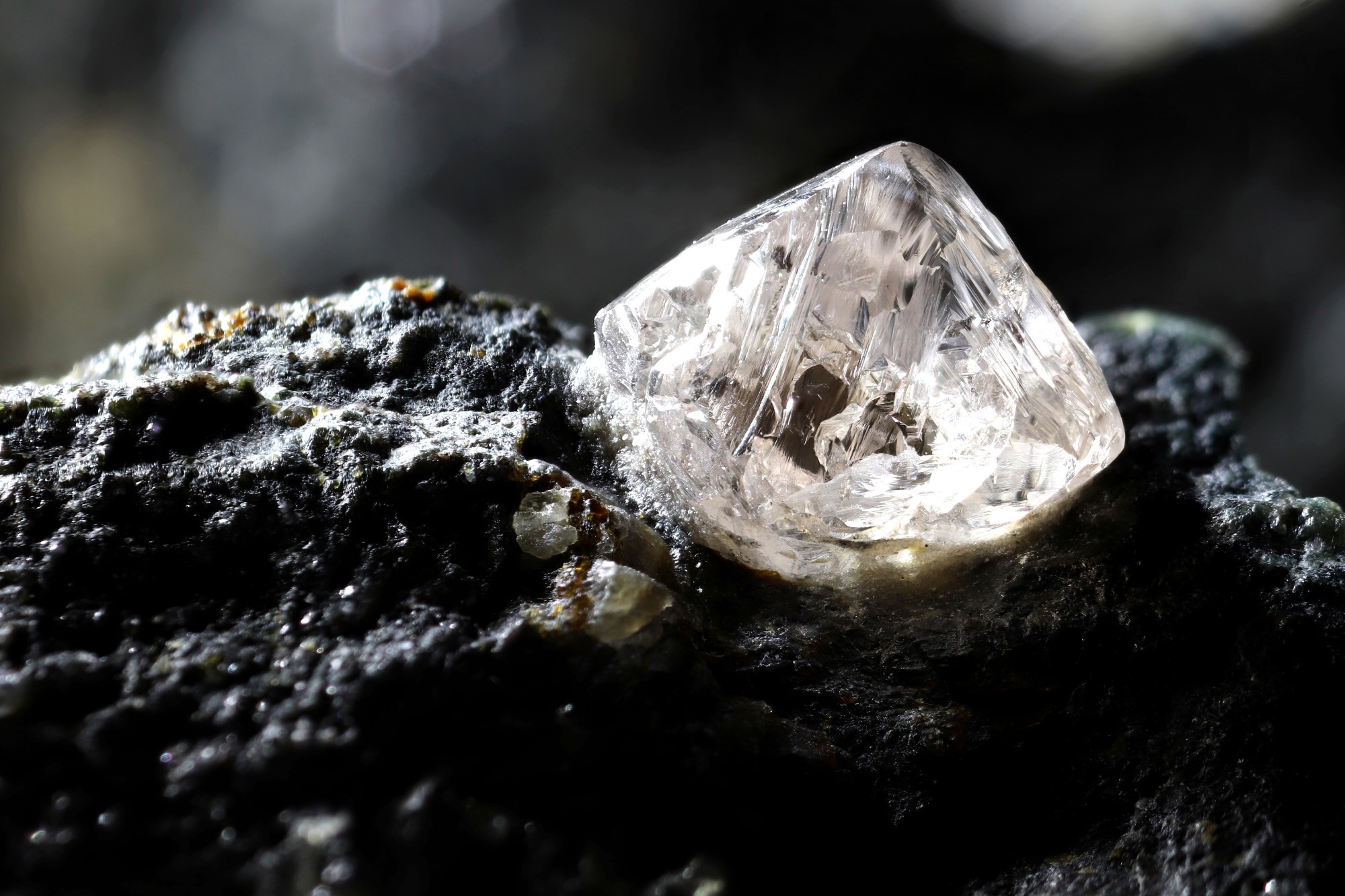
Image Credit: Bjoern Wylezich/Shutterstock.com
What is Natural Diamond Mining?
Natural diamond mining involves the extraction of diamonds formed beneath the Earth’s surface over billions of years under high-temperature and high-pressure conditions.
Found in lamproite and kimberlite pipes, as well as river- and erosion-carried alluvial deposits, these diamonds are mined using various methods, including underground mining, open-pit mining, and alluvial mining, depending on the deposit type.
While natural diamonds are mainly utilized in jewelry, they are also used in industrial applications in drilling, cutting, and electronics due to their thermal conductivity and extreme hardness.
The Diamond Market
Historically, mining supply balanced natural diamond prices and demand, but the supply chain was disrupted and several engagements and marriages were postponed during the coronavirus disease 2019 (COVID-19) pandemic.1,2
Yet, many at-home individuals splurged on self-care gifts, and diamond prices rose unexpectedly. Later, diamond prices fell as supply chains stabilized and the traditional three-year engagement-to-marriage cycle returned.
The rapid adoption of lab-grown diamonds (LGDs) has significantly reduced natural stone prices, as many consumers prefer affordability. Simultaneously, heightened environmental, social, and governance (ESG) expectations are increasing demand for enhanced sourcing traceability.
Finally, sanctions on Russian diamonds are reshaping global supply dynamics. These factors are affecting the market environment of limited natural-diamond supply growth, shifts in financing, and other geopolitical tensions.1,2
Current State of the Diamond Market
The diamond industry, primarily a business-to-consumer (B2C) market, is more vulnerable to changing customer preferences and inflationary pressures than other commodities. Supply-chain constraints in late 2021, compounded by COVID-19, increased rough-diamond prices. This benefited upstream producers while pressuring downstream players.
High prices raised financing costs for consumers and retailers, and overseas cutting centers faced margin squeeze and heavy debt.
Diamond prices peaked in February 2022 and then declined sharply, prompting upstream producers to stockpile rough stones and cancel sales promotions to stabilize prices once midstream inventories were decreased. Diamond production is also affected by LGDs, which have almost similar physical properties and cost significantly less than natural stones, almost 80 % lower in many instances.2
In 2023, the natural diamond industry faced challenges, including rising LGD demand in countries such as the United States (US) and macroeconomic headwinds.
The natural diamond industry is influenced by various short- and long-term drivers. In the short term, market performance depends on midstream inventory levels and retailers’ restocking behavior around major selling periods.
Fundamental supply and demand dynamics influence long-term prospects. Although near-term demand remains uncertain, the industry’s long-term outlook is more favorable due to limited primary supply, improving global affordability, and strategic initiatives aimed to strengthen the natural diamonds’ appeal.
The natural diamond market has also been impacted by recent US tariffs on India, the world’s largest diamond-processing hub, which have increased costs for diamonds polished and cut there before being exported to the US. Smaller producers like Burgundy Diamond Mines, which owns the Ekati mine in Canada, are facing losses due to these tariffs.3-4
The LGD Factor
LGDs possess the same physical, chemical, and optical properties as natural diamonds, but are synthesized in a controlled laboratory environment using the chemical vapor deposition (CVD) method for gem-quality synthetic diamond production and high-pressure high-temperature (HPHT) for industrial applications.
In January 2025, natural diamonds were 26 % cheaper in US shops than two years earlier, a notable decline amid high inflation. However, LGD prices have fallen sharply by 74 % compared to 2020 prices.
Across over 2,000 US stores, the average one-carat natural diamond fell from $6,819 in May 2022 to $4,997 in December 2024, while LGDs dropped from $3,410 in January 2020 to $892 in December 2024.
The decline in natural diamond demand is primarily driven by the emergence of LGDs, which can now be produced in hours using plasma reactors, compared with billions of years for natural stones. Their provenance is easier to trace, making them more ethically attractive to millennial buyers. Synthetic diamonds now account for 45 % of the bridal jewelry market, challenging traditional producers like De Beers.3,5
Currently, the LGD market is concentrated in the US, accounting for about 75 % of retail sales. Strong value perception among younger consumers has boosted demand, particularly in the bridal segment, where LGDs now represent over 20 % of engagement ring value.
Retail prices will decline further, enhancing differentiation from natural diamonds. Price trends and detectability will influence retailer margins, promotional incentives, and consumer perceptions of LGD desirability compared to natural stones.3
Click here to download a free PDF copy of this page
The Future of the Diamond Market
Global primary natural diamond supply will decline by about 1 % compound annual growth rate (CAGR) over the next decade as older mines near the end of their productive lives.
Limited exploration spending, few major discoveries, and long development timelines restrict new supply growth.
Recycled and artisanal diamonds will contribute minimally, maintaining a limited overall supply and supporting long-term industry stability.
Long-term natural diamond demand is affected by desirability and affordability compared with other jewelry, experiences, or discretionary goods.3
Rising global gross domestic product (GDP), wealth, and personal disposable income (PDI) will improve overall affordability. Yet, desirability faces uncertainty due to the growth of branded diamond jewelry, LGD demand over the next decade, and the preference of consumers for diamonds versus other gemstones, gold, or alternative discretionary spending, specifically among Asia’s expanding middle class.
Across these dynamics, annual demand growth is projected at 2 %–4 % CAGR, supported by sustained US demand, differentiated positioning from LGDs, moderate growth in China, and strong growth in India.
Five key developments will shape the natural diamond market in the future, including customer behavioral shifts, ESG traceability, competition from LGDs, natural diamond supply disruptions, and financial regulations and financing practice.2,3
Conclusion
The natural diamond market faces a complex future shaped by limited supply growth, rising LGD competition, evolving consumer preferences, and regulatory challenges.
While short-term demand remains uncertain, long-term prospects are supported by constrained primary supply, increasing global affordability, and initiatives aimed at enhancing the desirability and traceability of natural diamonds.
Strategic adaptation to these trends will be essential for industry players to maintain market relevance and sustain growth.
References and Further Reading
- Natural Diamond Mining Market [Online] Available at https://www.marketresearchstore.com/market-insights/natural-diamond-mining-market-830015 (Accessed on 16 December 2025)
- The diamond industry is at an inflection point [Online] Available at https://www.mckinsey.com/industries/metals-and-mining/our-insights/the-diamond-industry-is-at-an-inflection-point (Accessed on 16 December 2025)
- The Future of the Natural Diamond Industry [Online] Available at https://www.bcg.com/publications/2024/future-of-natural-diamond-industry (Accessed on 16 December 2025)
- Stevis-Gridneff, M. (2025) When Diamonds Are Not Forever [Online] Available at https://www.nytimes.com/2025/12/09/world/canada/canada-northwest-territories-diamond-mines.html (Accessed on 16 December 2025)
- Tapper, J. (2025) Diamonds lose their sparkle as prices come crashing down [Online] Available at https://www.theguardian.com/business/2025/jan/25/diamonds-lose-their-sparkle-as-prices-come-crashing-down (Accessed on 16 December 2025)
Disclaimer: The views expressed here are those of the author expressed in their private capacity and do not necessarily represent the views of AZoM.com Limited T/A AZoNetwork the owner and operator of this website. This disclaimer forms part of the Terms and conditions of use of this website.