The global transition toward renewable energy technologies has significantly increased the demand for minerals like lithium, cobalt, and rare earth elements. As primary ore grades decline and new mining projects face long permitting delays, the industry is re-evaluating legacy mine tailings as potential secondary resources. This approach involves reprocessing waste materials that were discarded during earlier mining operations when certain minerals were not economically valued. Mining companies aim to recover these materials while also addressing the environmental risks associated with long-term waste storage by utilizing modern extraction technologies.
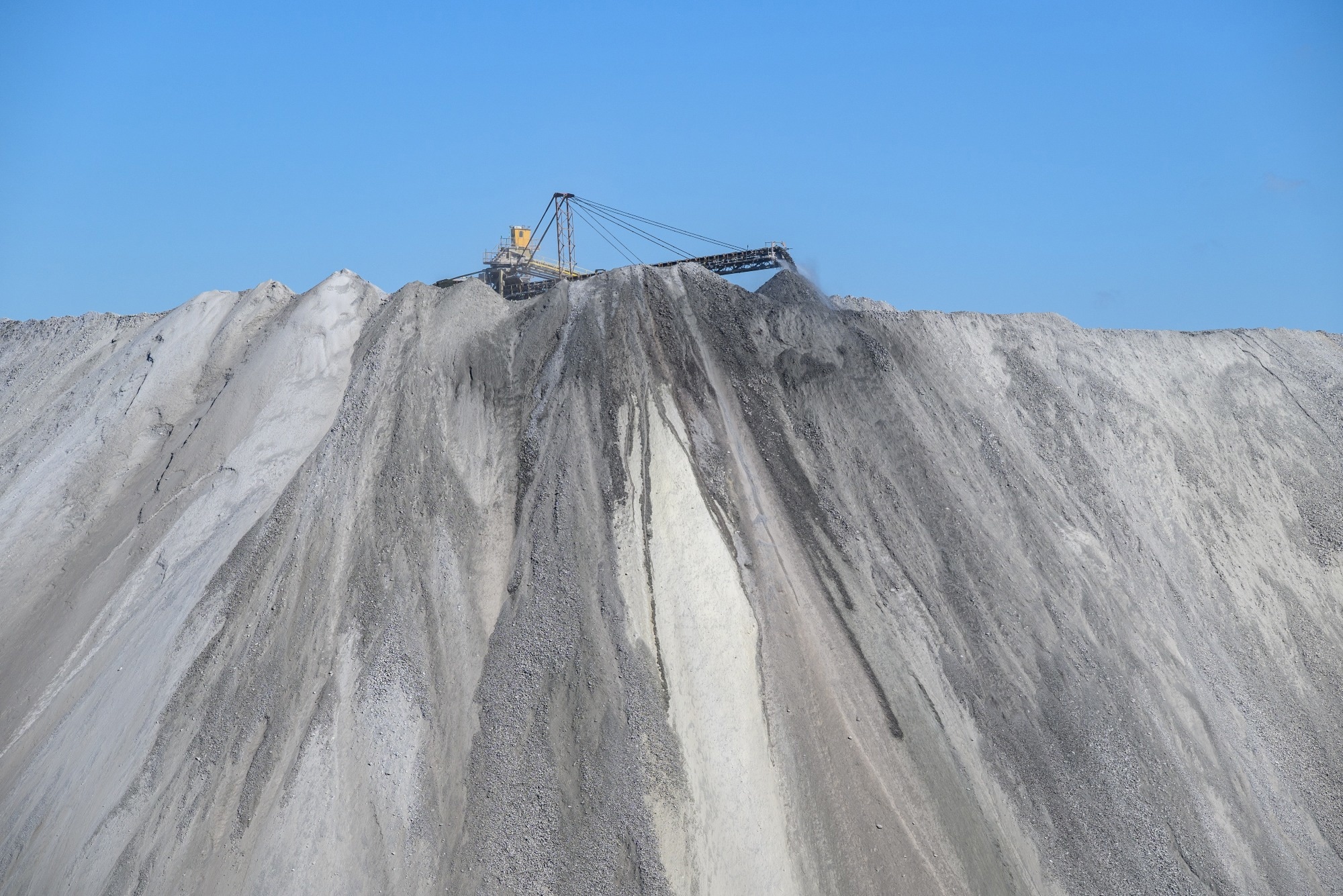
Image Credit: Mirko Kuzmanovic/Shutterstock.com
The Scale of the Opportunity
The potential for mineral recovery from waste is significant, particularly in established mining jurisdictions like the United States. According to a 2025 study, the US could meet a measurable portion of its critical mineral needs by reprocessing mine waste. The study indicates that while recovery percentages for 15 specific elements currently sit at less than 1 %, for 11 other elements, including lithium, the potential recovery from waste ranges between 1 % and 10 % of total national demand.1
The United States Geological Survey (USGS) has identified mine waste as a viable "secondary" resource that can bolster domestic supply chains.2 This is particularly relevant for minerals that were not the primary focus of historical mining operations. For example, porphyry copper deposits, which have been mined for decades across the American Southwest, often contain significant quantities of rhenium (Re), tellurium (Te), and selenium (Se). A recent Scientific Investigations Report suggests that the endowments of these minerals in porphyry copper waste are comparable to some of the world’s largest primary deposits.3
Regulatory and Policy Frameworks
Significant policy changes in both the United States and the European Union are accelerating the shift toward waste reprocessing. In July 2025, the U.S. Department of the Interior issued Secretary's Order 3436, which focuses on "unlocking" critical minerals from mine waste. This order aims to reduce "red tape" and provides incentives for the private sector to undertake reclamation projects that include mineral recovery.4 By streamlining the permitting process for waste reprocessing, the order seeks to restore domestic production dominance while cleaning up legacy sites.
Similarly, the European Union has implemented the Critical Raw Materials Act (CRMA), which established a framework for securing sustainable supplies. A key component of this regulation is the target for the Union's recycling capacity to produce at least 25 % of its annual consumption of strategic raw materials by 2030.5 This benchmark explicitly includes the recovery of minerals from extractive waste, compelling operators to investigate the potential of their tailing facilities as part of their environmental and operational strategies.
Technical Breakthroughs in Recovery
The viability of "mining the waste" depends on the development of specialized extraction techniques, as the concentrations of minerals in tailings are often lower than in primary ores. Modern research is focusing on hydrometallurgy and bio-leaching to overcome these challenges.
A 2025 review in the Journal of Sustainable Metallurgy highlights advances in acid leaching and solvent extraction specifically designed for tailings.6 These processes allow for the recovery of REEs, cobalt, and nickel from fine-grained waste materials that were previously considered unprocessable. Bio-leaching, which utilizes microorganisms to dissolve and concentrate metals, is also gaining traction as a lower-energy alternative to traditional smelting, particularly for recovering metals from sulfide-rich tailings.6
Beyond chemical extraction, the physical management of waste is evolving. The Perpetua Stibnite project provides a modern case study in this integrated approach. The project involves the reprocessing of historical tailings to recover antimony, a critical mineral used in high-capacity batteries and flame retardants, alongside gold.7 By reprocessing these legacy materials, the project not only secures mineral supply but also funds the restoration of a site that was abandoned decades ago.
Economic and Environmental Considerations
Reprocessing tailings offers a distinct economic advantage over greenfield mining projects (new mines on undisturbed land). According to analysis by GLOBSEC, reprocessing projects can benefit from 40 % to 50 % lower capital expenditure (capex) compared to traditional mining.8 This is because the material has already been mined, crushed, and ground, eliminating the most energy-intensive and expensive stages of the mining cycle.
The environmental benefits of this approach are twofold. First, it reduces the volume of waste stored in tailing dams, which are prone to physical failure. Second, it can mitigate the chemical risks of acid mine drainage.
Many legacy tailings contain sulfides that produce sulfuric acid when exposed to air and water. Projects like the Cobalt Blue initiative in Australia demonstrate how extracting cobalt and removing elemental sulfur from tailings can neutralize the environmental threat while producing high-value battery materials.8
Meeting the Critical Minerals Demand
The urgency of these efforts is highlighted by projections from the International Energy Agency (IEA). To meet the goals of the Paris Agreement, the IEA estimates that total mineral demand for clean energy technologies will need to quadruple by 2040.9
Relying solely on new mining projects is risky, as the average time to bring a new mine from discovery to production is approximately 16 years. In contrast, waste reprocessing projects utilize already-disturbed land with known mineralogies, offering a faster route to market.
Click here to download a free PDF copy of this page
Conclusion
Expanding mineral supplies for energy infrastructure involves diversifying beyond traditional primary extraction. Research from the USGS and recent industrial trials suggest that existing waste deposits contain significant concentrations of critical minerals. Implementation of these recovery projects requires ongoing technological advancement and specific policy frameworks.
Re-processing historic mining waste provides a means to increase resource efficiency and support environmental remediation. What was formerly categorized as waste is now being integrated into industrial mineral supply chains as a source of raw materials.
References and Further Reading
- Hodgson, C. (2025, August 21). US could meet critical minerals needs from mining waste, study finds. Financial Times. https://www.ft.com/content/29cd7909-a842-45d4-9009-e8891303a99b
- Piatak, N., White, S.J., Hayes, S., and Seal, R.R., II. (2025). Critical minerals in mine waste: U.S. Geological Survey Fact Sheet 2025–3026. https://doi.org/10.3133/fs20253026
- U.S. Geological Survey. (2025). Mine waste as a potential source of critical minerals and other commodities: Examples from the Four Corners states, USA. Scientific Investigations Report. https://pubs.usgs.gov/publication/70271512
- U.S. Department of the Interior. (2025, July 23). Secretary's Order 3436: Unlocking critical and strategic minerals from mine waste, cutting red tape, and restoring American dominance. https://www.doi.gov/sites/default/files/document_secretarys_orders/so-3436-critical-and-strategic-minerals-from-mine-waste-2025-07-23-final_signed_508.pdf
- European Parliament and Council. (2024). Regulation (EU) 2024/1252 establishing a framework for ensuring a secure and sustainable supply of critical raw materials. https://eur-lex.europa.eu/eli/reg/2024/1252/oj
- Kursunoglu, S. (2025). "A Review on the Recovery of Critical Metals from Mine and Mineral Processing Tailings: Recent Advances." Journal of Sustainable Metallurgy, 11, pp. 2023–2050. https://doi.org/10.1007/s40831-025-01126-y
- Society for Mining, Metallurgy & Exploration (SME). (2024). Critical Minerals Produced from Alternative Resources. SME Technical Briefing https://www.smenet.org/What-We-Do/Technical-Briefings/Critical-Minerals-Produced-from-Alternative-Resour
- GLOBSEC. (2024, December 20). Finding new supply options for critical materials – processing of mine tailings. https://www.globsec.org/what-we-do/press-releases/finding-new-supply-options-critical-materials-processing-mine-tailings
- International Energy Agency (IEA). (2021). The Role of Critical Minerals in Clean Energy Transitions. World Energy Outlook Special Report. https://www.iea.org/reports/the-role-of-critical-minerals-in-clean-energy-transitions
Disclaimer: The views expressed here are those of the author expressed in their private capacity and do not necessarily represent the views of AZoM.com Limited T/A AZoNetwork the owner and operator of this website. This disclaimer forms part of the Terms and conditions of use of this website.