Mining is a major driver of global deforestation, as it frequently involves clearing large areas of native forest to extract minerals and build supporting infrastructure.1 This loss of forest cover severely threatens biodiversity and disrupts vital ecosystems. In response, scientists and governments worldwide have developed strategies to mitigate the impact of mining on forests. These measures aim to strike a balance between meeting the demand for mineral resources and protecting the essential ecological functions that forests provide.
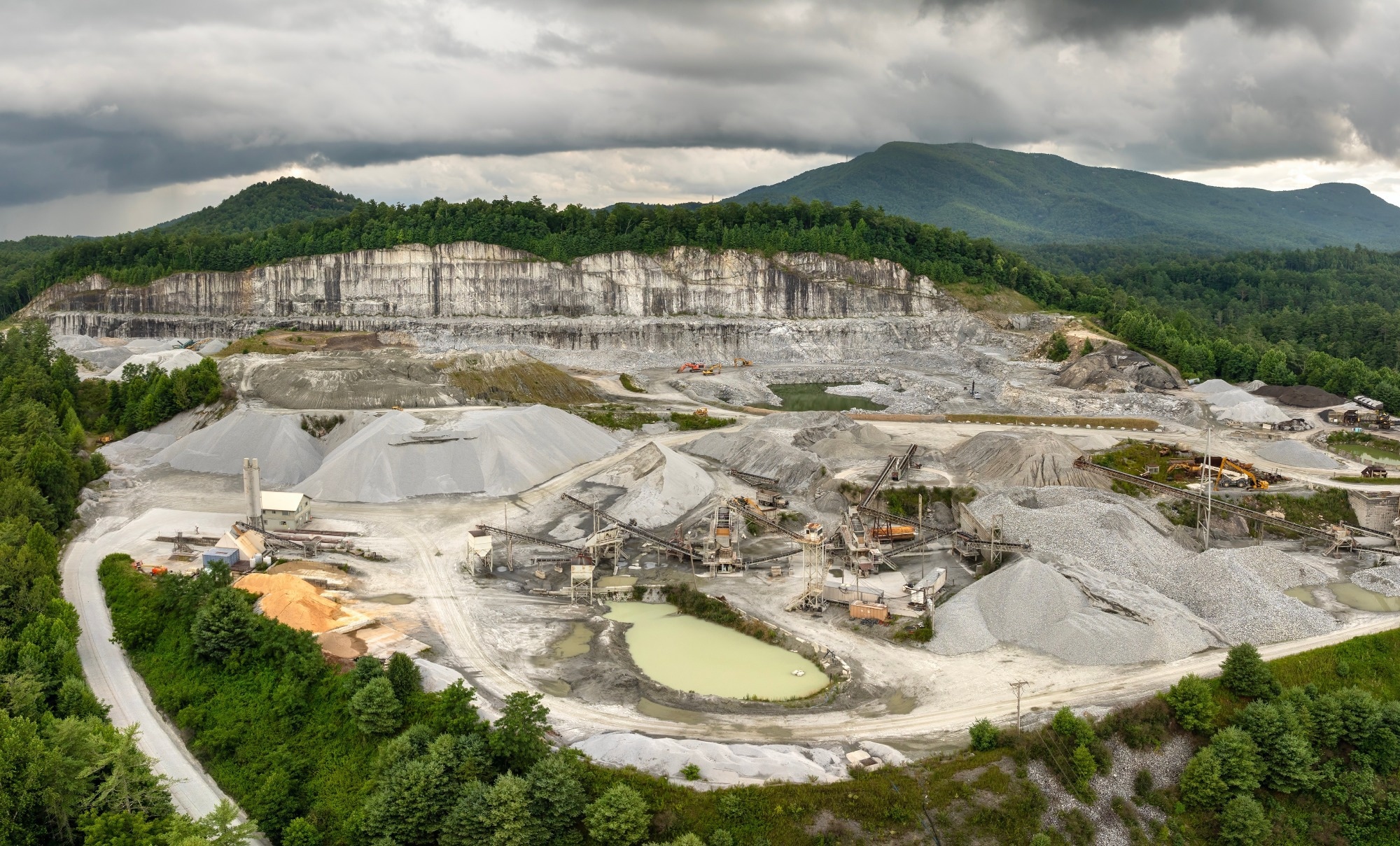
Image Credit: Bilanol/Shutterstock.com
The Hidden Scale of Mining-Induced Deforestation
Although mines occupy less than 1 % of Earth's land surface, mining significantly alters landscapes far beyond the extraction site.2 It is a major driver of deforestation, as forests are cleared not just to access minerals but also to construct supporting infrastructure. For instance, sites located deep within remote forests require the development of roads, settlements, and other infrastructure. This expansion leads to further land clearing and environmental disruption, resulting in widespread habitat loss and threatening biodiversity.
Mining drives deforestation well beyond the boundaries of mining leases.3 Land-use displacement, urban expansion, growing supply chains, and pollution from mining cause forest loss many kilometres from the original site. In some cases, deforestation extends beyond lease boundaries by more than 10 kilometres.
Since the beginning of the century, mining has surged by 52 % to meet the rising demand for coal, iron, and other minerals, often at the expense of forests and the communities that depend on them.4 Analysis of satellite data shows mining is increasingly encroaching on forests, especially tropical rainforests and protected areas.
A recent study produced a comprehensive global inventory of 236,028 mining areas, enabling researchers to quantify mining-related deforestation and the resulting forest carbon emissions from 2001 to 2023.5 The findings show deforestation from mining is two to three times higher than previously estimated, with 19,765 km² of forest lost and 0.75 petagrams of CO2 emissions during the study period. Notably, more than half of this loss is linked to informal or unrecorded mining operations.
These results reveal that mining’s impact on deforestation and climate change has been greatly underestimated. It is clear that there is an urgent need for improved monitoring and stricter regulation to protect forests and the climate.
Strategies to Reduce Deforestation in Mining
Promoting responsible mining requires strong standards and enforcement. Researchers and policymakers have suggested that governments implement and enforce regulations to ensure mining is environmentally responsible and does not cause deforestation.
They have identified several strategies to minimize mining-induced deforestation while supporting sustainable development.4,6 These include:
- Demand management: Managing demand for mined materials is crucial. Key strategies include designing products and systems that use fewer critical minerals, extending product lifespans through durability and repair, and expanding recycling efforts. For example, innovations in battery design have already halved projected cobalt demand, while recycling is expected to supply over half of some minerals by 2050.
- Careful site selection: Before mining begins, comprehensive site assessments should identify ecologically valuable or vulnerable areas, including endangered species, water sources, and intact forests. Avoiding critical habitats and regions with high biodiversity reduces environmental impact. Engaging local communities and Indigenous Peoples in site selection ensures mining does not threaten culturally significant or subsistence areas and promotes sustainable outcomes.
- Managing excavation: Mining companies should adopt best practices and technologies to limit their footprint, such as restricting excavation areas, staging development for phased restoration, and employing precision techniques. Effective waste management, runoff control, and water efficiency all contribute to reducing pollution. Regular monitoring and contingency plans further protect surrounding environments.
- Reforestation: After mining, companies should restore land to its original or improved state by replacing topsoil, replanting native vegetation, and restoring waterways. Long-term monitoring ensures success. Involving local communities in restoration fosters stewardship and employment. Many regions now require restoration plans before mining begins.
- Enforcing regulatory frameworks: Governments must rigorously enforce environmental laws and require thorough Environmental Impact Assessments (EIAs) that assess direct, indirect, and cumulative impacts. Public participation, regular audits, and independent oversight are essential for transparency and compliance. Penalties must deter violations, while access to real-time alerts and satellite data enables rapid enforcement and empowers communities.
- Collaborations: Collaboration among governments, researchers, Non-Governmental Organisations (NGOs), and mining companies is essential to prevent encroachment into protected areas. Coordinated action could sustainably manage future mineral demand without increasing deforestation.
By integrating these approaches, mining operations can significantly reduce their impact on forests and contribute to long-term environmental sustainability.
Research Focus and Challenges
Current research focuses on the direct consequences of mining, including substantial forest loss and habitat fragmentation, as well as indirect effects from infrastructure and supply chains.
Effective conservation planning requires a comprehensive understanding of these deforestation pathways and their impacts on forest ecosystems.7
Click here to download a free PDF copy of this page
Technological advances can expand mining’s footprint and offer new tools to reduce deforestation.
While new technologies can reduce impacts, they can also enable mining in previously inaccessible areas, potentially increasing deforestation risk.
Environment-friendly extraction methods, improved processing, and effective land rehabilitation practices are essential to minimizing forest loss.8 However, challenges remain in scaling up these solutions.
Assessing mining’s impact on deforestation requires comprehensive scenario modelling that captures direct forest loss and indirect and cumulative effects from related infrastructure and supply chains. Limited information on the long-term, cumulative, and indirect effects of mining hampers strategic planning and effective mitigation.
International institutions can play a crucial role by funding research, establishing standards, and guiding policies that strike a balance between mining and forest conservation. Their efforts must translate into practical actions on the ground to ensure mining does not drive further deforestation.
References and Further Reading
- Giljum S, et al. A pantropical assessment of deforestation caused by industrial mining. Proc Natl Acad Sci. 2022;119(38):e2118273119. doi: 10.1073/pnas.2118273119.
- Siqueira-Gay J, et al. Exploring potential impacts of mining on forest loss and fragmentation within a biodiverse region of Brazil's northeastern Amazon. Resour Policy. 2020; 67, 101662. https://doi.org/10.1016/j.resourpol.2020.101662
- Sonter L J, et al. Mining drives extensive deforestation in the Brazilian Amazon. Nature Communications. 2017; 8, 1013. https://doi.org/10.1038/s41467-017-00557-w
- Stanimirova R, et al. Mining Is Increasingly Pushing into Critical Rainforests and Protected Areas. World Resources Institute. 2024. Available at: https://www.wri.org/insights/how-mining-impacts-forests
- Zhang X, et al. Overlooked deforestation from global mining activities in the 21st century. Nat Commun.2025; https://doi.org/10.1038/s41467-025-67501-1
- Sonter LJ, et al. Mining and biodiversity: Key issues and research needs in conservation science. Proc Biol Sci. 2018; 285(1892):20181926. https://doi.org/10.1098/rspb.2018.1926
- Buthelezi MNM, et al. Exploring forest rehabilitation and restoration: A brief systematic review. Trees, For People. 2025; 20, 100898. https://doi.org/10.1016/j.tfp.2025.100898
- Wang L, et al. Transforming forest management through rewilding: Enhancing biodiversity, resilience, and biosphere sustainability under global change. One Earth. 2025; 8(3), 101195. https://doi.org/10.1016/j.oneear.2025.101195
Disclaimer: The views expressed here are those of the author expressed in their private capacity and do not necessarily represent the views of AZoM.com Limited T/A AZoNetwork the owner and operator of this website. This disclaimer forms part of the Terms and conditions of use of this website.