Inside the Mining Track
Plumes: A Different Kind of Damage
The Baseline Problem
Broader Ecological Concerns of Deep-Sea Mining
Deep-Sea Mining Regulatory Picture
What the 37 % Tells Us and What It Doesn't
References and Further Reading
In October 2022, a commercial-scale prototype mining vehicle crawled across roughly 80 kilometers of Pacific Ocean floor at a depth of 4,280 meters, vacuuming up over 3,000 tons of polymetallic nodules - potato-sized metal lumps rich in cobalt, nickel, and copper.1 Two months later, scientists collected sediment samples from the tracks left behind. What they found raises serious questions about the ecological cost of commercial-scale nodule extraction.
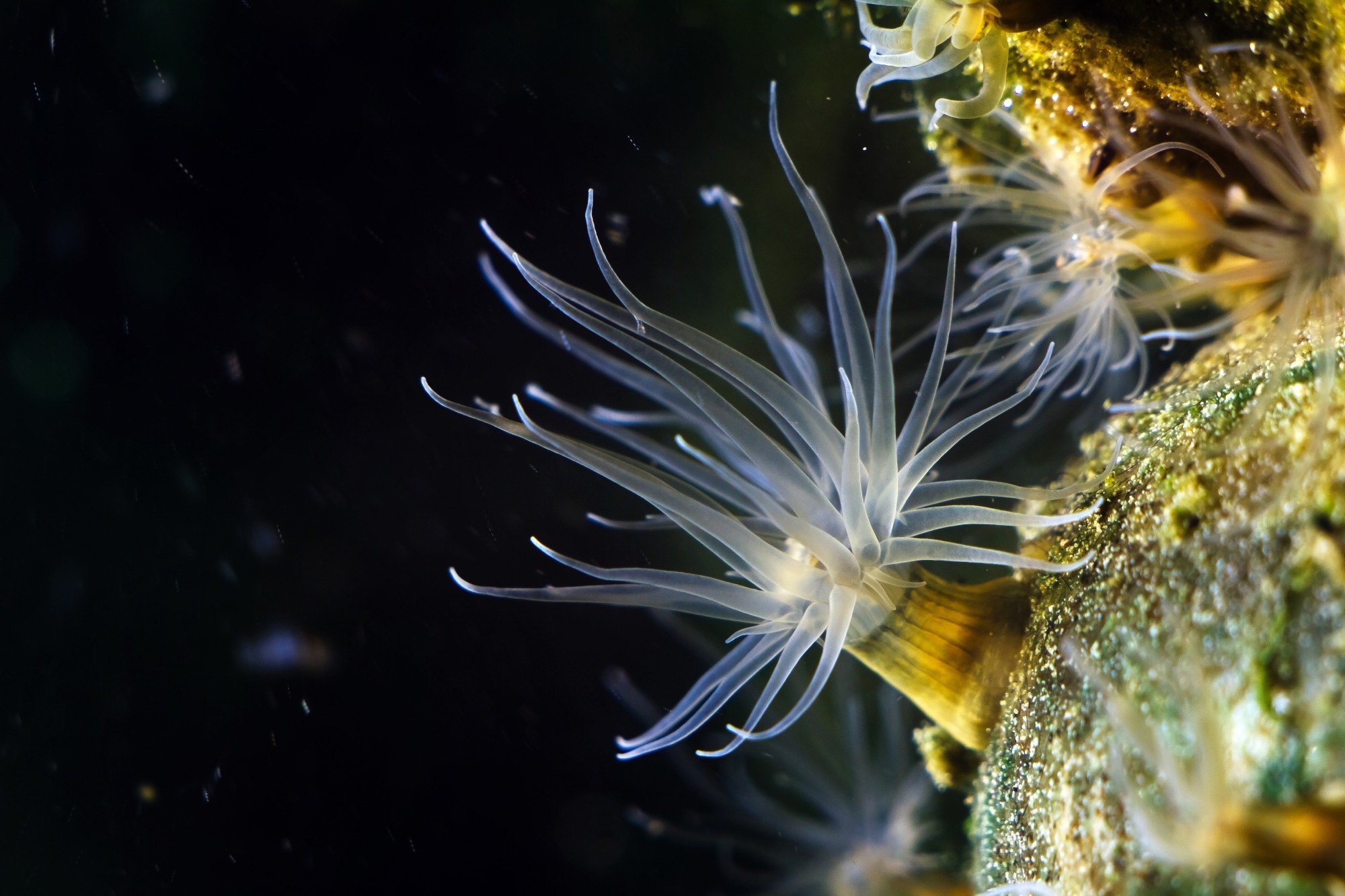
Image Credit: Aleron Val/Shutterstock.com
A study published in December 2025 in Nature Ecology & Evolution by Stewart et al. documented the ecological aftermath of that trial, conducted by Nauru Ocean Resources Inc. (NORI), a subsidiary of The Metals Company (TMC), in the Clarion-Clipperton Zone (CCZ) of the eastern equatorial Pacific. The CCZ holds an estimated 21 billion tons of nodules and is the primary target for the nascent deep-sea mining industry.1 The study recorded a 37 % decline in macrofaunal density within the mining tracks, alongside a 32 % drop in species richness.
Inside the Mining Track
Macrofauna are the small animals, worms, crustaceans, and molluscs that live in or on seafloor sediment, typically 0.3 mm to 2 cm in length. Across 80 sediment cores collected over two years before and two months after the mining test, researchers identified 788 species from over 4,000 individuals. Polychaete worms made up the largest share (44.5 %), followed by peracarid crustaceans (37.5 %) and molluscs (13.7 %). An estimated 90 % of the collected taxa remain undescribed by science.1
The mechanism of harm is relatively direct. Most abyssal macrofauna live in the top 2 cm of sediment, precisely the layer that nodule-mining vehicles strip away. Recovery is the harder question.
Seven years after the smaller DISCOL disturbance experiment in the Peru Basin, polychaete diversity remained reduced.1 A March 2025 study by Jones et al., following up on a 1978 CCZ mining track, found that biological impacts persisted across many organism groups after four decades, though some macrofaunal populations had begun to re-establish.
Physical seafloor disturbance was still visible after 44 years.2
Plumes: A Different Kind of Damage
Nodule mining generates sediment plumes. These are the clouds of particles that spread beyond the collection site. Stewart et al. found no significant change in macrofaunal abundance or species richness at sites 400 meters from the tracks, but community structure had shifted: certain polychaete families associated with disturbed conditions became more dominant, consistent with patterns seen in communities affected by natural turbidity flows. 1
Plume effects extend into the water column. Mining waste discharged into midwater could disrupt food webs by diluting the nutritious natural particles that underpin mesopelagic ecosystems.3 With 53 % of zooplankton taxa at proposed discharge depths classified as particle feeders and 60 % of micronekton as zooplanktivores, the food chain is vulnerable to bottom-up disruption from nutritionally deficient mining particles.
Click here to download a free PDF copy of this page
The Baseline Problem
One of the study's key methodological contributions is its two-year pre-impact baseline. Natural variation in abyssal ecosystems, linked partly to El Niño/Southern Oscillation (ENSO) cycles, is substantial enough to mask or mimic mining impacts without adequate prior data. A 2024 study of a separate CCZ mining trial by Belgian company Global Sea Mineral Resources (GSR) found complex, variable disturbances to meiofaunal communities, illustrating how differently the seafloor's inhabitants respond to the same event.4
Capturing species diversity in the NORI-D area fully would require sampling of over 15,000 individuals or more than 400 sediment cores, roughly 100 square metres.1 The industry is currently nowhere near meeting that standard. Over 5,000 new species to science have already been found in the CCZ, with potentially millions more in deep-ocean environments globally.5
Broader Ecological Concerns of Deep-Sea Mining
Macrofauna are not the only concern. A May 2025 study in Frontiers in Marine Science documented up to 30 cetacean species in the CCZ, including several threatened species, during surveys conducted in August 2023 on NORI-D and adjacent blocks.6
Mining-generated noise poses additional risks. For example, a 2025 study found that deep-sea mining in the CCZ would generate continuous acoustic pollution across multiple depth zones, and only 35 % of taxonomic classes known in the region have been studied for noise sensitivity.7
The ISA has designated nine Areas of Particular Environmental Interest (APEIs) covering roughly 30 % of the CCZ. But research into these areas remains limited, and their ecological representativeness of adjacent mining licence zones is uncertain.8
Read More: Can Deep-Sea Mining Ever Be Sustainable?
Deep-Sea Mining Regulatory Picture
The International Seabed Authority (ISA) has been working on exploitation regulations since 2014, but has not finalized them.
In April 2025, the Trump administration issued an executive order titled "Unleashing America's Offshore Critical Minerals and Resources", directing agencies like NOAA to expedite permitting for deep-sea mining exploration and commercial recovery, including in areas beyond national jurisdiction, under the 1980 Deep Seabed Hard Mineral Resources Act.
Shortly afterward, The Metals Company (through its U.S. subsidiary, TMC USA) submitted applications to NOAA for exploration licenses and a commercial recovery permit in the Clarion-Clipperton Zone. ISA Secretary-General described this move as a violation of international law, as it bypasses the Authority's exclusive mandate over the Area under UNCLOS.5 China, the UK, and several other nations objected. As of late 2025, 37 countries had joined calls for a moratorium or precautionary pause on exploitation.
The underlying tension is genuine: cobalt, nickel, and manganese are in demand for batteries and renewable energy infrastructure, and land-based mining carries its own environmental costs. But the ecological data suggest that deep-sea mining could have severe and long-lasting impacts on biodiversity. The DISCOL and CCZ track data point to disturbances that persist for decades in ecosystems where recovery is inherently slow.
What the 37 % Tells Us and What It Doesn't
The 37% decline in animal density was measured just two months post-impact. Whether communities recover over years or decades remains unknown. The finding also covers only macrofauna. Megafauna, meiofauna, and microbial communities, each likely responding differently, were outside the study's scope.
What the figure does demonstrate is that a single pre-commercial trial, across just 2 by 4 kilometres of seafloor, produced measurable, statistically significant changes to both abundance and community structure.
A commercial operation in the CCZ could cover 8500 km² or more. The study's clearest message may be methodological: properly assessing the impacts of deep-sea mining requires robust temporal baselines, sufficient spatial replication, and species-level taxonomy. That standard has rarely been met in past environmental assessments, and it is one the industry will need to meet if commercial mining proceeds.
References and Further Reading
- Stewart, E.C.D. et al. (2025). Impacts of an industrial deep-sea mining trial on macrofaunal biodiversity. Nature Ecology & Evolution. https://doi.org/10.1038/s41559-025-02911-4
- Jones, D.O.B. et al. (2025). Long-term impact and biological recovery in a deep-sea mining track. Nature, 642(8066), 112–118. https://doi.org/10.1038/s41586-025-08921-3
- Dowd, M.H. et al. (2025). Deep-sea mining discharge can disrupt midwater food webs. Nature Communications, 16(1), 9575. https://doi.org/10.1038/s41467-025-65411-w
- Lefaible, N. et al. (2024). Industrial mining trial for polymetallic nodules in the Clarion-Clipperton Zone indicates complex and variable disturbances of meiofaunal communities. Frontiers in Marine Science, 11, 1380530. https://doi.org/10.3389/fmars.2024.1380530
- Ashford, O. et al. (2024). What we know about deep-sea mining - and what we don't. World Resources Institute. https://www.wri.org/insights/deep-sea-mining-explained
- Young, K.F. et al. (2025). Threatened cetaceans in a potential deep seabed mining region, Clarion Clipperton Zone, Eastern Pacific, August 2023. Frontiers in Marine Science, 12, 1511075. https://doi.org/10.3389/fmars.2025.1511075
- Williams, R. et al. (2025). Noise from deep-sea mining in the Clarion-Clipperton Zone, Pacific Ocean will impact a broad range of marine taxa. Marine Pollution Bulletin, 218, 118135. https://doi.org/10.1016/j.marpolbul.2025.118135
- Jones, D.O.B. et al. (2021). Environment, ecology, and potential effectiveness of an area protected from deep-sea mining (Clarion Clipperton Zone, abyssal Pacific). Progress in Oceanography, 197, 102653. https://doi.org/10.1016/j.pocean.2021.102653
Disclaimer: The views expressed here are those of the author expressed in their private capacity and do not necessarily represent the views of AZoM.com Limited T/A AZoNetwork the owner and operator of this website. This disclaimer forms part of the Terms and conditions of use of this website.