Researchers have evaluated the viability of a surface-deployed distributed acoustic sensing (DAS) array for deep mineral targeting and to assess its performance against a simultaneously acquired, collocated nodal broadband seismic dataset.
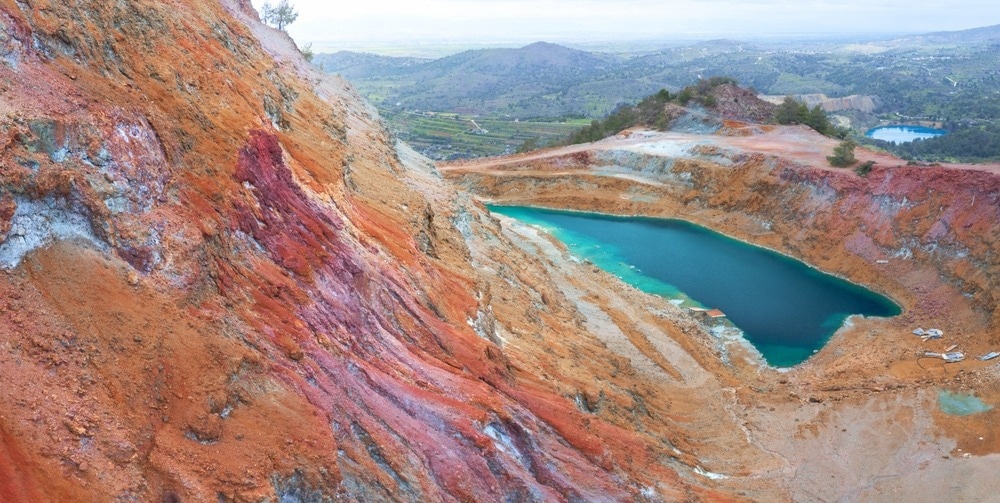
Image Credit: Anna Kucherova/Shutterstock.com
Background
The use of distributed acoustic sensing (DAS) technology as a receiver array in active-source seismic studies is well-established, particularly in borehole applications, such as Vertical Seismic Profiling (VSP), for reservoir characterization and monitoring.
The Bergslagen mining district in central Sweden is a historically significant mineral province. The specific target of this study is the Blötberget deposit, which contains high-grade iron-oxides, primarily magnetite and hematite, with localized enrichment in apatite that may host rare-earth elements (REEs).
The ore bodies are hosted in sheet-like horizons, ranging from 10 to 30 meters in thickness, and dip approximately 45° eastward. Current interpretations suggest the mineralization extends to a depth of 1000 meters, where a cross-cutting seismic reflector, thought to be a fault system, appears to terminate its continuity.
The Current Study
The surface DAS dataset was acquired in June 2022 at the Blötberget mine. The receiver array consisted of a 2.2-km straight telecom fiber-optic cable, partially aligned with 492 MEMS receivers and 150 three-component geophones. The DAS interrogator unit (IU) was placed near the profile.
The DAS settings included a channel spacing of 5 m, resulting in 448 channels, with a gauge length of 10 m, and data recorded as differential phase at 20 kHz.
A seismic vibrotruck with a 77 kN peak force was used as the vertical seismic source. The source performed three sweeps at every 5 m interval, with up to ten sweeps generated near a borehole. The sweeps were linear, lasting 18 seconds, with frequencies increasing from 2 to 200 Hz.
Data processing began by extracting shots from continuous recordings. A time delay of approximately 500 ms, caused by a GPS timing issue in the interrogator, was noted. The DAS measurements were transformed from phase to strain rate and subsequently downsampled to 1 kHz. Cross-correlation with the theoretical sweep was performed.
The data were heavily affected by common-mode noise, visible as horizontal lines varying in time and amplitude across shot gathers. While some noise was reduced by sweep cross-correlation, the remainder was removed using a horizontal median filter. Repeated shot records were then vertically stacked to enhance the signal-to-noise ratio.
Although the sweep ranged from 2 to 200 Hz, the useful bandwidth of the DAS data was restricted to 50–90 Hz. A 30-50-90-135 Hz bandpass filter was applied to the entire dataset.
Both the first breaks and the reflection from the mineralization exhibited reverberation effects, which were addressed by bandpass filtering and using pre- and post-stack gapped deconvolution filters. Subsequent steps included first-break picking, trace editing, and the computation and application of refraction and elevation static corrections. Finally, normal-moveout (NMO) corrections and automatic gain control (AGC) were applied to the data before stacking it into a 2D seismic section.
Results and Discussion
The DAS data quality varied significantly along the cable, largely due to coupling issues. The shot gathers were challenging to interpret, displaying significant incoherent noise, weak first-break amplitudes, and no discernible reflections. In contrast, receiver gathers showed substantially more coherent energy, with the first-break signal traceable and ground-roll continuous in high-quality sections.
The most prominent data quality issue was the presence of reverberations, often associated with ground roll, that propagated up to the end of the 1-second shot record. These reverberations, which peaked between 10–40 Hz, varied considerably in amplitude and duration but remained consistent for all shots recorded at a specific receiver, suggesting they primarily resulted from poor cable-to-ground coupling. For instance, a section of channels (109-123) located over an outcrop, which lacked a low-velocity surface layer, displayed outstanding quality with low reverberation and limited signal distortion, confirming the link between coupling/ground conditions and data quality.
The unmigrated stacked section of the DAS data successfully displayed clear reflections from the mineralization (M1-M2) down to about 0.4 seconds. A fragmented, cross-cutting reflection (F1), interpreted as a fault, was also visible. The application of refraction and residual static corrections was crucial in enhancing the continuity of the mineralization reflection and making the fault reflection more visible.
Conclusion
This study successfully demonstrated that a surface DAS array can be effectively used to image a dipping iron-oxide deposit and key geological structures, such as cross-cutting faults, in a hard rock environment. The high variability in noise levels along the cable made the use of receiver gather essential for developing an adequate processing sequence and for identifying and removing poor-quality data sections. Although the overall data quality was significantly lower and the bandwidth narrower than that of the collocated MEMS data, the DAS array successfully imaged the ore body and important host-rock structures, highlighting its potential.
Journal Reference
Gyger L., Malehmir A., et al. (2025). Surface distributed acoustic sensing for mineral exploration. Scientific Reports 15, 43391. DOI: 10.1038/s41598-025-29964-6, https://www.nature.com/articles/s41598-025-29964-6