A team of researchers has developed a new method to improve zoning strategies in open-pit coal mining, offering a practical solution to long-standing safety and efficiency challenges. Focusing on the Baoqing Chaoyang Open-Pit Coal Mine in China, the study introduces an integrated framework that enhances capacity expansion efforts while maintaining operational stability and minimizing environmental risks.
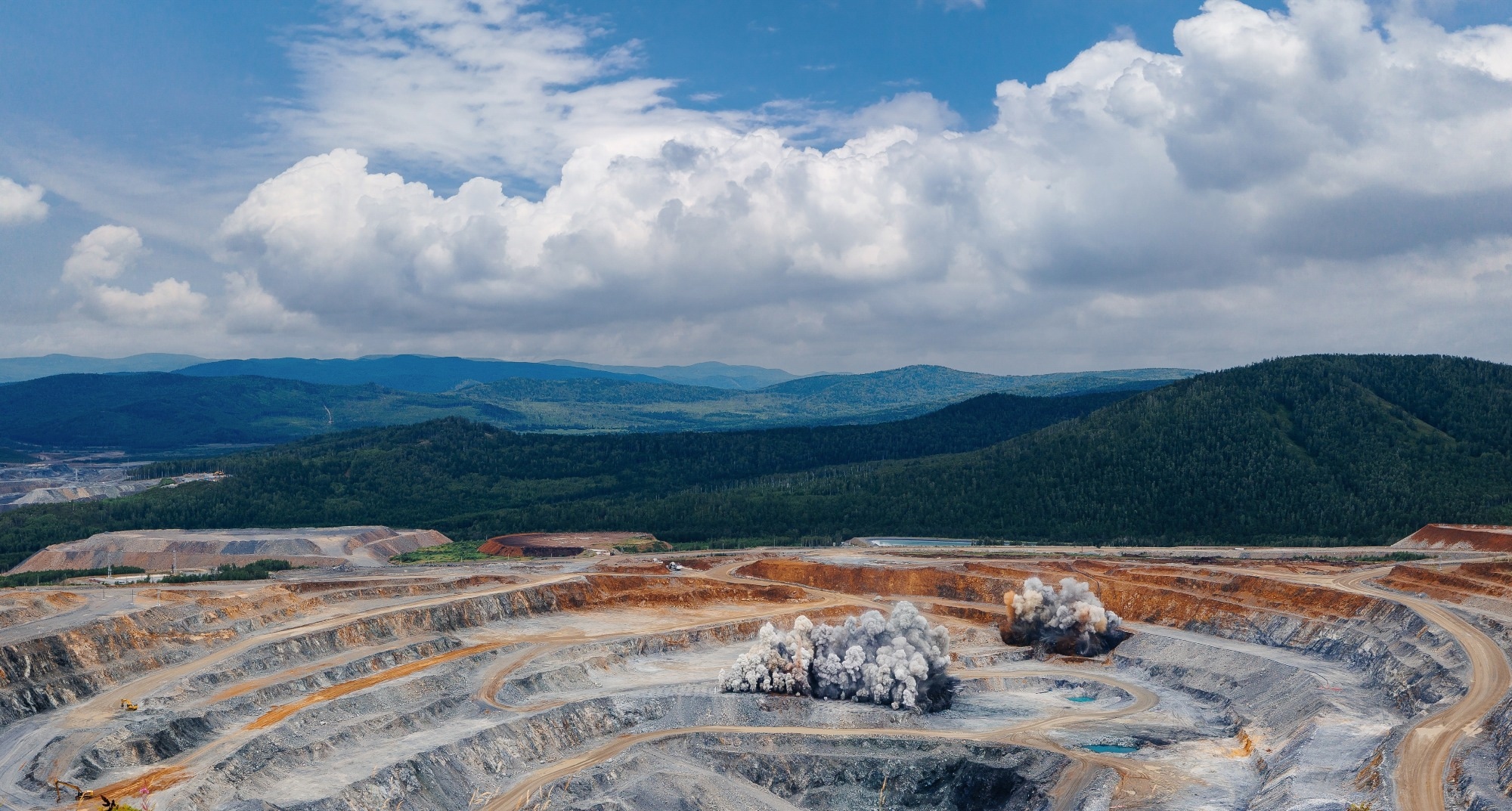
Image Credit: Parilov/Shutterstock.com
Tackling Mining Expansion Challenges with Smarter Zoning
Open-pit mining continues to be one of the most cost-effective methods for coal extraction, especially in large-scale operations. However, as mines grow, they often face mounting issues - limited working-line length, high advancing intensity, slope stability concerns, and operational coordination problems. Traditional longitudinal mining layouts frequently fall short in addressing these complexities.
At the Baoqing Chaoyang Open-Pit Coal Mine in Heilongjiang Province, where annual output is targeted to rise from 7 to 11 million tons, these challenges have become increasingly evident. In response, researchers have proposed a transverse mining zoning strategy supported by a multi-criteria evaluation framework. By combining Unascertained Measure Theory (UMT) with tools like the Analytic Hierarchy Process (AHP) and the Entropy Weight Method, the study offers a more balanced approach to mine expansion planning.
A New Framework for Optimizing Mining Zones
To better align mining operations with production goals and safety requirements, the researchers developed a zoning optimization method using UMT. This approach systematically evaluates mining schemes based on geological, operational, economic, and environmental factors.
Their first step involved analyzing the existing longitudinal layout, which was found inadequate for meeting the increased capacity targets. Using parameters such as coal seam thickness, density, and advancing intensity, the team designed an optimized working-line model. This model identified an ideal working-line length of 1350 to 2050 meters to support the new production goal.
Based on these findings, the mine was restructured into four transverse primary mining zones. This reorganization was designed to improve internal coordination, enhance resource recovery, and reduce safety risks.
Multi-Factor Evaluation Using an 8D System
To ensure a well-rounded assessment, the study introduced an eight-dimensional evaluation system. It accounted for geotechnical, geological, hydrogeological, topographical, economic, environmental, engineering, and social criteria.
By integrating expert judgment (through AHP) and objective data (via the Entropy Weight Method), the team created a robust decision-making framework. This dual-method approach made it possible to weigh trade-offs more accurately and select the most effective zoning strategy under complex and uncertain conditions.
Best-Performing Scheme Delivers Strong Results
Among the zoning options considered, Scheme II was the top performer. It showed superior results in key areas such as economic efficiency, operational safety, transportation coordination, and resource utilization. The scheme achieved a UMT confidence level of 0.7058, underscoring its reliability.
Under Scheme II, the four mining zones collectively offered 971.2 million tons of recoverable raw coal. The approach also achieved an average stripping ratio of 5.8 m³/t and a projected service life of up to 34.3 years. Beyond production metrics, the transition to transverse mining significantly improved the stability of internal dump slopes - reducing the likelihood of slope failure and associated geological risks.
Want to save for later? Click here.
Real-World Applications for Mining Operations
This research holds substantial value for open-pit mining operations, particularly in regions facing similar constraints during capacity expansion. The proposed framework serves as a practical decision-support tool, enabling mining companies to improve planning, safety, and long-term sustainability.
By adopting this systematic approach, operators can better navigate the complexities of mine design and make data-driven decisions that account for operational, environmental, and societal considerations. The inclusion of UMT provides a structured way to handle uncertainty - an ongoing challenge in large-scale mining operations.
Importantly, the methodology is adaptable to different geological and operational contexts, offering flexibility for implementation across a wide range of mining environments.
Conclusion and Future Outlook
The integrated zoning strategy presented in this study demonstrates real promise for enhancing open-pit coal mine expansion. By combining working-line optimization with comprehensive multi-criteria evaluation, the framework improves resource efficiency, operational safety, and decision-making under uncertainty.
Looking ahead, future research could build on this foundation by incorporating real-time monitoring systems and adaptive management tools to further boost flexibility. As mining operations grow more complex, such advanced evaluation methods will be essential for balancing productivity with environmental and social responsibility.
Journal Reference
Wen, Y., et al. (2026). Optimization study on transverse mining zoning during the capacity expansion stage of nearly horizontal open-pit coal mines. Sci Rep. DOI: 10.1038/s41598-026-35908-5, https://www.nature.com/articles/s41598-026-35908-5
Disclaimer: The views expressed here are those of the author expressed in their private capacity and do not necessarily represent the views of AZoM.com Limited T/A AZoNetwork the owner and operator of this website. This disclaimer forms part of the Terms and conditions of use of this website.