Lithium may be powering the clean-energy transition, but new research shows its extraction comes with a heavy environmental price tag.
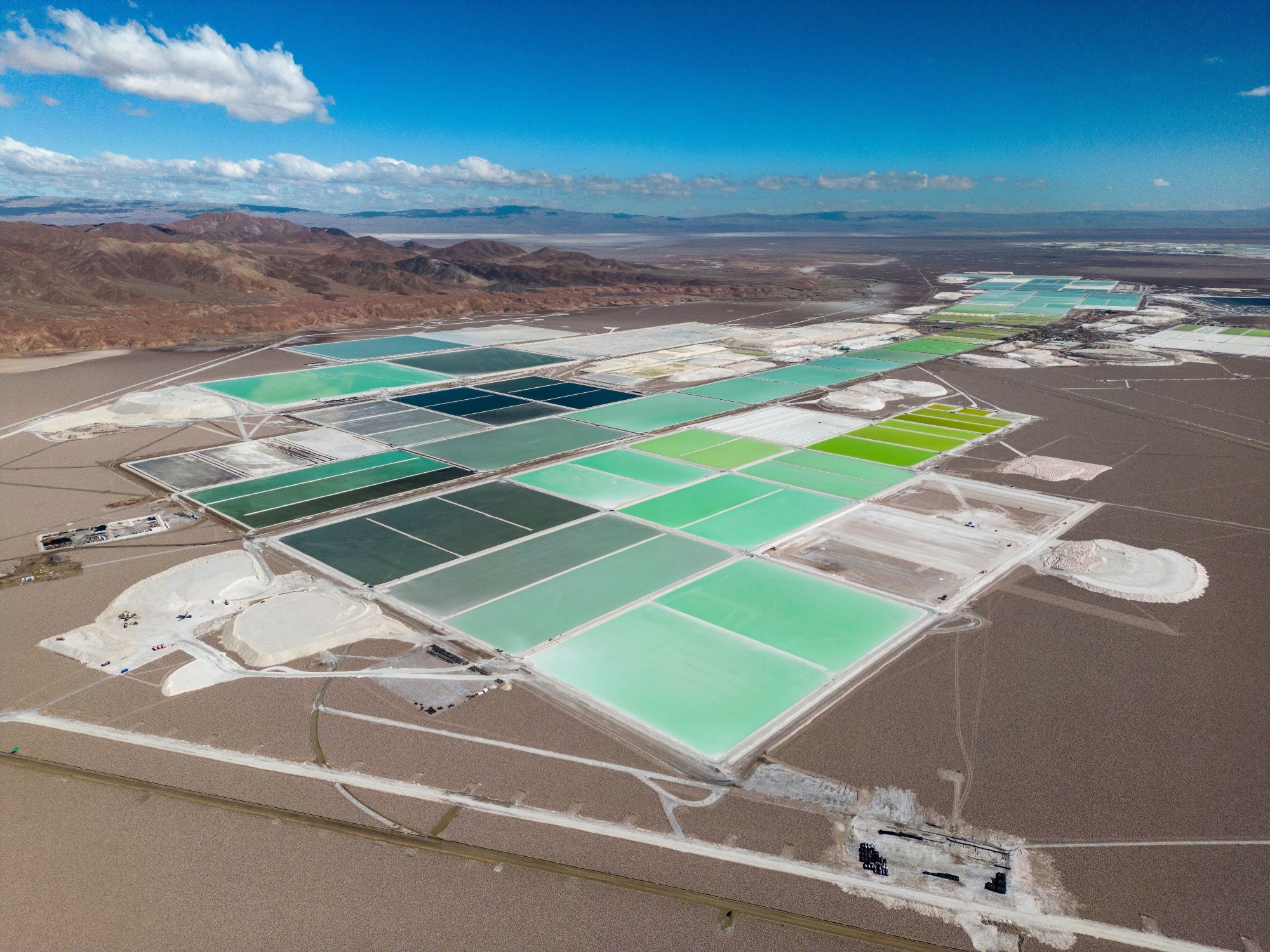
Image Credit: Freedom_wanted/Shutterstock.com
Lithium’s emergence as a critical metal is primarily due to its essential role in lithium-ion batteries, which are valued for their energy and power storage capabilities, reliability, and durability, making them crucial for the transition to greener energy and electric transportation. Lithium-ion batteries accounted for 46 % of total world lithium consumption in 2017, a figure anticipated to rise to 95 % by 2030.
This study focused on hard rock lithium extraction, which typically involves excavation and ore transfer to refining plants where it undergoes physical or flotation processes to yield a 6 % spodumene concentrate. This concentrate is then either processed domestically or exported.
Given that lithium recycling is expected to contribute only a small portion to the overall supply in the near future, establishing sustainable and reliable primary lithium production is essential to meet the battery sector's future requirements. The geographical concentration of lithium deposits poses significant supply concerns, particularly as demand continues to escalate.
The Current Study
This study employed Life Cycle Impact Assessment (LCIA) to quantify the environmental impacts of α-spodumene production in Australia, specifically using plant emission data from eight facilities.
The assessment considered various impact categories, with a particular focus on global warming potential (GWP), terrestrial ecotoxicity, human health impacts from fine particulate matter (PM2.5) formation, and non-carcinogenic toxicity.
The ReCiPe 2016 method was applied to evaluate endpoint impacts across three categories: human health, ecological quality, and resource scarcity. The data was sourced primarily from the National Pollutant Inventory (NPI) and was specific to Australian spodumene mines.
A sensitivity analysis was also conducted to determine how reductions in key inputs, namely diesel and chemical reagents, would affect the overall environmental impacts, modeling scenarios with 5 % and 10 % reductions in fuel use and chemical inputs.
The study’s scope was limited to the α-spodumene production stage, excluding downstream stages such as chemical conversion, transportation, and end use in battery manufacturing.
Results and Discussion
The LCIA results indicated an average GWP of 0.4 kg CO2? eq/kg α-spodumene. This impact is predominantly driven by the energy consumption of mining and processing operations, where diesel fuel accounts for three-quarters of the total energy used by the internal combustion vehicle fleet.
Beyond GWP, the production process generates significant environmental and human health burdens. Fine particulate matter formation was identified as the main effect on human health, with an average impact of 7.08E-07 DALY/kg α-spodumene.
This impact is primarily driven by emissions of NOx? (4.43E-07 kg/kg α-spodumene) and PM2.5? (2.70E-07 kg/kg α-spodumene), both of which are linked to respiratory and cardiovascular disorders.
Non-carcinogenic toxicity and terrestrial ecotoxicity are also significant, resulting from the release of heavy metals and chemical reagents during ore beneficiation, the creation of contaminated dust and tailings, and potential leaching into adjacent soils.
Terrestrial ecotoxicity, with an average value of 7.1E-11 species⋅yr/kg α-spodumene, is primarily driven by emissions of Cu, Ni, Zn, and Cr (III). For resource scarcity, the production significantly impacts both fossil and mineral resource availability, with average impacts of 3.58E-04 USD2013?/kg α-spodumene and 4.01E-04 USD2013?/kg α-spodumene, respectively, due to the reliance on non-renewable energy sources and the loss of mineral deposits.
The sensitivity analysis showed that optimizing diesel and chemical reagent consumption yields measurable improvements. A 5 % reduction in diesel and chemical use resulted in reductions of 4.96 % for human health impacts, 5.00 % for ecosystem quality impacts, and 5.00 % for resource scarcity.
A 10 % reduction was associated with decreases of around 9.96 %, 10.00 %, and 10.00 %. Various Australian mining operators are implementing mitigation measures, such as Mineral Resources Limited’s plan for net-zero Scope 1 and 2 greenhouse gas emissions by 2050 through renewable energy integration and fleet electrification, and Mt. Cattlin’s plan to reduce GHG emissions by 42 % by 2032–33 by increasing efficiency and using renewable electricity.
Greenbushes has also introduced measures like a Dust Emission Trigger Action Response Plan (TARP) to monitor and control particulate matter emissions in real-time.
Conclusion
The study confirms that the increasing demand for lithium-ion batteries results in substantial environmental impacts from upstream lithium production.
The analysis, based on site-specific Australian facility data, revealed that diesel-dependent mining operations and associated ore beneficiation processes are the dominant factors contributing to greenhouse gas emissions and fine particulate matter formation. Furthermore, ore extraction, including blasting, excavation, and the use of chemical reagents, is responsible for heavy metal emissions and related risks to human health and ecosystems through terrestrial and non-carcinogenic toxicity.
The findings stress the need for future research to include downstream chemical processing and comparative assessments of mining operations globally to broaden the applicability of these results and build a lower-impact lithium supply chain.
Journal Reference
Setu S., & Strezov V. (2026). Environmental impact assessment of α-spodumene production from Lithium mining in Australia. Resources, Conservation & Recycling, 225, 108601. DOI: 10.1016/j.resconrec.2025.108601, https://www.sciencedirect.com/science/article/pii/S0921344925004781