A new study published in the journal Scientific Reports shows how different afforestation strategies reshape soil health in hard coal post-mining landscapes, offering practical insight into how degraded mining sites can recover over time.
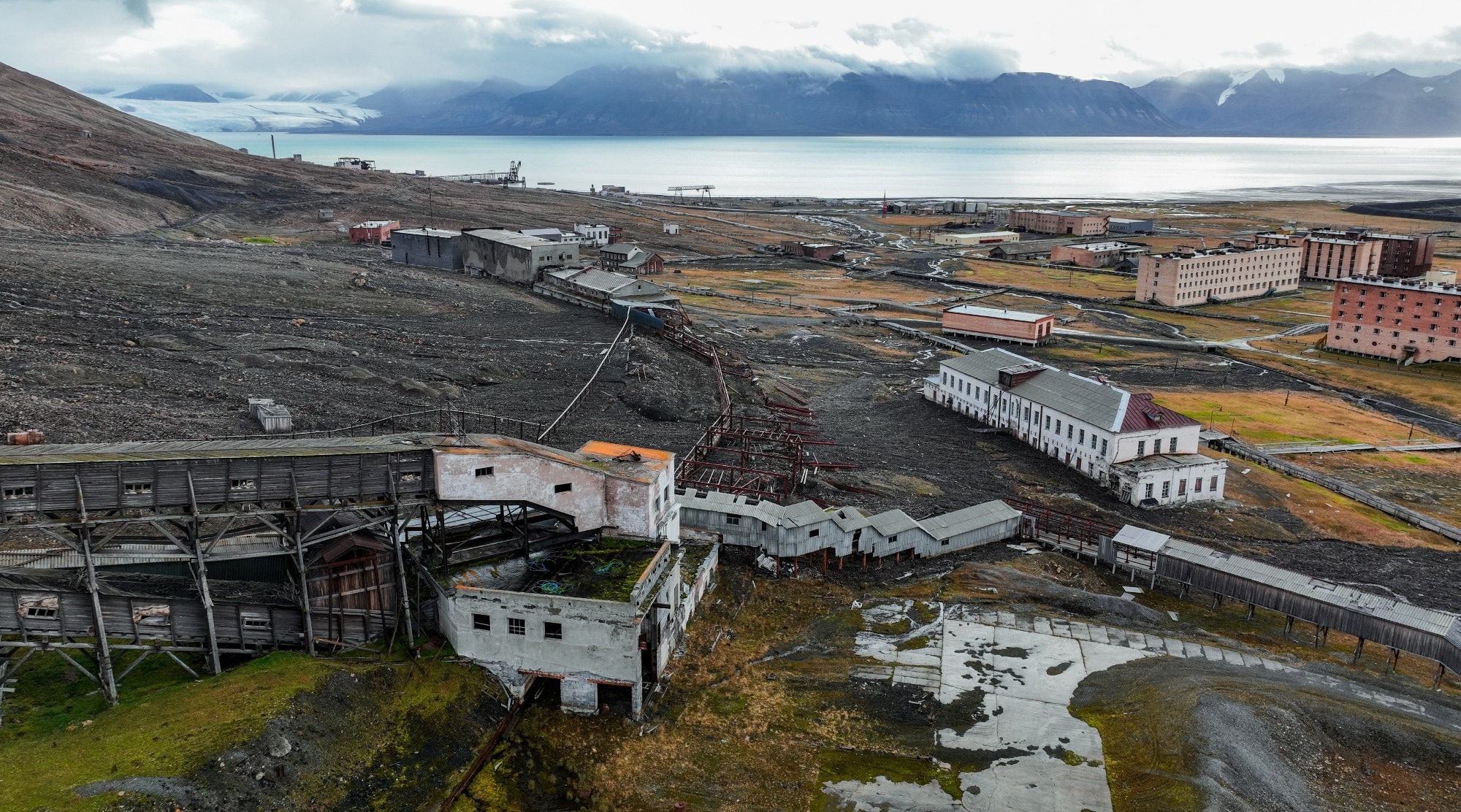
Image Credit: Dave Primov/Shutterstock.com
Why Soil Restoration After Mining Is So Challenging
Afforestation is widely recognized as a central strategy for restoring post-mining land, but rebuilding soil is far more complex than simply planting trees. Mining operations remove vegetation and strip away topsoil, leaving behind degraded substrates known as Technosols. These soils are typically formed from massive overburden dumps and are often polluted, structurally unstable, and extremely low in soil organic carbon (SOC) and nutrients. Such conditions significantly restrict ecosystem development.
Effective restoration depends on rebuilding core soil properties, including SOC, total nitrogen (Nt), water-holding capacity, and exchangeable base cations such as calcium, magnesium, potassium, and sodium. Earlier research has shown that afforestation can increase SOC through leaf litter inputs and root biomass accumulation. However, the type of vegetation introduced and the reclamation method used strongly influence how carbon and nutrients accumulate and how they are distributed within the soil profile. In general, applying reclaimed topsoil leads to greater SOC accumulation than leaving barren spoil in place.
The new study set out to compare how different approaches perform under real post-mining conditions.
Inside the Study: Comparing Three Afforestation Methods
Researchers collected soil samples in October 2021 from three afforestation variants: succession on barren spoil top (SBT), succession on reclaimed topsoil (STS), and plantation on reclaimed topsoil (PTS). To reduce the influence of landscape variability, all plots were located on sites with similar slope and aspect conditions.
The study included 30 research plots measuring 10 × 10 meters, with 10 replications per treatment. An additional 10 plots were established on barren rock areas to account for geogenic carbon when calculating soil organic carbon under SBT conditions. Because pedogenesis was still limited and unweathered materials contained substantial geogenic carbon, sampling focused on the upper 0–10 cm soil layer. Each plot was sampled at five locations, and undisturbed core samples were collected to determine bulk density.
Researchers conducted detailed analyses of physical properties, including soil texture, bulk density, porosity, air capacity, capillary water capacity, and moisture content. Chemical analyses included pH, total organic carbon, total nitrogen, total sulfur, exchangeable base cations, and different SOC fractions, including free light, occluded light, and mineral-associated carbon.
Soil Structure and Water Retention: Clear Differences Emerge
The afforestation type significantly influenced soil structure. Soils under SBT showed higher sand content, lower silt content, and lower pH compared to STS and PTS. Porosity was also significantly higher under SBT than under STS. While higher porosity may appear beneficial, the pattern likely reflects the absence of compaction rather than improved soil development.
In contrast, bulk density was highest under STS, reaching 1.59 ± 0.11 Mg m?³, compared to 1.21 ± 0.12 Mg m?³ in SBT and 1.31 ± 0.17 Mg m?³ in PTS. This increase is likely linked to the heavy machinery used during topsoil transport and grading. Compaction can restrict root growth and water movement, partially limiting the benefits of topsoil application.
PTS demonstrated a significantly higher capillary water capacity than SBT. This improvement reflects better soil aggregation and higher organic matter content, both of which enhance the soil’s ability to retain water. The greater proportion of finer particles, such as silt and clay, in reclaimed soils further contributed to improved moisture retention compared to the coarse texture of barren spoil.
Nutrient Recovery: The Advantage of Reclaimed Topsoil
The study also revealed notable differences in nutrient concentrations. Total nitrogen, calcium, and potassium levels were significantly higher in PTS compared to SBT. These findings are consistent with previous work showing that topsoil reclamation enhances nutrient stocks, largely through the decomposition of organic matter. Strong correlations between SOC and nutrient concentrations further support the role of organic inputs in rebuilding soil fertility.
In contrast, sulfur concentrations were significantly higher in SBT than in STS and PTS. This pattern is attributed to the mineralization of sulfur-bearing minerals, primarily pyrite (FeS2), exposed during mining. The release of sulfur from these materials can contribute to soil acidification and complicate restoration efforts. Magnesium concentrations were also higher in SBT than in STS, while sodium levels did not differ significantly among treatments.
Active Reclamation vs. Natural Succession
Overall, active reclamation through plantation on reclaimed topsoil proved highly effective in improving soil stability, nutrient retention, and long-term carbon stabilization. However, succession on reclaimed topsoil showed comparable improvement patterns for several key properties, suggesting that natural regeneration can also drive substantial soil recovery when conditions are favorable.
Interestingly, total SOC was similar across all treatments, even though the distribution among SOC fractions differed. This finding indicates that both natural succession and active planting can support organic carbon accumulation, though they may influence carbon stabilization pathways differently.
What This Means for Post-Mining Land Management
The results underscore the value of topsoil application in improving nutrient availability and water retention, while also highlighting the structural challenges associated with heavy machinery use. At the same time, the comparable performance of succession on reclaimed topsoil suggests that, in certain contexts, natural regeneration may offer a viable and potentially cost-effective alternative to intensive plantation strategies.
Future research should move beyond physical and chemical indicators to examine biological properties such as microbial diversity and ecosystem functioning. Integrating economic analyses will also be critical for refining large-scale reclamation strategies in hard coal post-mining landscapes.
Journal Reference
Pietrzykowski M., Misebo A.M., et al. (2026). Effects of afforestation on Technosol properties in reclaimed hard coal deep mining spoil heaps. Scientific Reports. DOI: 10.1038/s41598-026-37992-z, https://www.nature.com/articles/s41598-026-37992-z