*Important notice: This news reports on an unedited version of the paper which has been accepted. and is awaiting final editing. Scientific Reports sometimes publishes preliminary scientific reports that are not fully edited and, therefore, should not be regarded as conclusive or treated as established information.
Repurposed coal mine voids store compressed air for energy systems, stabilizing renewable power supply. This approach transforms mining infrastructure into scalable energy storage solutions for grid reliability.
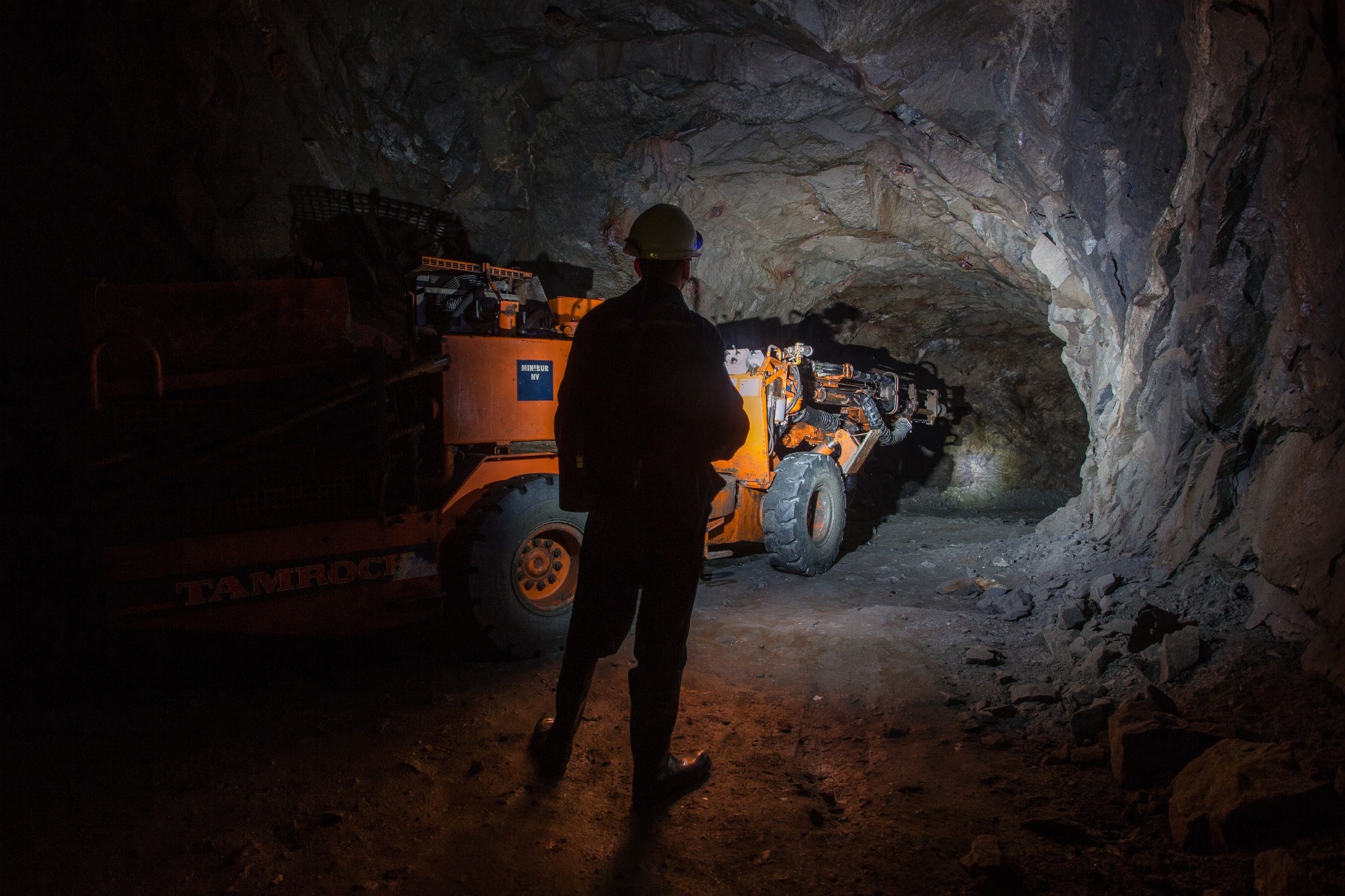 Study: Research on energy storage in coal mine goafs: geological model construction and application based on Nanshan Mine. Image Credit: Mishainik/Shutterstock
As the global energy transition accelerates toward decarbonization, the mining sector is emerging as a key player in circular economy solutions. A recent study published in the journal Scientific Reports explored how abandoned coal mine “goafs”, collapsed voids formed after extraction, can be repurposed for energy storage systems.
Using advanced three-dimensional (3D) geological modeling, researchers demonstrated that these underground spaces can serve as reservoirs for Compressed Air Energy Storage (CAES), effectively functioning as large-scale “gas batteries.” A case study of the Nanshan Mine confirmed that such systems can store excess renewable energy and release it when needed, helping to stabilize power grids and transforming legacy mining sites into valuable infrastructure for low-carbon energy systems.
Addressing Energy Storage Challenges with Goafs
The expansion of intermittent renewable energy sources, such as wind and solar, has increased the need for large-scale energy storage to balance grid supply and demand. Abandoned underground spaces now offer new opportunities for energy storage.
Coal mine goafs provide large subsurface volumes that can be repurposed for technologies like CAES and pumped hydro storage (PHS). In these systems, surplus electricity compresses air into underground voids, which is later released to generate power during peak need. Compared to conventional CAES systems that rely on salt caverns, mine-based storage offers wider geographic applicability and reduces the need for new infrastructure.
Developing a 3D Geological Model for Feasibility
To address subsurface uncertainty, researchers conducted a detailed case study at the Nanshan Mine, developing a high-resolution 3D geological model (a digital twin). The workflow integrated borehole logs, 3D seismic data, and historical mining maps to reconstruct the mine's internal structure. Using software tools such as GOCAD and 3DMine, the team mapped coal seams, overburden layers, and goaf geometry.
A key focus was the characterization of the goaf’s “three-zone” structure: the caving zone, fractured zone, and deformation zone. Kriging interpolation and volumetric analysis were applied to estimate void ratios and the spatial distribution of fragmented rock (gangue).
To evaluate mechanical stability, the model was imported into FLAC3D for numerical simulation, with the goaf modeled as a porous medium. The analysis applied the Mohr-Coulomb failure criterion to assess long-term stability under pressurized conditions.
Parameters such as rock density, bulk modulus, and shear modulus were assigned across different lithologies, including siltstone and sandstone, at depths of around 350 meters. This approach enabled the identification of leakage pathways and stress concentrations, thereby ensuring that future air injection would not compromise structural integrity.
Evaluating Storage Capacity and Stability Metrics
The outcomes established benchmarks for converting the Nanshan Mine into an energy storage system. 3D volumetric analysis quantified the effective storage capacity of the goaf. Rock fragmentation plays a critical role, as the bulking factor determines the remaining void space after collapse. The caving zone shows higher porosity and permeability, making it more suitable for air storage than the fractured zone.
The study provided estimates of total storage volume, enabling calculations of potential energy capacity in megawatt-hours (MWh). Mechanical simulations showed that system stability depends on the balance between internal air pressure and in-situ geological stress. Pressure cycles tested between 6 MPa and 10 MPa demonstrated that rock displacement remains within safe limits, with internal air pressure supporting the overlying strata.
Long-term feasibility depended on maintaining airtightness and structural strength. Sealing techniques, such as grouting within fractured zones, can prevent leakage and sustain repeated pressure cycles. The system also offers environmental benefits, as gas storage within the goaf can stabilize the mine structure and reduce methane emissions from legacy coal operations.
Transforming Mining Infrastructure into Energy Hubs
This research has significant implications for regions with large numbers of abandoned or closing coal mines. By applying the 3D modeling framework demonstrated at the Nanshan Mine, mining companies can transition from extraction to energy services.
Major applications include Underground Pumped Hydro Storage (UPHS), where elevation differences between mine levels are used to store and release energy through water movement. These approaches extend the lifecycle of mining assets, reduce decommissioning costs, and create new revenue streams.
Strategic Insights for Future Mining Practices
In summary, this study establishes a foundation for converting coal mine goafs into energy storage systems. Accurate 3D geological modeling, combined with mechanical analysis, is essential for ensuring safety and performance. The results from the Nanshan Mine demonstrate that such voids can support high-pressure storage under controlled conditions. The “three-zone” framework provides a reliable method for assessing stability across different geological settings.
Download the PDF of this page here
Future development will depend on improved sealing technologies and monitoring systems to track pressure and rock behavior. Integrating sensors with 3D models could create dynamic maps for continuous risk management. Overall, this research highlights a broader transition in the mining sector, from resource extraction to energy storage infrastructure. Repurposed mine spaces may become a critical component of renewable energy systems, supporting long-term energy security and sustainability.
Journal Reference
Feng, M., & et al. (2026). Research on energy storage in coal mine goafs: geological model construction and application based on Nanshan Mine. Sci Rep. DOI: 10.1038/s41598-026-49741-3, https://www.nature.com/articles/s41598-026-49741-3
Disclaimer: The views expressed here are those of the author expressed in their private capacity and do not necessarily represent the views of AZoM.com Limited T/A AZoNetwork the owner and operator of this website. This disclaimer forms part of the Terms and conditions of use of this website.