*Important notice: This news reports on an unedited version of the paper which has been accepted. and is awaiting final editing. Scientific Reports sometimes publishes preliminary scientific reports that are not fully edited and, therefore, should not be regarded as conclusive or treated as established information.
Passive seismic tomography identifies high-stress zones linked to future rockbursts. The method achieves over 86% prediction accuracy, enabling early hazard detection and improving safety in deep mining operations.
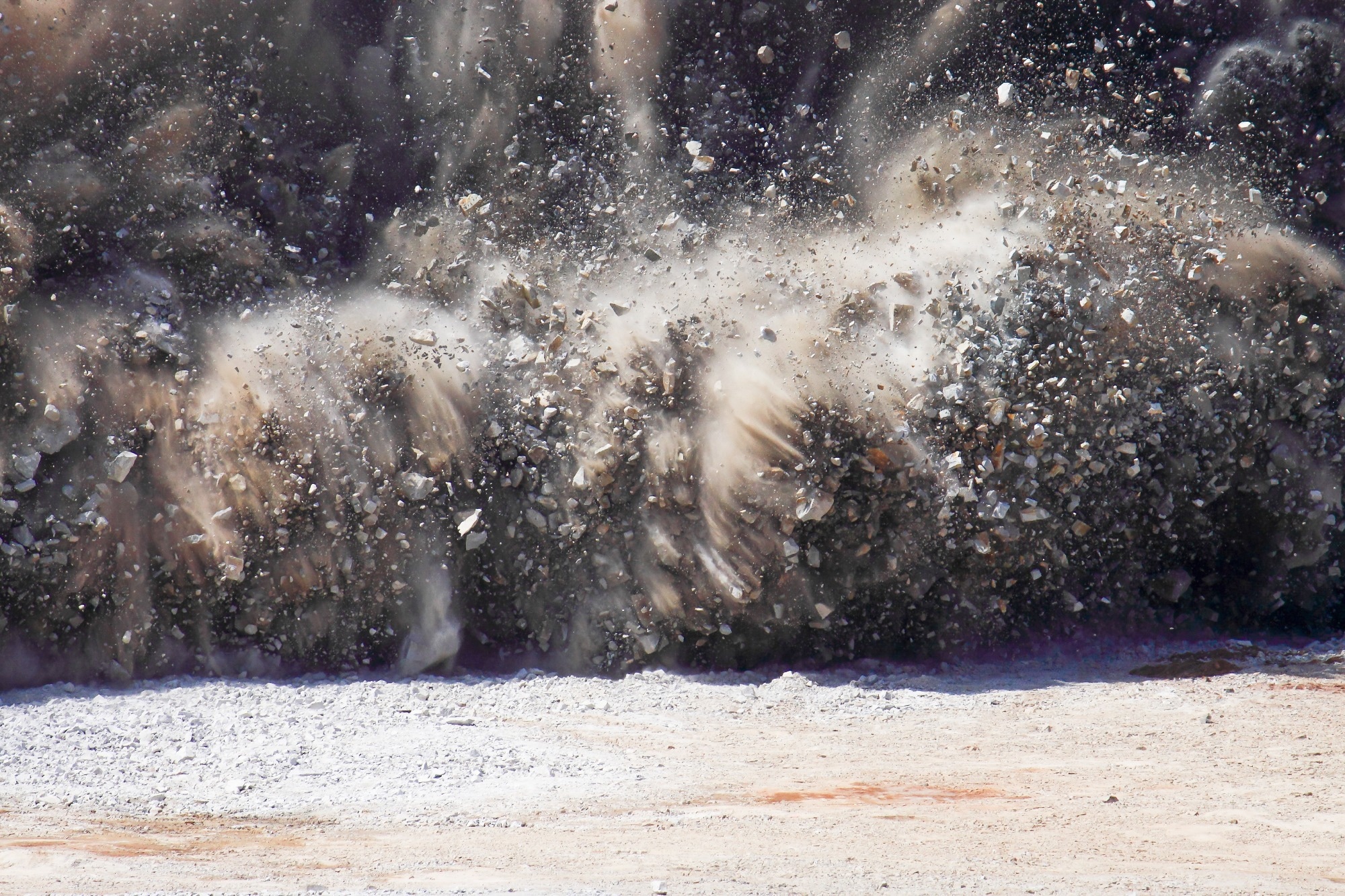 Study: Evaluation of the correlation between passive velocity tomography and mining seismic activity. Image Credit: phetsamay philavanh/Shutterstock
A recent study published in Scientific Reports presents a detailed evaluation of how passive seismic velocity tomography can be used to predict mining-induced seismic activity in deep coal mines. The researchers demonstrate that high P-wave velocity zones strongly correlate with future seismic events, providing a reliable indicator of rock burst risk. The study establishes velocity tomography as a practical and efficient tool for early hazard identification by combining qualitative mapping with quantitative analysis.
Addressing Rockburst Risk in Deep Mining
Rockbursts remain one of the most dangerous hazards in underground coal mining. They occur when built-up stress in rock masses suddenly releases, triggering violent failure and strong ground vibrations. These events can damage infrastructure, interrupt operations, and threaten worker safety. As mining extends beyond depths of 1,000 meters, stress conditions intensify, increasing both the likelihood and severity of rockbursts.
Microseismic monitoring helps track these risks by detecting seismic signals generated during mining. Passive seismic velocity tomography builds on this method by using these signals to map subsurface velocity distributions. High wave velocity typically marks zones of stress concentration, which often correspond to areas of future seismic activity. Previous studies have highlighted this relationship, but most rely on qualitative interpretation. This study addresses that gap by combining qualitative observations with quantitative analysis to assess predictive performance more rigorously.
Seismic Monitoring and Tomographic Analysis Approach
The research was carried out at the 3307-longwall working face in Xingcun Coal Mine, China, at a depth exceeding 1,100 meters. The team deployed a micro seismic monitoring system with 12 geophones, of which seven sensors covered the study area. These sensors continuously recorded seismic events generated during mining, supplying the data required for tomography.
Passive velocity tomography utilizes these naturally occurring seismic events as sources. By analyzing P-wave arrival times at multiple sensors, the study reconstructs the velocity distribution of the surrounding rock mass. The inversion process divides the region into discrete grid cells and applies an iterative reconstruction method to generate stable velocity models.
To evaluate predictive capability, the study adopts two complementary approaches. First, the qualitative analysis compares velocity maps from earlier periods with seismic activity observed in later periods. The microseismic activity degree serves as an indicator, combining event frequency and energy. Second, the quantitative analysis applies the velocity anomaly coefficient to measure deviations from average velocity. Thresholds of 5%, 15%, and 25% are used to assess how effectively velocity anomalies capture future seismic events.
Download the PDF of this page here
Strong Correlation Between Velocity and Seismic Activity
The results show a clear and consistent relationship between high-velocity zones and future seismic activity. Qualitative comparisons across eight time periods indicate that most cases exhibit strong or moderate overlap between high P-wave velocity regions and subsequent seismic activity zones. Overall, 87.5% of cases demonstrate meaningful correlation, confirming that velocity tomography can effectively identify areas of elevated seismic risk.
Quantitative analysis further suggests that predictive performance varies with the selected velocity anomaly threshold. At higher thresholds (≥25%), prediction remains limited due to smaller coverage areas. At moderate thresholds (≥15%), performance improves but remains variable. The most reliable results occur at the lowest threshold (≥5%), where prediction efficiency exceeds 86% across all seismic events.
It was observed that all high-energy seismic events occur within zones where the velocity anomaly exceeds 5%. This result shows that high-stress regions identified through velocity tomography strongly align with the most critical seismic hazards. Low-energy events dominate the dataset and cluster within these zones, whereas medium-energy events exhibit a slightly broader spatial distribution.
A comparison with a random prediction model confirms the method's robustness. Velocity tomography consistently outperforms random prediction, demonstrating that seismic activity is not randomly distributed but instead concentrates within high-velocity anomaly zones.
Implications for Safer and Smarter Mining Operations
This study shows that passive seismic velocity tomography can effectively predict mining-induced seismic activity and assess rockburst risk. By identifying high-stress zones in advance, it supports targeted risk management strategies, including optimized support design and better planning of mining sequences.
The method uses existing microseismic monitoring systems and avoids the need for major additional infrastructure. The approach also provides wide spatial coverage and near real-time monitoring, making it well-suited for continuous use in active mining environments.
Several challenges such as the accuracy of tomography, depend on data quality, sensor placement, and geological complexity. Noise, localization errors, and changing rock conditions can affect the obtained results. Improving algorithms, strengthening data integration, and validating the method across different mining settings will help address these limitations.
Future research should focus on combining velocity tomography with other indicators, such as b-value analysis or energy release metrics which could further improve prediction accuracy. A multi-parameter approach would offer a more complete understanding of rockburst risk. Overall, this work provides a strong scientific and practical foundation for applying geophysical monitoring in deep mining. It shows how data-driven methods can improve safety, reduce uncertainty, and support more efficient and resilient mining operations.
Journal Reference
Zhang, Z., Cao, W., et al. (2026). Evaluation of the correlation between passive velocity tomography and mining seismic activity. Scientific Reports. DOI: 10.1038/S41598-026-49780-W. https://www.nature.com/articles/s41598-026-49780-w
Disclaimer: The views expressed here are those of the author expressed in their private capacity and do not necessarily represent the views of AZoM.com Limited T/A AZoNetwork the owner and operator of this website. This disclaimer forms part of the Terms and conditions of use of this website.