*Important notice: This news reports on an unedited version of the paper which has been accepted. and is awaiting final editing. Scientific Reports sometimes publishes preliminary scientific reports that are not fully edited and, therefore, should not be regarded as conclusive or treated as established information.
Geotechnical modeling reveals how rainfall and groundwater affect mine slope stability. This mining approach enables early warning systems and safer waste dump management under changing environmental conditions.
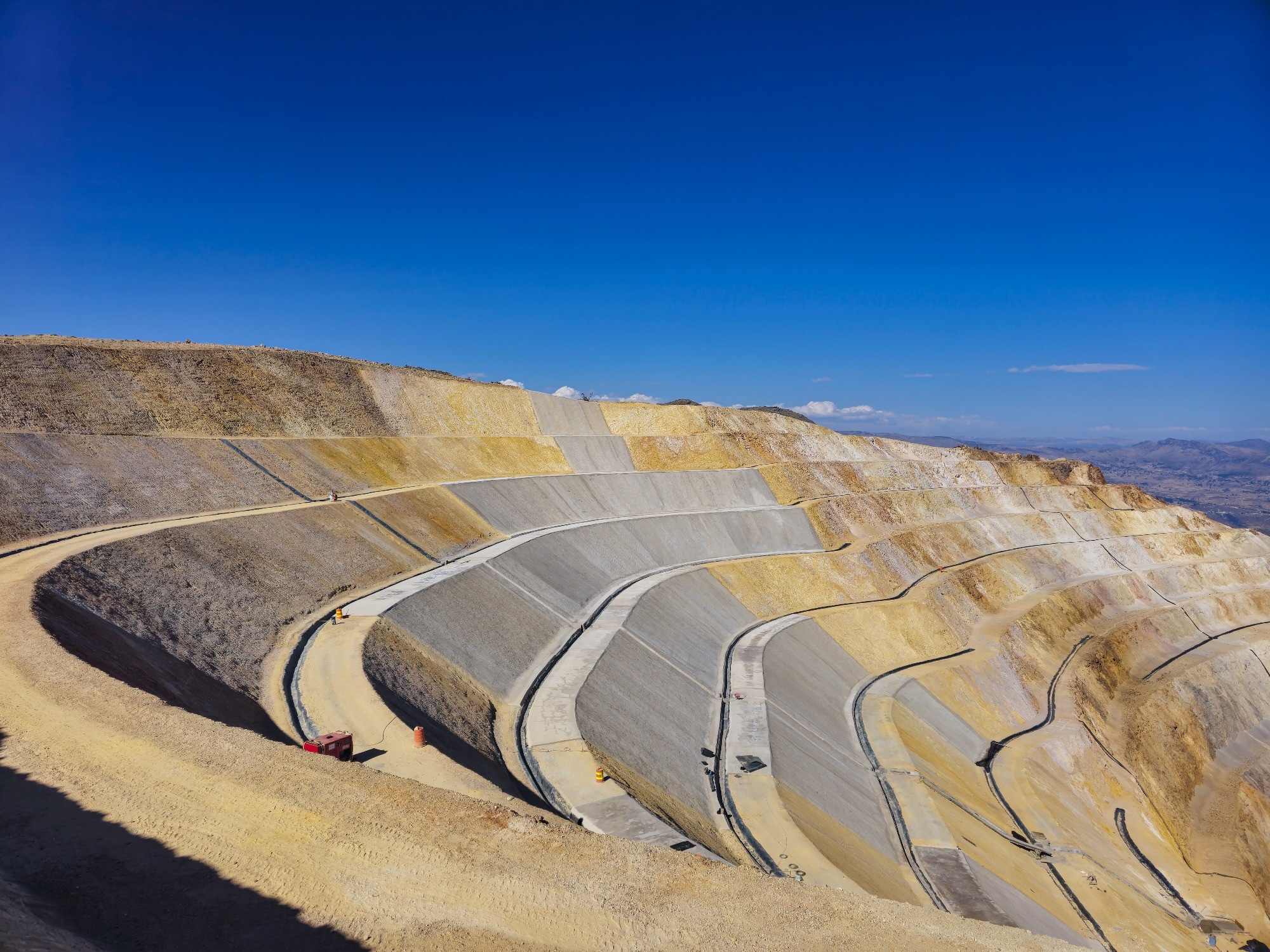 Study: Mechanical properties and slope stability of a copper mine waste dump in China. Image Credit: WILLIAM LUQUE/Shutterstock
The rapid expansion of global mining operations has increased the need for advanced geotechnical monitoring to reduce the risk of catastrophic failures. A recent article published in the journal Scientific Reports investigated the structural stability of a copper mine waste dump in Jiangxi Province, China, which has processed over 90 million tons of ore.
Researchers investigated the impact of rock content and environmental factors, including heavy rainfall and shifting groundwater conditions, on slope stability. Their findings provide practical guidance for mine operators to mitigate landslide risks and protect surrounding infrastructure. It emphasizes that slope stability depends on both dump height and the interaction between material composition and environmental conditions.
Challenges in Managing Soil-Rock Mixtures
In open-pit mining, the production of soil-rock mixtures (S-RM) is an unavoidable byproduct. These dumps are heterogeneous, containing fine-grained soil and coarse rock fragments, making their mechanical behavior difficult to predict. Therefore, understanding the internal friction of these materials is crucial for designing safe mining environments.
Integrating Laboratory Testing and Numerical Modeling
To assess the stability of these waste dumps, researchers focused on a copper mine with a final dump height of 65 meters. They combined laboratory triaxial testing with numerical simulations. S-RM samples were collected from various locations along the slope.
Because many natural rock fragments were too large for standard testing, the study employed a similarity gradation method to reduce particle size to a maximum diameter of 12.36 mm while preserving the characteristics of the original material. The laboratory phase involved consolidated undrained triaxial tests performed with an automated strain-controlled system. Four gradations (Q1x to Q4x) were tested at pressures ranging from 100 to 400 kPa, with deviator stress and axial strain measured to assess material deformation.
In addition to the laboratory work, GeoStudio, particularly the SEEP/W and SLOPE/W modules, was used to develop a numerical model of the waste dump. The model simulated conditions, including continuous rainfall over 15 days and varying root reinforcement depths, and used the Morgenstern-Price method to calculate the Factor of Safety (FS).
Behavior of Soil-Rock Mixtures
S-RM specimens exhibited strain hardening behavior, meaning the material continued to gain strength as deformation increased rather than failing suddenly. The study showed that material behavior was sensitive to rock content, with samples containing higher rock volumes (up to 53%) producing higher deviator stress due to interlocking effects.
The internal friction angle ranged from 22°C to 30°C, and cohesion values ranged from 0.75 kPa to 25.87 kPa. A nonlinear Power Law model provided a more accurate fit to the stress-strain relationship (R2 > 0.96) than the traditional Duncan-Chang model.
The numerical simulations identified groundwater as a primary factor in slope instability. Researchers established a warning groundwater level at 10 meters below the surface; when groundwater rose above this level, the FS dropped below the critical limit of 1.30, indicating a high risk of failure. Rainfall simulations demonstrated that the FS decreased rapidly with increasing rainfall intensity and duration, following an exponential decay pattern.
Under extreme rainfall conditions of 200 mm per day, the slope reached critical instability within five days. These findings provide mine safety engineers with measurable thresholds for monitoring slope stability during periods of heavy rainfall and the monsoon season.
Implications for Enhanced Mining Safety
The study identified two major applications: predictive monitoring and biological slope reinforcement. By establishing the relationship between rainfall intensity and slope stability loss, mining companies can develop early-warning systems that trigger evacuation or drainage measures when rainfall exceeds critical thresholds. Researchers confirmed the stabilizing effect of vegetation, noting that plant roots provided additional cohesion of 10 to 20 kPa, increasing the Factor of Safety by nearly 3% during moderate rainfall conditions.
Download the PDF of this page here
When rainfall intensity exceeded 200 mm per day, the higher permeability of root-reinforced soil could promote the formation of a perched water table, triggering shallow landslides. Additionally, integrating drainage systems with revegetation strategies could help prevent internal water buildup within the slope.
Future Directions in Waste Dump Management
In summary, this research indicates that the stability of mine waste dumps is controlled by both the geological properties of the waste material and changing environmental conditions. The shift from traditional linear models to nonlinear analysis has significantly improved the accuracy of geotechnical predictions. By considering factors like rock content and root reinforcement, the findings support the development of reliable, site-specific strategies.
Researchers emphasized the importance of integrating real-time groundwater sensors and automated slope monitoring systems based on the critical thresholds identified in the analysis. As mining operations continue to expand, predicting how a 65-meter slope will respond to prolonged rainfall or rising groundwater levels will be increasingly important for operational safety. Overall, this study provides a strong technical foundation for safer and more sustainable management of mining waste dumps.
Journal Reference
Zhang, Z., & et al. (2026). Mechanical properties and slope stability of a copper mine waste dump in China. Sci Rep. DOI: 10.1038/s41598-026-51707-4, https://www.nature.com/articles/s41598-026-51707-4
Disclaimer: The views expressed here are those of the author expressed in their private capacity and do not necessarily represent the views of AZoM.com Limited T/A AZoNetwork the owner and operator of this website. This disclaimer forms part of the Terms and conditions of use of this website.