The mining industry is currently facing a complex problem. On one side of the equation, the energy transition is driving a substantial increase in demand for raw materials. Technologies such as electric vehicles (EVs), wind turbines, and grid storage require vast amounts of copper, lithium, nickel, and rare earth elements. On the other side of the equation, the industry’s ability to supply these materials efficiently is declining. Although manufacturing and agriculture have seen steady productivity gains over the last two decades, mining productivity has dropped. This imbalance creates a supply risk that cannot be solved simply by digging more holes; it requires a fundamental change in how the industry applies technology.
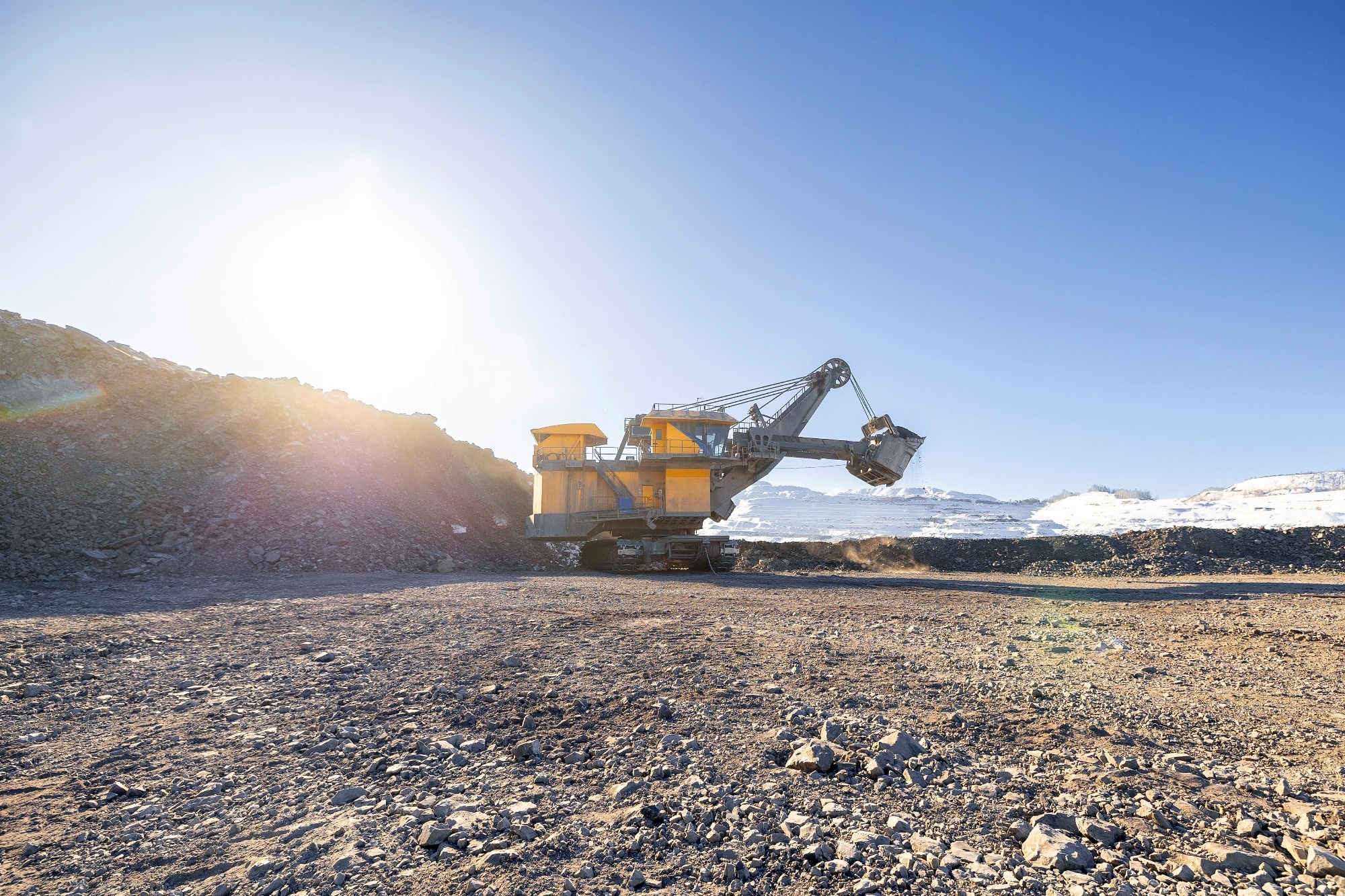
Image Credit: Parilov/Shutterstock.com
We examine the roots of this productivity slump, the technologies that offer a solution, and the management strategies required to implement them effectively.
The Mining Productivity Decline
For much of the 20th century, mining followed a reliable path to efficiency: bigger trucks, larger shovels, and wider pits. However, that trend has stalled. According to recent OECD data analyzed by McKinsey & Company, mining productivity has declined by approximately 50 % since the late 1990s. In contrast, the manufacturing sector doubled its productivity over the same period.1
The reasons for this decline are largely physical. Mines are facing headwinds that include falling ore grades, deeper deposits, and longer haul distances. To produce the same amount of copper today as it did 20 years ago, a mine must move significantly more rock and consume more energy.
A recent report highlighted by Mining.com notes that despite high commodity prices, physical productivity, the raw efficiency of extraction, has struggled to improve, with gross production across the industry dropping by roughly 28 % in recent years relative to input costs.2
These physical constraints mean that the "bigger is better" approach has reached a point of diminishing returns. Continuing to scale up conventional equipment is no longer yielding the necessary efficiency gains.
Mineral Demand is Increasing
Although productivity lags, the requirement for output is climbing. The International Energy Agency (IEA) projects that to meet current climate pledges, demand for lithium could grow by more than 40 times by 2040, while demand for nickel and cobalt could grow twentyfold.3 Copper, essential for electrification, faces a similar trajectory.
The gap between this projected demand and the industry’s current output capability is widening. Developing a new mine often takes 15 years or more from discovery to production. Therefore, the industry cannot rely solely on new discoveries to bridge the gap; it must maximize the value of existing assets.
Bright Spots in Innovation
Despite the general slump, specific technologies are proving capable of reversing the decline in productivity. The challenge is no longer the availability of technology, but rather its effective integration.
1. Autonomous and Electric Ecosystems
Automation is now moving beyond the pilot phase. In China, mining companies have successfully deployed large fleets of autonomous, electric haul trucks. Unlike isolated tests, these deployments are systemic, involving collaboration between mining operators, equipment manufacturers, and technology providers. The result is an integrated ecosystem that lowers labor costs, improves safety, and reduces emissions.1
2. Remote Operations
In Australia, major miners have countered the challenges of remote geography and high labor costs by centralizing operations. Control centers located in cities now manage fleets and processing plants hundreds of miles away. This shift allows for real-time optimization and better work-life balance for staff, which aids in retention.1
3. Digital Twins and Processing
In the Americas, where copper producers are battling declining ore grades, innovation is focusing on the processing plant. Companies are using "digital twins", virtual replicas of physical systems, and deep learning to optimize concentrators. Operators can squeeze higher recovery rates out of lower-grade ore without major capital expenditures by simulating different operating conditions.1
Moving from Pilot to Production
If these technologies exist, why is the industry average still lagging? The McKinsey report suggests the problem is managerial rather than technological.1 The mining sector is plagued by "pilot purgatory", where companies run endless small-scale tests that never scale across the enterprise.
To break this cycle, successful miners are adopting a three-stage framework:
- Aspiration
Instead of setting vague goals like "becoming digital", leaders are identifying specific physical problems to solve. For example, a mine might set a goal to reduce the energy cost per ton of moved rock by 30 %. This focuses innovation on business value rather than technology for its own sake.1
-
Innovation as a Portfolio
Successful companies manage innovation like an investment portfolio. They acknowledge that some ideas will fail, but they bet on technologies that show a clear path to cost reduction over time. This involves examining "cost ramp-down curves", similar to how the cost of solar panels plummeted as adoption increased, to determine which technologies to support.1
-
Execution and Governance
This is the most critical step. Innovation often dies in the daily grind of operations. To prevent this, leading companies are creating dedicated teams with their own budgets and reporting lines, separate from day-to-day mine management. This creates a protected space for new systems to be tested and refined before being rolled out operationally.1
Conclusion
The physical challenges of extraction are becoming increasingly difficult as the world’s demand for minerals continues to accelerate. The current trajectory of declining productivity suggests that business as usual will lead to supply shortages and higher costs for the energy transition.
However, the tools to fix this exist. From autonomous fleets to AI-driven processing, the technology is available. The difference between the companies that thrive in the coming decade and those that struggle will likely come down to execution. It will require moving beyond cautious pilot programs and committing to systemic, scalable changes in how mines operate.
References and Further Reading
- McKinsey & Company. (2025). Performing under pressure: Implementing innovation in mining. Retrieved from McKinsey.com. https://www.mckinsey.com/industries/metals-and-mining/our-insights/performing-under-pressure-implementing-innovation-in-mining
- Mining.com (2025). Innovation slump drags mining productivity down - report. Retrieved from Mining.com. https://www.mining.com/innovation-slump-drags-mining-productivity-down-report/
- International Energy Agency (IEA). (2021). The Role of Critical Minerals in Clean Energy Transitions: Executive Summary. Retrieved from https://www.iea.org/reports/the-role-of-critical-minerals-in-clean-energy-transitions/executive-summary
Disclaimer: The views expressed here are those of the author expressed in their private capacity and do not necessarily represent the views of AZoM.com Limited T/A AZoNetwork the owner and operator of this website. This disclaimer forms part of the Terms and conditions of use of this website.