The global transition to renewable energy relies heavily on lithium-ion batteries, with a significant portion of the supply extracted from arid closed-basin brine deposits. Recent research indicates that water density, rather than simple volume, determines the environmental impact of these operations. The mining industry can develop strategies to protect critical ecosystems in arid regions by understanding the distinct physical properties of dense brine and freshwater.1
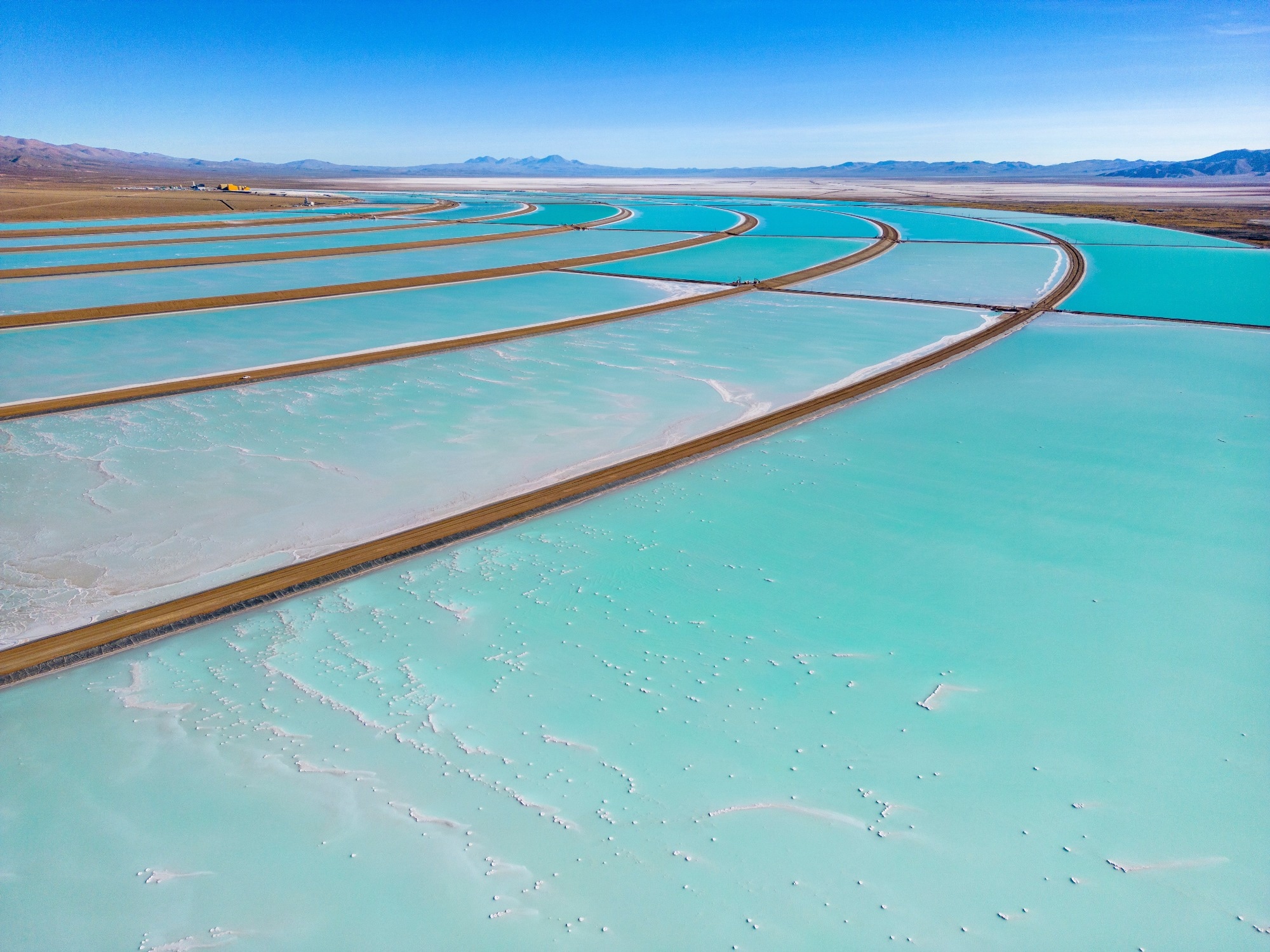
Image Credit: Freedom_wanted/Shutterstock.com
The Density Difference in Hydrological Impact
The central finding of recent hydrogeological research is that not all water in a salt flat, or salar, behaves the same way. In the high-altitude deserts of the "Lithium Triangle", lithium is found in hypersaline brine located deep beneath the surface. This brine is significantly denser than the fresh water that enters the basin from mountain snowmelt. Although fresh water has a standard density of 1.0 grams per milliliter (g/mL), the concentrated brines targeted by mining companies often reach densities of 1.2 g/mL or higher.
This density difference is a critical factor in how the underground aquifer responds to pumping. Because saltwater is denser, it occupies less pore space per unit of mass than freshwater. When a mining company extracts a specific mass of brine, the resulting change in underground pressure is relatively localized. In contrast, removing the same mass of freshwater causes a much larger volumetric change in the aquifer, leading to a more rapid drop in the water table.
Mathematical modeling and 200-year simulations have quantified this disparity, showing that the extraction of freshwater can have a 200-2300 % greater impact on local wetlands than the extraction of an equivalent amount of brine.2 This suggests that previous environmental impact assessments, which often treated all water removals as equal, have fundamentally misunderstood the risk profile of these mining operations.
Strategic Extraction and Basin Zoning
The study identifies that the location of extraction wells within the salar is just as vital as the type of fluid being removed. Salares are complex, closed-basin systems where freshwater typically resides at the margins, creating freshwater lenses that support vegetation, migratory birds, and local communities. As water moves toward the topographic low at the center of the basin, it becomes increasingly saline, eventually forming the lithium-rich brine core.
The research conducted by the University of Massachusetts Amherst team reveals that the most sustainable approach is to focus extraction on the briniest, most central portions of the salar. When brine is pumped from the center, the high-density fluid acts as a buffer, slowing the propagation of pressure changes toward the freshwater edges. However, if wells are placed near the "mixing zone" where fresh and saltwater meet, the extraction can cause the freshwater-brine interface to shift, potentially drawing fresh water into the salty core and making it non-potable.1
This finding challenges the traditional industry assumption that all water in a closed basin eventually mixes and is part of a single resource. Instead, it suggests that the natural density stratification of these basins provides a layer of protection that can be maintained if pumping is strategically managed.
Click here to download a free PDF copy of this page
Field Evidence from the Lithium Triangle
To confirm these theoretical models, researchers utilized nearly 40 years of satellite data and ground-level observations from the Salar de Atacama in Chile and the Salar del Hombre Muerto in Argentina. These two regions serve as the world's primary sources of brine-based lithium, offering distinct examples of how water management impacts the environment.
At the Salar de Atacama, researchers examined the southern Tumisa wetland zone. They found that in sectors where freshwater pumping occurred for agricultural or industrial use, there was a documented 90 % reduction in the vegetated area of the wetlands.2 Conversely, in sectors where only brine was being extracted from the central salt crust, the wetlands remained stable, with no observable reduction in vegetation.
Similarly, at the Salar del Hombre Muerto, the data showed that the health of the Río Trapiche meadows was directly tied to freshwater usage. When freshwater consumption increased to support processing facilities, the meadows showed immediate signs of stress. These real-world case studies validate the density-driven models, proving that the protection of the freshwater margins must be the primary goal for regulators and mining companies.1
Challenges for Future Technologies
As the industry moves away from traditional evaporation ponds, which can take up to two years to produce lithium, many companies are adopting Direct Lithium Extraction (DLE). DLE technology uses chemical adsorbents or membranes to pull lithium ions directly from the brine, which is then reinjected into the ground. Although this preserves the volume of the brine, it introduces a new set of environmental risks.
The primary concern with DLE is its high demand for fresh water. Many DLE systems require significantly higher amounts of freshwater for rinsing resins and chemical processing.3 If this water is sourced from the delicate freshwater lenses at the edges of the salar, the environmental benefit of reinjecting the brine is completely negated. The density research makes it clear that even if 100 % of the brine is returned to the aquifer, a small increase in freshwater withdrawal could still lead to the collapse of local ecosystems.
For DLE to be a truly sustainable solution, the industry must focus on closed-loop systems that recycle freshwater or utilize alternative sources, such as desalinated seawater piped from the coast.
Redefining Sustainability Metrics
The implications of this research extend to how governments and international bodies regulate the lithium industry. Current water footprint metrics are often oversimplified, calculating total liters of water used per ton of lithium produced without distinguishing between brine and freshwater. This study advocates for a "weighted" approach to water accounting that reflects the actual ecological risk associated with the fluid being extracted.
Regulators can set more precise limits on pumping by incorporating density-dependent modeling into environmental impact assessments. For example, a mining project could be permitted to extract large volumes of dense brine from the basin center, while being strictly limited in its freshwater intake. This approach offers a scientifically defensible means of balancing the global demand for lithium with the local need for water security.4
Ultimately, the sustainability of lithium mining depends on a nuanced understanding of hydrogeology. Although the extraction of lithium is essential for the green energy transition, it must be managed to prevent the degradation of sensitive, high-altitude environments. The mining industry can ensure that the transition to a low-carbon future is built on a foundation of environmental integrity by respecting the physics of water density and prioritizing the protection of freshwater recharge zones.
References and Further Reading
- Bose, P. (2025). Water’s density is key to sustainable lithium mining, study reveals. Phys.org. https://phys.org/news/2025-09-density-key-sustainable-lithium-reveals.html
- Corkran, D. B., et al. (2025). Density Constrains Environmental Impacts of Fluid Abstraction in Closed-Basin Lithium Brines. Water Resources Research, 61, e2024WR039511. https://doi.org/10.1029/2024WR039511
- Vera, M. L., et al. (2023). Environmental impact of direct lithium extraction from brines. Nature Reviews Earth & Environment, 4, 149–165. https://doi.org/10.1038/s43017-022-00387-5
- Moran, B. J., et al. (2022). Relic Groundwater and Prolonged Drought Confound Interpretations of Water Sustainability and Lithium Extraction in Arid Lands. Earth's Future, 10, e2022EF002901. https://doi.org/10.1029/2021EF002555
Disclaimer: The views expressed here are those of the author expressed in their private capacity and do not necessarily represent the views of AZoM.com Limited T/A AZoNetwork the owner and operator of this website. This disclaimer forms part of the Terms and conditions of use of this website.