In February 2026, at least 18 miners died when an illegal coal mine exploded in India's Meghalaya state.1 Just weeks earlier, nine workers were trapped after water flooded a rat-hole mine in Assam, with only a handful escaping after clinging to ropes in 15-18 meter deep water for nearly an hour.2 Across the world in Mali, more than 40 people, mostly women scavenging for gold scraps, were killed when an abandoned mine collapsed.3 These incidents represent just the visible tip of a global crisis that claims thousands of lives annually yet persists despite decades of regulatory efforts.
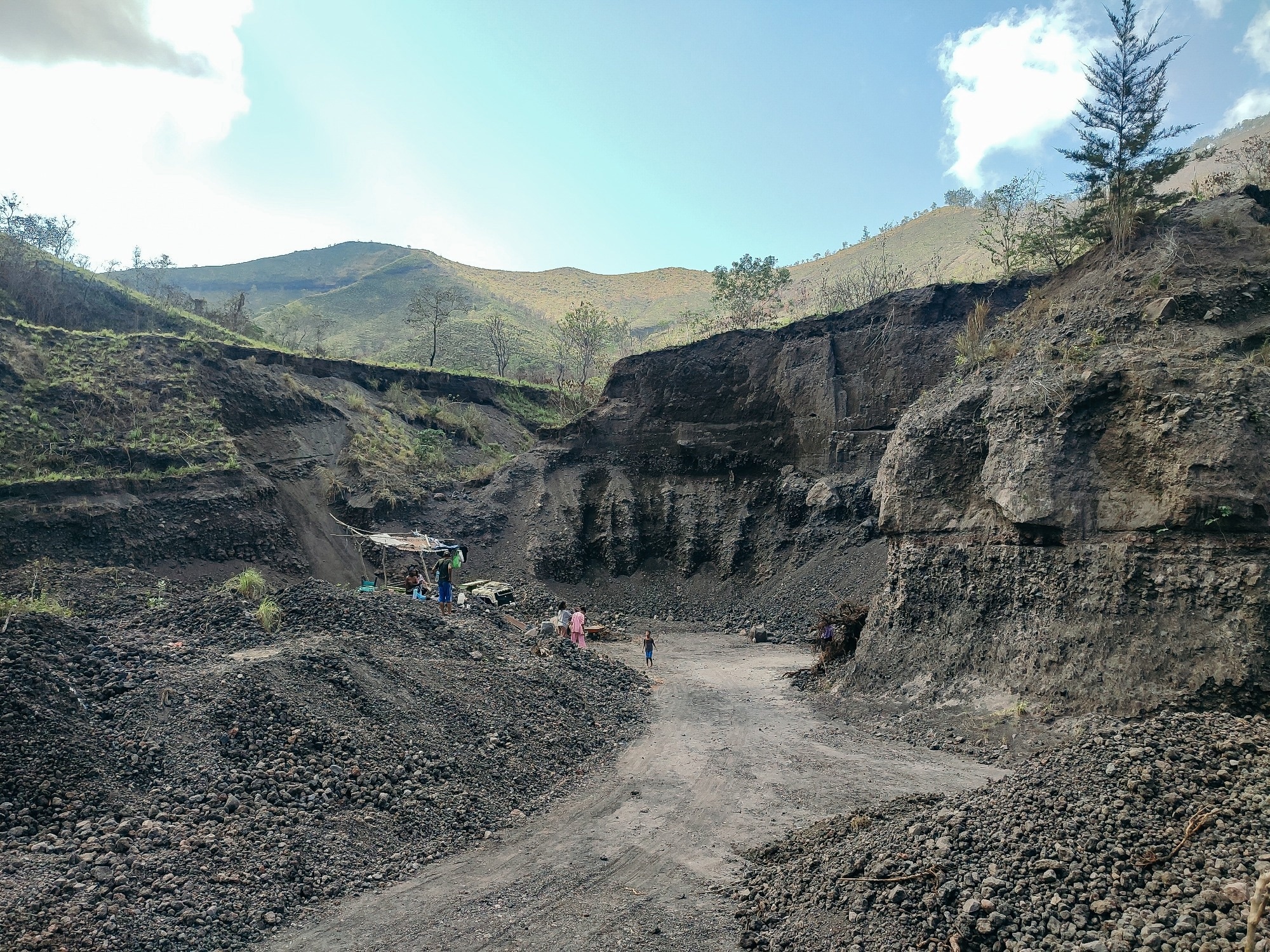
Image Credit: KARITING PICAH/Shutterstock.com
The Anatomy of Danger in Illegal Mines
Illegal mines are death traps by design. The February 2026 Meghalaya blast occurred in a rat-hole mine, a hazardous extraction method involving narrow tunnels barely wide enough for workers to crouch while using dynamite to break coal seams.1 These operations lack the fundamental safety infrastructure that characterizes legal mining. Research analyzing illegal gold sites in Indonesia found safety factors below accepted engineering thresholds, indicating a high probability of slope failure and collapse.4 The mines operate without geotechnical design, proper ventilation systems, or structural support, creating unstable cavities that can collapse without warning.
Field studies using geophysical surveys have identified hidden voids and weak zones beneath surface infrastructure at illegal mining sites, which predispose sudden ground failures.5 When informal miners re-open abandoned workings or dig into slopes without engineering oversight, they create conditions for catastrophic collapse.
The January 2025 Assam disaster illustrated another common hazard: uncontrolled flooding. This is where water from nearby abandoned mines or rivers can rapidly inundate poorly designed shafts lacking dewatering systems, posing a sudden drowning risk.2
Beyond structural failures, illegal operations expose workers to multiple overlapping hazards. Abandoned mine re-entry lacks ventilation plans and monitoring, thereby elevating the risk of asphyxiation and explosive atmospheres.6 Workers use simple tools without basic protective equipment, increasing exposure to falling ground and confined-space dangers. The use of uncontrolled blasting to open veins also provokes unstable fractures and localized collapse.7 These technical failings interact: unsupported excavations combined with concealed voids and poor drainage rapidly convert routine digging into fatal events.
Why Does Illegal Mining Persist?
Despite known dangers, illegal mining continues because it addresses immediate economic needs that formal systems fail to meet. Research in Ghana's Eastern Region found that miners expressed a desire to operate legally but were deterred by complex licensing procedures.8 The study revealed that bureaucratic barriers, high costs, and lengthy approval processes effectively exclude small-scale operators from formalization, pushing them into illegal activity.
Poverty and limited alternatives drive participation across multiple continents. In Indonesia, artisanal and small-scale gold mining supports over two million people, creating strong local dependence that sustains informal operations.7
A review of Colombian mining recorded 1,743 mining emergencies and 1,978 fatalities between 2005 and 2020, yet illegal operations persist because they provide accessible livelihoods for poor rural households where few formal employment options exist.9 Informal mining requires limited capital and skills compared with obtaining formal permits, attracting those needing immediate income.
Read More: An Overview of the Most Recent Mining Laws and Regulations
Political and economic incentives at institutional levels also perpetuate illegal mining. Studies document local politicians, officials, and criminal networks who collude with or benefit from illegal operations, shielding them from enforcement.10 In Ghana, analysis of government interventions since 1989 shows repeated failures, with military crackdowns temporarily displacing miners but failing to prevent their return because underlying livelihood needs remain unaddressed.11 The Mali collapse occurred at a site abandoned by a Chinese company, where impoverished women sought gold scraps to survive.3
The Enforcement Dilemma
Regulatory efforts repeatedly fail to eliminate illegal mining due to fragmented governance, weak institutional capacity, and political interference. Analysis of Indonesian mining law identified legislative gaps and complexity that make enforcement diffuse and formalization procedures difficult for community miners.12 Formal permit procedures often mirror requirements designed for large-scale operations, creating insurmountable barriers for small operators.12
Enforcement agencies face practical constraints, including limited budgets, insufficient personnel, and inadequate equipment that hinder their ability to seal shafts, monitor remote sites, and sustain enforcement actions over time.6 Illegal mines often occur in remote, forested, or mountainous areas where access is difficult. The Meghalaya mine explosion was located in a forested area 72 kilometers from the state capital.1 Such remoteness complicates regular inspections and emergency response.
Want to save for later? Click here.
Short-term crackdowns without follow-up consistently fail. India's National Green Tribunal imposed a blanket ban on rat-hole mining in 2014, upheld by the Supreme Court, yet monitoring committees have repeatedly flagged enforcement failures.1 Activists note that illegal coal mining has continued in Meghalaya despite the ban, with high demand for coal, poverty in mining regions, weak enforcement in remote areas, and alleged political patronage allowing unsafe operations to persist.
How Can Illegal Mining Be Prevented?
Research indicates that sustainable reductions in illegal mining disasters require coordinated reforms across multiple domains rather than purely coercive approaches. Policy reform must simplify licensing pathways to create proportionate, low-cost permits for small-scale operators, making formalization feasible.12 Regulations should be adapted to small producers rather than applying large-scale standards by default.
Enforcement mechanisms must be both targeted and sustained. Geophysical mapping and risk assessment can identify high-risk sites for priority action.5 Coordinated police, environmental, and local government resources with follow-up measures prove more effective than one-off crackdowns.13 Rehabilitating legacy workings by sealing, backfilling, and stabilizing abandoned shafts removes ready access points for illegal re-entry.6
Community engagement and alternative livelihoods are essential components. Combining eradication with credible alternative income or cash-for-work programs reduces immediate economic incentives to return to illegal pits.11 Involving communities in co-management, benefit-sharing, and small-scale licensing schemes reduces resistance and political patronage.14 As Ghanaian miners stated: "We desire to mine legally but the license procedure put us off".8 Addressing this disconnect between regulatory design and local economic reality is fundamental to prevention.
Governance reforms must strengthen transparency in permitting and enforcement to limit capture by vested interests.12 Sustained funding, training, and equipment for local agencies responsible for monitoring and emergency rescue are necessary investments. The literature indicates no single measure will suffice; durable reductions in collapses require coordinated reforms across regulation, enforcement, community livelihoods, and technical remediation, implemented with sustained resources and local participation.12
The tragedies in Meghalaya, Assam, and Mali are not isolated incidents but symptoms of a global system where regulatory frameworks designed for industrial mining fail to accommodate small-scale operators, enforcement capacity cannot match the scale of informal activity, and economic desperation drives workers into known death traps.
Until policies address the structural drivers that make illegal mining an economic necessity for millions, disasters will continue to claim lives in preventable accidents.
References and Further Reading
- BBC News. (2026). At least 18 die in 'rat-hole' mine blast in India. [Online] Available at: https://www.bbc.co.uk/news/articles/c20zvvez9y9o
- BBC News. (2025). Survivor recounts harrowing escape from deadly mine collapse in India. [Online] Available at: https://www.bbc.co.uk/news/articles/cpdnwdz2dx8o
- BBC News. (2025). Dozens killed in Mali illegal gold mine collapse. [Online] Available at: https://www.bbc.co.uk/news/articles/c87d9z4g5ywo
- Saputra, A., Priadi, E., & Rustamaji, R. (2024). Analysis of slope stability due to illegal gold mining in Bengkayang regency. Jurnal Teknik Sipil, 24(1). https://doi.org/10.26418/jts.v24i1.76179
- Maphanga, T., & Madonsela, B. S. (2023). Land degradation associated with illegal sand mining in rural areas and lack of formalization of the industry in South Africa: A review. International Journal of Environmental Impacts, 6(4). https://doi.org/10.18280/ijei.060408
- Matshusa, K., & Leonard, L. (2022). Exploring strategies for management of disasters associated with illegal gold mining in abandoned mines: A case study of Ekurhuleni Metropolitan Municipality. Jàmbá: Journal of Disaster Risk Studies, 14(1). https://doi.org/10.4102/jamba.v14i1.1237
- Takyi, R., Hassan, R., & El Mahrad, B. (2021). Socio-ecological analysis of artisanal gold mining in West Africa: A case study of Ghana. Journal of Sustainable Mining. https://doi.org/10.46873/2300-3960.1322
- Adanu, S. K., Boakye, M. K., Francis, G. S., & Arago, A. (2026). We desire to mine legally but the license procedure put us off: Perspectives from illegal miners in Fanteakwa South and Atiwa East Districts of the Eastern Region of Ghana. Advances in Social Sciences and Management, 4(1), 65-76. https://doi.org/10.63002/assm.401.1240
- Legacy gold mine sites & dumps in the Witwatersrand: Challenges and required action. (2023). Natural Resources. https://doi.org/10.4236/nr.2023.145005
- Efendi, N., & Frinaldi, A. (2023). Pertambangan emas tanpa izin (PETI): Dampak lingkungan, sosial dan ekonomi serta peranan hukum lingkungan. Jurnal Ilmiah Multidisiplin Nusantara, 1(3). https://doi.org/10.59435/jimnu.v1i3.57
- Yeboah, R. D. (2023). Galamsey fight in Ghana: An analysis of failure of government interventions since 1989. E-Journal of Humanities, Art and Social Sciences. https://doi.org/10.38159/ehass.20234417
- Rohman, A., Syafruddin, S., & Masnyur, M. (2020). Politica of criminal law: The importance of revision of mineral and coal law: Who is benefitted. Journal of Programming Languages, 13(4). https://doi.org/10.5539/JPL.V13N4P156
- Saputri, L. (2024). Environmental law enforcement on illegal rock mining in Indonesia: A case study of Bone Regency. Constitutional Law Review, 3(1). https://doi.org/10.30863/clr.v3i1.5638
- To coerce, or not to coerce? Assessing policy strategies to regulate small-scale and artisanal mining in the Andes. (2022). School of Public Policy Publications, 15(1). https://doi.org/10.11575/sppp.v15i1.75622
Disclaimer: The views expressed here are those of the author expressed in their private capacity and do not necessarily represent the views of AZoM.com Limited T/A AZoNetwork the owner and operator of this website. This disclaimer forms part of the Terms and conditions of use of this website.