Researchers have found that native forest litter jumpstarts microbial life, accelerating the recovery of degraded mine soils.
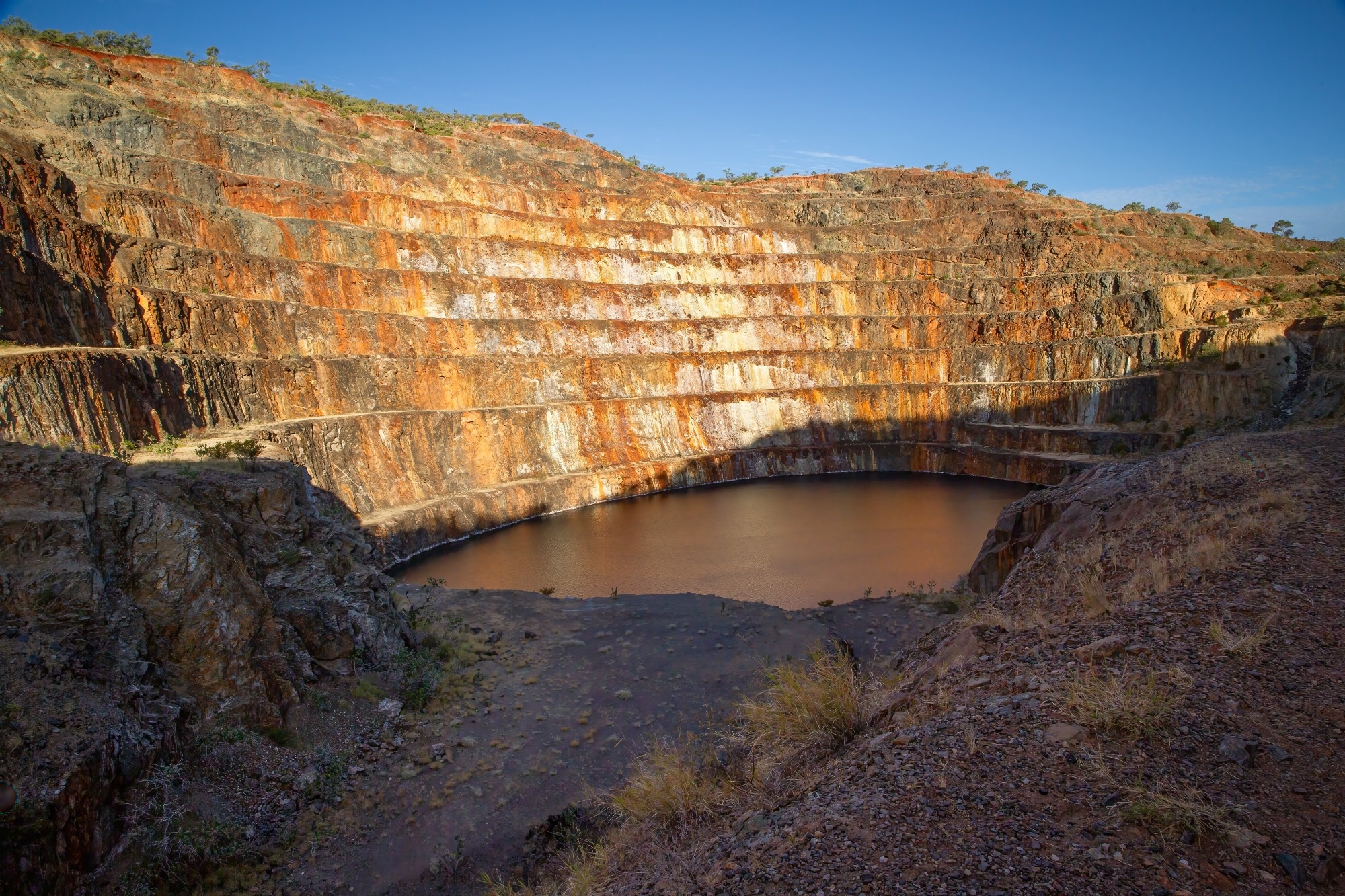
Image Credit: Shirley Jayne Photography/Shutterstock.com
Eucalyptus woodland ecosystems depend heavily on soil microbial communities to break down tough, low-quality litter material rich in lignin and marked by high carbon-to-nitrogen ratios (around 60:1). This isn’t a simple process. Fungi and bacteria work together within complex ecological networks to decompose organic matter, while archaea quietly drive essential nitrogen transformations, particularly in nutrient-poor soils where every available resource matters.
Recreating these finely tuned microbial systems after mining is far from straightforward. Post-mining rehabilitation often struggles to establish similar communities in engineered waste rock (WR)-based soils, largely due to abiotic constraints and limited organic inputs. Traditional soil amendments can help, but they’re often costly and labor-intensive. This has led to growing interest in more practical, nature-based approaches, such as repurposing native plant litter removed during site clearing as a biological inoculant.
At the Ranger Uranium Mine in Australia’s Northern Territory, previous work has shown that WR-based soils can support Eucalyptus vegetation over the long term. However, the recovery of microbial communities has lagged, highlighting the need for targeted interventions, especially during key windows, such as the wet season, when microbial activity is naturally elevated.
Ranger Uranium Mine Rehabilitation Landform Trial
This study took place at the Ranger Uranium Mine rehabilitation landform trial (TLF-1A), where WR-based soils have supported Eucalyptus-dominated vegetation for roughly a decade. To introduce a biologically relevant input, native plant litter was collected from a nearby reference Eucalyptus woodland within the Georgetown Creek Reference Area, ensuring both chemical and microbial compatibility.
The litter - primarily Eucalyptus, with contributions from Acacia and native grasses - contained 39.5 % to 45.4 % total organic carbon and 0.6 % to 0.7 % nitrogen, resulting in carbon-to-nitrogen ratios between 54 and 67. Macronutrients such as phosphorus, potassium, calcium, and iron were also quantified, along with moisture content and baseline microbial respiration.
Before application during the wet season, the litter was homogenized and spread evenly across two 20 m × 20 m plots at a depth of 5 cm. Control plots without litter, along with the reference woodland, provided benchmarks for comparison. After 15 weeks, surface soils (0–5 cm) were collected for detailed physicochemical analysis, microbial profiling, and enzymatic assays.
A comprehensive suite of soil biochemical parameters was measured, including pH, electrical conductivity, total organic carbon and nitrogen, water-soluble organic carbon, mineral nitrogen species (NH4+, NO2-, NO3-), and phosphorus availability. Microbial activity was assessed through sucrose-induced respiration and nitrogen mineralization rates.
To better understand functional dynamics, key extracellular enzymes involved in carbon and nitrogen cycling were analyzed using fluorometric assays - β-1,4-glucosidase (βG), cellobiohydrolase (CB), and L-leucine aminopeptidase (LAP). Together, these indicators provided a direct window into how microbial communities were processing organic matter.
Microbial composition was characterized using high-throughput sequencing of 16S rRNA genes (for prokaryotes) and ITS regions (for fungi). Standardized bioinformatics pipelines handled quality filtering, taxonomic classification, and diversity analysis, with rarefaction ensuring fair comparisons across samples. Core microbiomes - taxa present in more than 80% of samples - were identified to pinpoint organisms consistently associated with them. Co-occurrence network analysis further revealed patterns of interaction, including modularity, clustering, and connectivity within microbial communities.
Click here to download a free PDF copy of this page
Results and Discussion
Introducing native litter triggered clear and meaningful shifts in the WR-based soil microbiome. Microbial diversity increased, and community composition began to resemble that of nearby natural woodlands.
Notably, there was a strong enrichment of taxa linked to carbon and nitrogen cycling. This included ammonia-oxidizing archaea (family Nitrososphaeraceae), bacterial decomposers such as Bacteroidetes, and fungi within the Ascomycota. At the same time, taxa typically associated with stress tolerance or extreme conditions - such as thermophilic Thermoplasmata and Glomeromycota (arbuscular mycorrhizal fungi) - declined. This shift suggests a transition away from survival-oriented communities toward more functionally active decomposer systems.
Network analysis added another layer of insight. Archaeal and bacterial communities showed increased modularity, pointing to more efficient resource partitioning. Fungal networks, meanwhile, became more connected and clustered, indicating stronger cooperative interactions. These structural changes are likely to underpin improved ecosystem functioning, particularly in organic matter breakdown and nutrient cycling.
From a biochemical perspective, the effects were equally clear. Litter inoculation stimulated extracellular enzyme activity linked to cellulose and protein degradation, alongside higher nitrogen mineralization rates. These responses were especially pronounced during the wet season, when microbial processes are naturally amplified.
Conclusion
This study demonstrates that native litter inoculation can meaningfully improve the biological functionality of WR-based soils in post-mining landscapes. By boosting microbial diversity, enriching key functional groups, and strengthening microbial network structure, this approach enhances the processes that drive soil recovery - namely, organic matter decomposition and nutrient cycling.
Importantly, this strategy is both practical and scalable. Native plant material is already available during land clearing, making litter inoculation a cost-effective alternative to external soil amendments. By working with, rather than against, natural ecological processes, it offers a more sustainable pathway for restoring Eucalyptus woodland ecosystems.
As mining rehabilitation continues to evolve, integrating biologically driven approaches like this could play a key role in rebuilding resilient, self-sustaining ecosystems from the ground up.
Journal Reference
You F., Parry D., et al. (2026). Biological triggering waste rock-based soil system with native plant litter establishes soil microbiome and biochemical functional potential typical of Eucalyptus woodland. Environmental and Experimental Botany, 2, e008. DOI: 10.48130/een-0026-0003, https://www.maxapress.com/article/doi/10.48130/een-0026-0003