Dual-porosity modeling and experiments reveal how stress-driven damage affects methane flow. This mining approach identifies optimal pressure conditions to improve gas drainage while maintaining borehole stability.
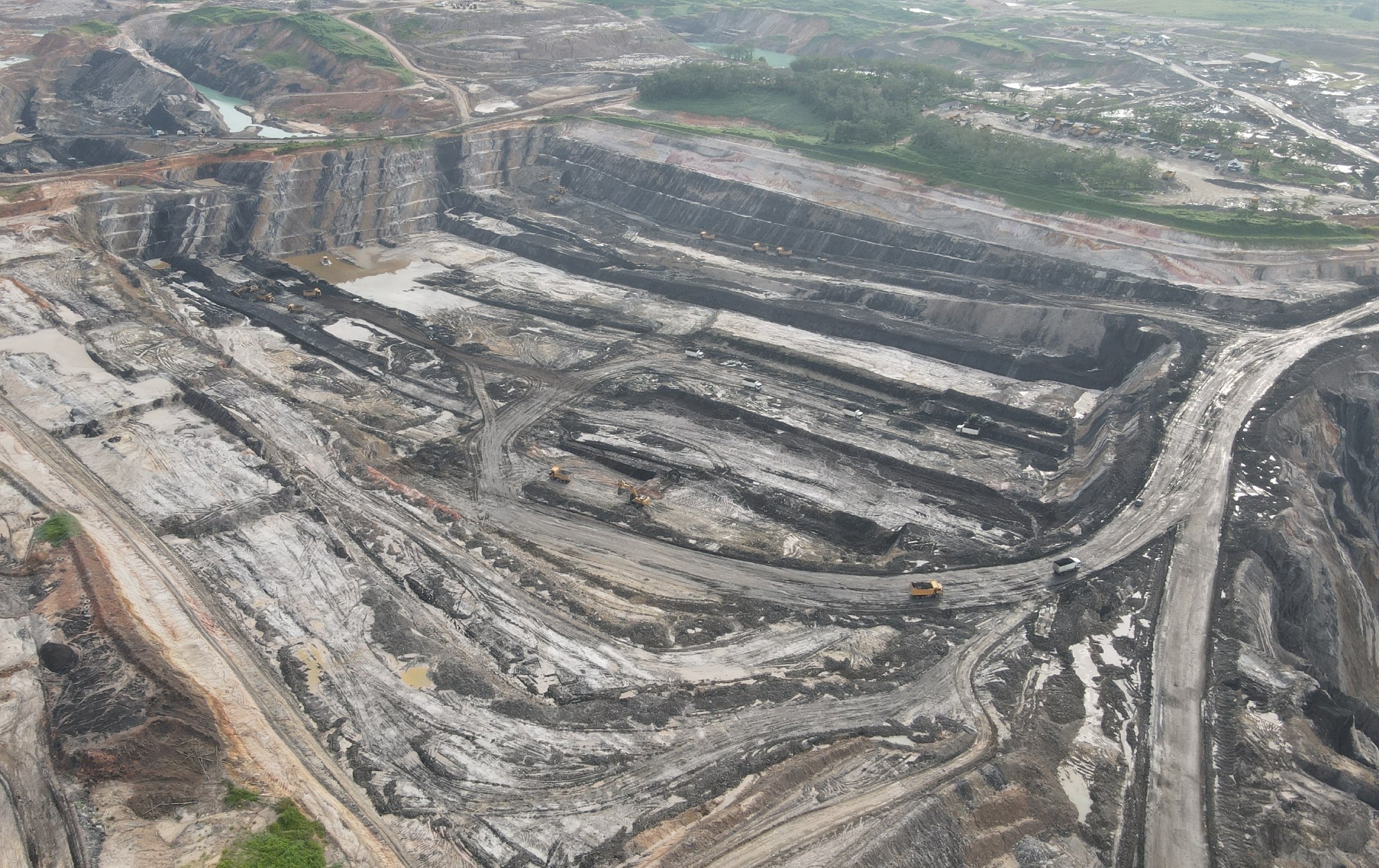 Study: Plastic Damage Evolution Around Deep Coal-Seam Boreholes and Its Effect on Gas Drainage Efficiency. Image Credit: Aghnia's Father/Shutterstock
The increasing depth of mining operations globally has raised the risk of coal rock dynamic disasters, making efficient gas drainage essential for underground mining safety. A recent study published in the journal Applied Sciences comprehensively examined the complex relationship between borehole-induced rock damage and methane (CH4) migration.
Researchers identified a strong nonlinear relationship: a fourfold increase in in situ stress led to a 13-fold increase in the damage variable. By combining dual-porosity modeling with triaxial experimental validation, they developed a framework that defines the optimal range for lateral pressure coefficients. This helps mining engineers in improving gas drainage while maintaining borehole stability under high-stress conditions.
Challenges in Deep Coal Extraction
As the global energy sector moves toward deeper mineral reserves, the mining industry faces geological challenges, including high ground temperatures and gas pressures. In China, traditional gas drainage methods often perform poorly in low-permeability coal seams due to complex interactions between rock deformation and fluid flow.
The extraction of CH4 depends on altering the coal stress field through drilling, which promotes gas desorption. However, instability in the surrounding rock and the weakening of borehole structures can reduce drainage efficiency. Therefore, enhancing gas drainage and rock stability is key to preventing gas outbursts and ensuring safe resource development.
Methodology: Integrating Experiments and Simulations
To effectively investigate the factors controlling borehole performance, researchers combined laboratory triaxial testing with multi-field numerical simulations. The experimental phase used cylindrical anthracite coal samples measuring 450 mm in height and 100 mm in diameter. These specimens were collected from the Qinshui Coalfield, China.
The study was designed to simulate eight axial and confining pressure conditions, each representing a different lateral pressure coefficient. During the tests, nitrogen was employed as a substitute gas at a constant injection pressure of 0.6 MPa to measure permeability changes under axial stresses ranging from 2 MPa to 8 MPa. The numerical phase developed a dual-porosity mathematical model within an elastoplastic framework, distinguishing CH4 diffusion in the coal matrix from gas flow in fractures.
Researchers simulated a two-dimensional (2D) gas drainage system covering an area of 20 m by 2 m with a central borehole radius of 0.1 m. Two numerical simulation schemes were applied: an isotropic stress scheme with equal vertical and horizontal stresses of 5, 10, 15, and 20 MPa, and a stress ratio scheme with a lateral pressure coefficient (k) ranging from 0.5 to 2.0. Using the Langmuir isothermal adsorption model and cumulative plastic strain analysis, the study linked rock deformation with gas transport behavior.
Key Findings: Nonlinear Damage Evolution
The outcomes demonstrated a strong nonlinear relationship between in situ stress and plastic damage. When isotropic stress increased from 5 MPa to 10 MPa, the damage area expanded by 203%, rising from 0.016962 m2 to 0.034479 m2. This indicates that coal enters a rapid deterioration phase even with moderate increases in stress.
Using a quadratic fit, the study indicated that the peak damage value (Dmax) increased sharply as stress reached 20 MPa. This suggests that high-stress conditions accelerate borehole instability, highlighting the need for stronger support systems in deeper coal seams.
Download the PDF of this page here
The lateral k significantly affected damage patterns. A coefficient of 1.0, representing uniform stress, produced the smallest and most symmetrical damage zone. However, as the coefficient deviated from 1.0, the damage pattern changed. At (k=0.5), the damage spreads vertically, forming an elliptical zone, while at (k=2), the damage area developed into an asymmetric butterfly-shaped pattern, which has potential for gas drainage.
Higher lateral pressure created high-velocity seepage zones near the borehole, enhancing local gas extraction but reducing permeability in distant regions due to stress-induced compaction. Researchers found that the drainage radius was greatest at a moderate stress level of 10 MPa, while higher stresses restricted the long-distance gas migration.
Implications for Engineering Gas Drainage Systems
This research has significant implications for designing gas drainage systems in deep coal mines. It identified an optimal safety range for lateral pressure coefficients, suggesting that engineers should maintain moderate damage levels, ideally with a damage area between 0.03 and 0.05 m2, to balance permeability improvement with borehole stability.
Researchers also identified directional seepage channels in anisotropic stress fields at (k=1), allowing boreholes to be oriented toward high gas flow zones. In regions with high vertical stress, horizontal borehole spacing can be adjusted to follow the butterfly-shaped damage pattern, improving contact with CH4 migration while reducing the risk of borehole collapse.
Future Directions for Deep Mining Safety
In summary, this study highlights the dual role of plastic damage in deep-seam mining, where it can both enhance permeability and reduce long-term gas extraction efficiency. It confirmed that fractures near the borehole facilitate immediate gas release, while excessive compaction in distant regions under high in situ stress can diminish the drainage radius.
Future work should focus on developing a three-dimensional (3D) multi-borehole framework that includes time-dependent deformation and creep behavior. Such advancements will be crucial for improving long-term extraction in deep mining operations and ensuring safer management of high-pressure underground environments.
Journal Reference
Li, R.; & et al. (2026). Plastic Damage Evolution Around Deep Coal-Seam Boreholes and Its Effect on Gas Drainage Efficiency. Appl. Sci. 16, 4563. DOI: 10.3390/app16094563, https://www.mdpi.com/2076-3417/16/9/4563
Disclaimer: The views expressed here are those of the author expressed in their private capacity and do not necessarily represent the views of AZoM.com Limited T/A AZoNetwork the owner and operator of this website. This disclaimer forms part of the Terms and conditions of use of this website.