Mining waste transformed into sodalite-based adsorbents removed Pb2+, Cu2+, and Cd2+ from contaminated water, improving surface area, adsorption rate, and wastewater treatment capacity while supporting sustainable, local circular mining practices.
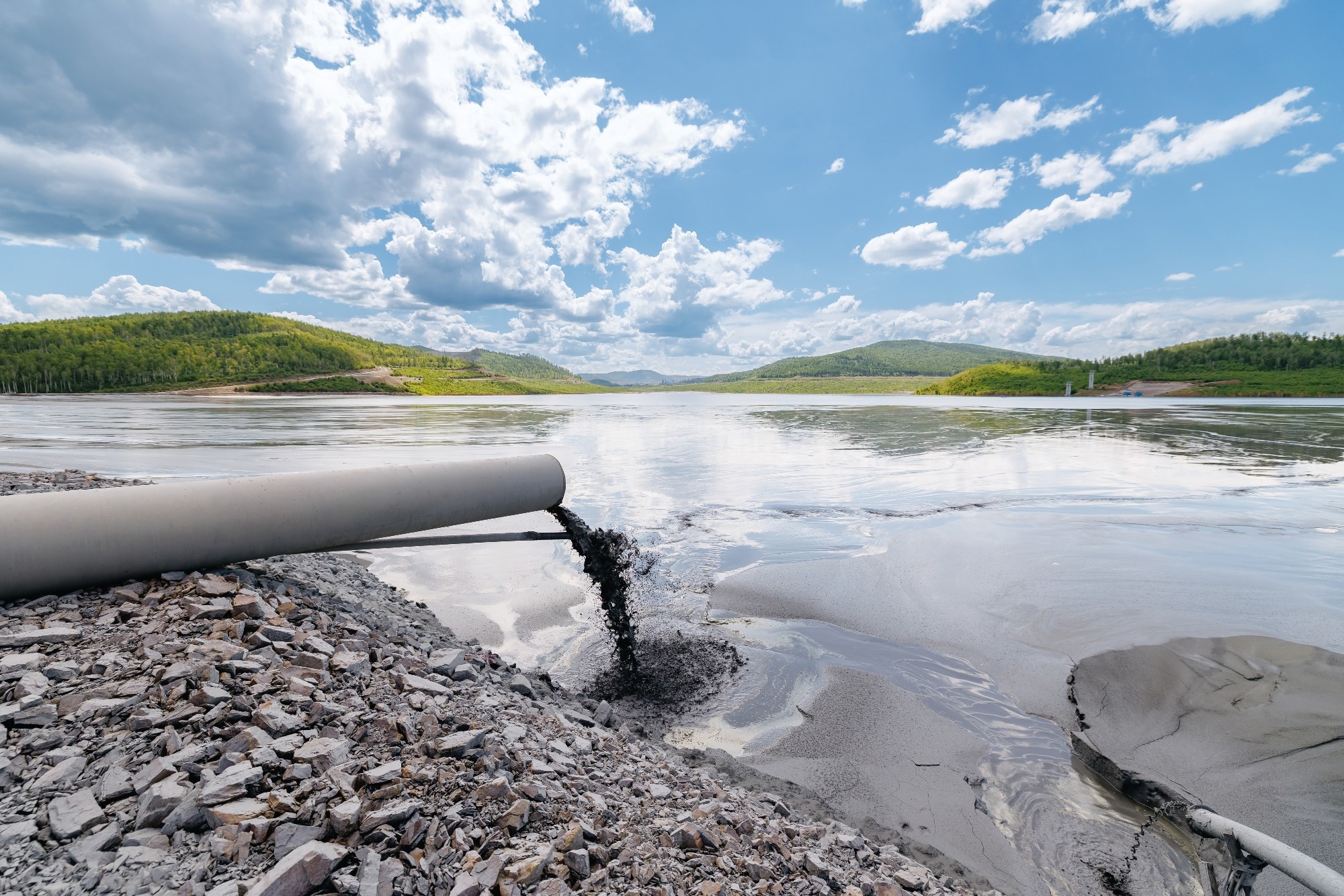 Study: Efficiency of mining rock wastes in the removal of toxic heavy metal ions (Pb2+, Cu2+, and Cd2+) from contaminated water solutions. Image Credit: Parilov/Shutterstock
A recent study published in Scientific Reports explores how mining waste can be transformed into low-cost adsorbents for wastewater treatment. The study evaluated the ability of mining waste-derived adsorbents to remove toxic heavy metals from contaminated water. The findings demonstrate a promising pathway for converting large volumes of mine waste into value-added products that support environmental remediation and sustainable mining practices.
Circular Approaches to Mining Waste
Mining operations generate large volumes of waste rock and overburden, creating long-term environmental and resource-management challenges. Phosphate mining at Egypt’s Abu Tartur Plateau generates significant amounts of waste, particularly phosphatic dolomite and black shale. These materials are stockpiled and can often cause environmental contamination through weathering and leaching processes.
Heavy metal contamination remains a significant challenge for the mining industry. Lead (Pb²+), copper (Cu²+), and cadmium (Cd²+) are particularly concerning because of their toxicity and persistence in the environment. Although conventional treatment methods can effectively remove these contaminants, they often rely on expensive materials or complex processes. Adsorption offers a cost-effective alternative with strong metal-removal performance and straightforward operation.
Researchers are studying various ways to transform mining waste into value-added materials. In this study, the team evaluated phosphatic dolomite waste from the Abu Tartur phosphate mine as a low-cost adsorbent for heavy metal removal. The developed material delivered significantly higher adsorption capacities and removal efficiencies for Pb²+, Cu²+, and Cd²+.
Adsorbent Synthesis and Characterization
The researchers used phosphatic dolomite and black shale collected from the Abu Tartur phosphate mining area as the starting materials for adsorbent production. To enhance adsorption performance, they first calcined the phosphatic dolomite and then combined it with black shale and an aluminum source through an alkali activation process. Subsequent hydrothermal treatment converted the mixture into a zeolite-like sodalite material designed to provide a higher surface area and more active adsorption sites.
The team conducted extensive material characterization to evaluate the structural and chemical changes introduced during synthesis. X-ray diffraction confirmed the formation of sodalite and cancrinite phases, while X-ray fluorescence analysis determined the elemental composition of the materials. Fourier-transform infrared spectroscopy identified key functional groups and chemical bonds, providing further evidence of successful mineral transformation. Scanning electron microscopy revealed changes in particle morphology, and surface-area measurements quantified pore structure and surface properties.
Researchers examined the removal of Pb2+, Cu2+, and Cd2+ under a range of operating conditions. They varied adsorbent dosage, solution pH, contact time, and initial metal concentration to identify optimal treatment parameters. The study also included mixed-metal adsorption tests to simulate more realistic wastewater conditions. Finally, the team applied adsorption isotherm and kinetic models to investigate metal uptake mechanisms.
Improved Metal Removal Efficiency
Material characterization revealed significant changes after mineral transformation. Raw phosphatic dolomite exhibited a dense and compact morphology. Calcination increased porosity through carbonate decomposition, while hydrothermal synthesis produced well-defined sodalite crystals alongside cancrinite phases. These structural modifications created a more porous and complex adsorbent framework.
The surface area analysis indicated that after structural modification, the surface area increased from 6.8 m²/g for raw phosphatic dolomite to 40.7 m²/g for the sodalite-based material. Pore volume increased substantially, thereby providing more active sites for metal adsorption.
Adsorption experiments highlighted the advantages of the modified material, and the synthesized sodalite consistently outperformed untreated phosphatic dolomite. Under optimized conditions, with only 0.2 g of the sodalite-based adsorbent removed 1000 ppm of Pb²+ from solution. For Cu²+, 0.3 g achieved removal efficiencies exceeding 90% at an initial concentration of 300 ppm. The material also delivered near-complete Cd²+ removal. In comparison, untreated phosphatic dolomite required higher dosages and exhibited lower overall removal efficiencies.
Download the PDF of this page here
Operating conditions strongly influenced adsorption behavior. The highest removal efficiencies occurred at pH values between 3 and 4, while adsorption equilibrium was reached within approximately 30 minutes. Increasing adsorbent dosage improved metal removal, whereas higher initial metal concentrations reduced performance because available adsorption sites became saturated.
Both adsorbents exhibited the same metal selectivity, following the order Pb2+> Cu2+ > Cd2+, with lead showing the strongest adsorption affinity even in mixed-metal systems. Isotherm and kinetic analyses indicated that metal uptake was dominated by monolayer adsorption and chemisorption, highlighting the enhanced adsorption performance of the synthesized sodalite material.
Advancing Mine Waste Utilization
This study demonstrates how mining waste can be transformed from an environmental liability into a valuable resource. The approach addresses two important challenges, i.e., managing large volumes of mining waste and improving water treatment technologies. The findings highlight the benefits of applying mineral processing and beneficiation techniques beyond conventional resource extraction. This strategy supports circular economy principles by extending the value of mining byproducts and reducing the environmental footprint of mining operations.
The synthesized adsorbent offers a cost-effective alternative to commercial adsorbents. It demonstrates strong and consistent performance in removing Pb2+, Cu2+, and Cd2+. Rapid adsorption kinetics and high removal efficiencies further enhance its potential for mine water treatment, industrial wastewater remediation, and environmental restoration applications. Looking ahead, waste valorization could become a key strategy for more sustainable and resource-efficient mining.
Journal Reference
Fathy, A. T., Moneim, M. A., et al. (2026). Efficiency of mining rock wastes in the removal of toxic heavy metal ions (Pb2+, Cu2+, and Cd2+) from contaminated water solutions. Scientific Reports, 16(1), 17343. DOI: 10.1038/s41598-026-48461-y, https://www.nature.com/articles/s41598-026-48461-y
Disclaimer: The views expressed here are those of the author expressed in their private capacity and do not necessarily represent the views of AZoM.com Limited T/A AZoNetwork the owner and operator of this website. This disclaimer forms part of the Terms and conditions of use of this website.