After the 2011 Fukushima accident, uranium prices dropped, mines closed, and exploration budgets were cut as many countries stepped back from nuclear power. However, changing climate goals, energy security concerns, and rising electricity demand have spurred renewed interest in nuclear energy.
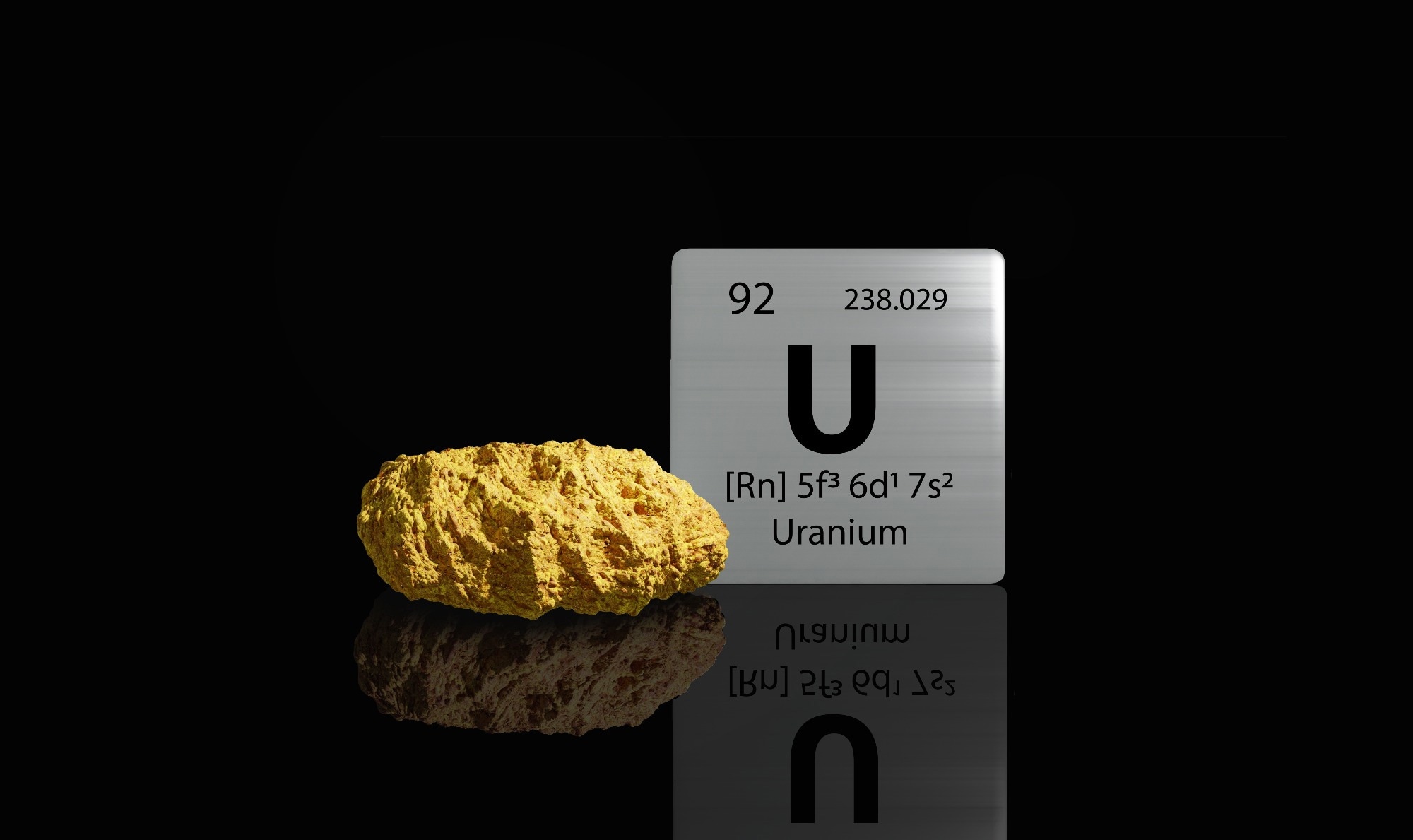
Image Credit: Ole.CNX/Shutterstock.com
Uranium is a dense and radioactive metal that can power a reactor for 18–24 months with a small amount of fuel. As more reactors are built and existing ones receive longer operating licenses, the demand for uranium is increasing.
This article discusses why nuclear power is becoming popular again, the growth in uranium demand, and how miners are responding to this shift while considering environmental impact.1,2
What's Fueling the Nuclear Power Comeback?
Nuclear power is appealing due to its low emission profile. Life cycle studies show that it emits about six tons of CO2 per GW of electricity; in comparison, natural gas emits around 440 tons, and coal emits about 970 tons.2
Nuclear reactors also run almost continuously. In the US, these plants work at a capacity factor of about 92.6%, delivering close to their full rated output for most of the year.2
Energy security is a second key motive for increased nuclear power use. Since 2022, Japan has restarted 14 units that were idled after Fukushima. At a similar time, 31 countries signed a pledge, first announced at the COP28 climate summit, to triple their nuclear capacity by 2050.2,3 This number has now increased to 39.8
Download a free copy of this page here!
Can Uranium Supply Keep Pace With Nuclear Growth?
The scale of planned growth in uranium demand is substantial. The World Nuclear Association reports that global operable capacity stood at 398 GW in mid-2025, and its reference scenario projects it to reach 746 GW by 2040.4
The World Nuclear Association estimates that annual reactor uranium requirements could increase from approximately 68,920 metric tons in 2025 to more than 150,000 metric tons by 2040 under its Reference Scenario, more than doubling demand over the period.4
Extending the life of existing plants is important because it allows for more years of fuel use without the need for new construction.4,5
Newer reactor designs could further support this growth. Small modular reactors can generate up to 300 megawatts each, which is about one-third the size of a conventional reactor. These smaller reactors can be built in factories and then shipped to their sites.
Several designs have already passed regulatory reviews. New nuclear programs in the Middle East, Africa, and Southeast Asia add another layer of demand that earlier market forecasts largely left out.1,5
On the supply side, the geological outlook is promising. The 2024 Red Book, prepared jointly by the OECD Nuclear Energy Agency and the International Atomic Energy Agency, estimates there are about 7.9 million tons of recoverable uranium.3
The harder task is converting those resources into working mines. The World Nuclear Association expects output from today’s mines to halve by 2040 as existing deposits are gradually depleted.2,3,6
Why Uranium Mines Can't Ramp Up Overnight
The decline in prices after 2011 led to mine suspensions and slashes to exploration investment, leaving the industry with limited capacity to respond. Investment levels have since rebounded, but the establishment of new production centers continues to face extended lead times due to cautious investors and protracted permitting processes.
Moreover, stockpiles held by utilities and governments, which once cushioned shortages, have thinned considerably.3,5
Producers are taking action on multiple fronts. In the US, companies are reopening idled mines in Texas, Utah, Wyoming, and Arizona, while new projects are also progressing in Canada, India, and Mongolia.
Utilities that have depleted their inventories have reverted to long-term contracts to secure fuel at fixed prices. Given that Kazakhstan remains the primary supplier, Western buyers are leaning towards projects in Canada, Australia, and Africa to diversify their geopolitical risks across more stable jurisdictions.1,5
How In Situ Recovery Is Changing Uranium Mining
A major chunk of the new uranium supply will come from in situ recovery, also known as in situ leaching. It involves leaving the ore in place
while drilling injection wells into a permeable, water-bearing rock layer. Operators then pump in a solution that combines an oxidant, such as oxygen or hydrogen peroxide, with sulfuric acid or a carbonate solution. The liquid dissolves the uranium and returns to a surface processing plant through production wells.1,7
The technique suits low-grade sandstone deposits that would be too costly to excavate by traditional methods. A recent review published in MDPI Mining highlights that in situ recovery avoids large excavations, waste rock, and radioactive dust while reducing operational costs. Its share of global output has climbed from 16% in 2000 to about 63% by 2021. In the United States, operations in Wyoming and Nebraska now rely heavily on gentler carbon dioxide and oxygen solutions.1,7
The Environmental Challenges Behind Uranium's Comeback
In situ recovery still carries real risks. Leaching fluids can mobilize radon, arsenic, and other heavy metals, which may contaminate nearby groundwater if they escape the target zone. Tighter proposed federal groundwater standards have been rolled back. This raises concerns among researchers, who stress that post-mining restoration requires sustained, long-term monitoring.
Environmental advocates also call for baseline water testing before operations begin and subsequent cleanup to restore pre-mining conditions after the event, with oversight from federal or state regulators.1,7
Public skepticism has deep roots in the industry’s past. The Cold War era left hundreds of abandoned sites across the Four Corners region of the American Southwest, many on the Navajo Nation and still awaiting cleanup. In 1979, a dam failure at New Mexico’s Church Rock mine sent 94 million gallons of radioactive waste into the Rio Puerco. Additionally, studies have linked the proximity to such sites with higher incidences of kidney disease and hypertension.1
What's Next for the Uranium Mining Revival?
Uranium is making a strong comeback due to its role in providing low-carbon, reliable electricity and enhancing energy independence. Fuel needs are climbing while existing mines age, secondary stockpiles thin, and buyers diversify away from dominant suppliers.
While the world has ample uranium underground, bringing it to market on time will require sustained exploration, faster permitting, and patient investment in new production.3,4
Cleaner extraction methods, such as in situ recovery, can reduce environmental impact if operators ensure groundwater safety and address prior mining issues.
Ultimately, safe uranium mining comes down to planning, regulation, and monitoring. The strategic comeback of uranium will endure if producers pair new supply with rigorous safeguards that earn the lasting confidence of host communities.1
References and Further Reading
- Robbins, J. (2024). A Nuclear Power Revival Is Sparking a Surge in Uranium Mining. [Online] Yale Environment 360. Available at: https://e360.yale.edu/features/us-uranium-mining-nuclear-power.
- Coulson, J. (2025). Nuclear Energy – why uranium is back in favour. [Online] HANetf. Available at: https://hanetf.com/news-insights/nuclear-energy-why-uranium-is-back-in-favour/.
- Sufficient uranium resources exist, however investments needed to sustain high nuclear energy growth. (2025). [Online] Nuclear Energy Agency. Available at: https://oecd-nea.org/jcms/pl_103308/sufficient-uranium-resources-exist-however-investments-needed-to-sustain-high-nuclear-energy-growth.
- World Nuclear Fuel Report: Global Scenarios for Demand and Supply Availability 2025-2040. (2025). World Nuclear Association. https://world-nuclear.org/our-association/publications/global-trends-reports/world-nuclear-fuel-report-2025
- Uranium Revival Gathers Momentum as Nuclear Capacity Expansions Proceed. (2026). [Online] Mining IR. Available at: https://miningir.com/uranium-revival-gathers-momentum-as-nuclear-capacity-expansions-proceed/
- Uranium 2024: Resources, Production and Demand. (2026). [Online] Nuclear Energy Agency. Available at: https://oecd-nea.org/jcms/pl_103179/uranium-2024-resources-production-and-demand.
- Li, G., & Yao, J. (2024). A Review of In Situ Leaching (ISL) for Uranium Mining. Mining, 4(1). DOI:10.3390/mining4010009. https://www.mdpi.com/2673-6489/4/1/9.
- Declaration to Triple Nuclear Energy. (2026). [Online] World Nuclear Association. Available at: https://world-nuclear.org/net-zero-nuclear/tripling-pledges/declaration-to-triple-nuclear-energy?.
Disclaimer: The views expressed here are those of the author expressed in their private capacity and do not necessarily represent the views of AZoM.com Limited T/A AZoNetwork the owner and operator of this website. This disclaimer forms part of the Terms and conditions of use of this website.