Market Size and Equipment Demand
Autonomous Haulage and Mine Safety
Battery-Electric Machines Underground
Trolley Assist and Electrified Surface Haulage
Barriers to Adoption
Regional Growth and Competitive Strategy
Conclusion
References and Further Reading
The global mining equipment market is entering a period of steady growth, with industry forecasts projecting its value to rise from $28.42 billion in 2026 to $42.81 billion by 2033. That trajectory represents a compound annual growth rate (CAGR) of around 6%.
The expansion points toward a gradual shift from diesel-powered, manually operated machines toward electrified, autonomous, and software-connected fleets across surface and underground mines worldwide. Mining companies are making this transition due to declining ore grades and stricter emission regulations that require reduced diesel use. This article examines the market’s structure, trends in automation and electrification, adoption challenges, and the regional and competitive forces ahead.1,2
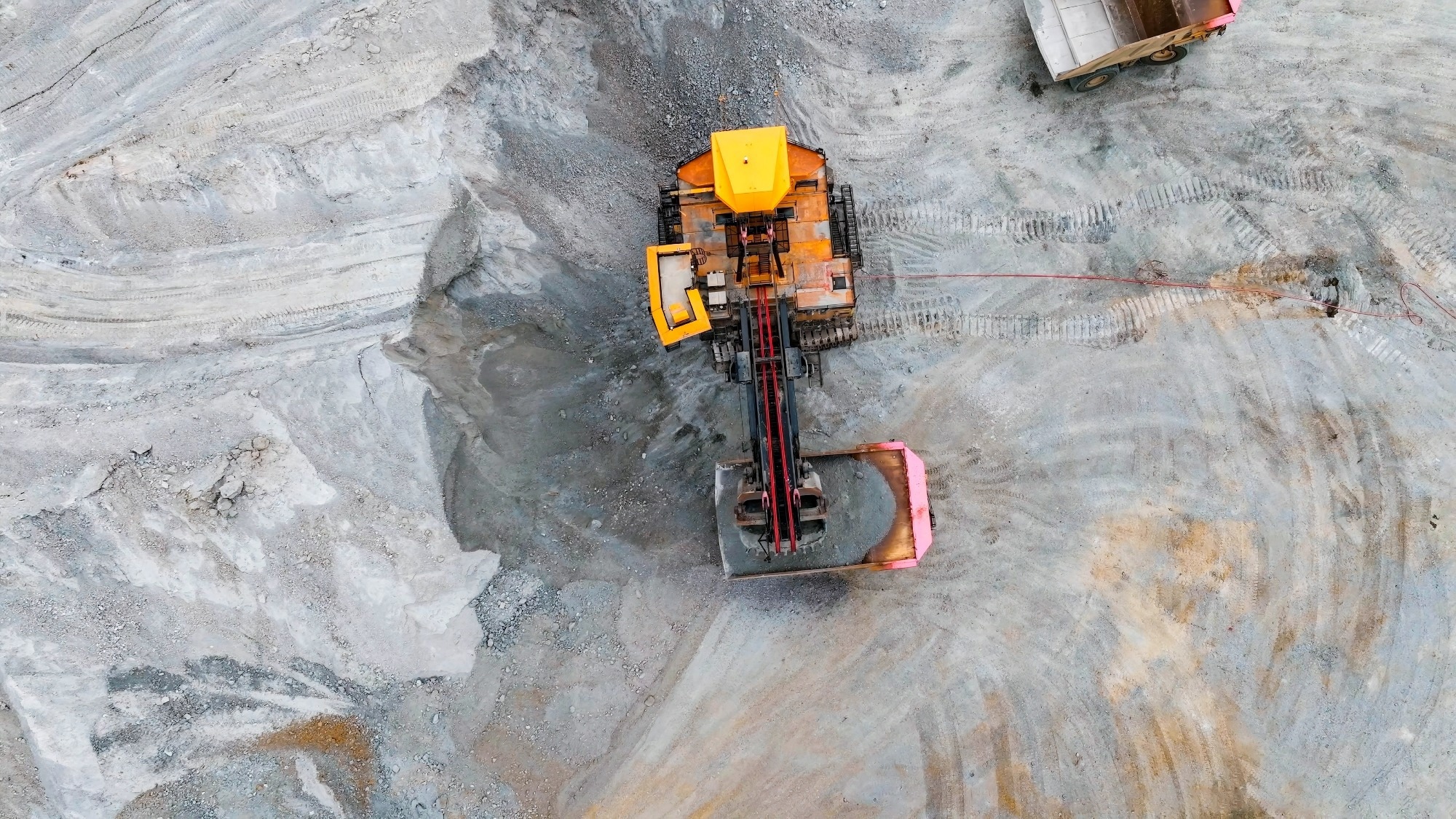
Image Credit: WILLIAM LUQUE/Shutterstock.com
Market Size and Equipment Demand
Among major surface machines, crawler excavators lead unit demand because they handle overburden removal, ore loading, pit development, and general earthmoving. Motor graders follow, as open-pit mines rely on them to maintain haul roads and lower rolling resistance for truck fleets. Similarly, surface operations favor very large machines, as open pits lack the space limitations of underground tunnels, allowing for greater payloads per cycle.1
The fastest-growing segment covers equipment rated above 2000 horsepower (hp), including ultra-class haul trucks, large electric rope shovels, and high-capacity dozers. As ore grades fall, mines must shift greater volumes of waste rock within shorter operating cycles, and these machines lower the cost per ton moved. However, their purchase prices, energy demands, and infrastructure needs make them better suited to large operations than to smaller mines.1
Autonomous Haulage and Mine Safety
Autonomous haulage systems (AHS) use onboard sensors, positioning systems, and central fleet software to drive haul trucks without a cab operator. Mining companies adopt them to raise equipment utilization, increase tons moved per operating hour, and reduce personnel exposure in busy pits. Equipment makers are now pairing autonomous trucks with precision drilling and fleet management platforms that coordinate loading, hauling, and drilling to reduce idle time.1
A recent simulation study published in Applied Sciences combined mine accident records with discrete-event modeling to compare collision risk across fleet configurations. A fully human-operated fleet showed an average collision probability of 0.209 during the morning shift, compared with 0.017 for a fully autonomous fleet. The authors linked most truck accidents to human error and identified busy intersections as the main hazard, though their results depend on modeling assumptions.3
Want to save this article for later? Click here.
Battery-Electric Machines Underground
Underground mines are investing heavily in fans that clear diesel exhaust and heat from tunnels, which makes battery-electric vehicles (BEVs) a natural choice for underground operations.
Epiroc has delivered over 600 BEVs to more than 30 mining sites, and Sandvik aims for half of its sales to be battery-electric by the 2030s. Lithium-ion battery prices fell 82% between 2013 and 2023, reaching $139/kWh.4
A practical example of this shift is Newmont’s Borden gold mine in Ontario. According to Natural Resources Canada, its near-full battery-electric fleet, paired with an automated ventilation-on-demand system, eliminates about 1.6 million liters of diesel annually. With lower ventilation and heating energy use, the project cut greenhouse gas emissions by 40% against a diesel baseline. The agency also reported that BEVs are 5.1 to 8.4 times more efficient than diesel machines.5
Trolley Assist and Electrified Surface Haulage
Open-pit mines face a different energy challenge, particularly because loaded trucks burn the most fuel while climbing long ramps during the haul cycle. Trolley-assist systems address this by connecting diesel-electric trucks to overhead power lines on uphill segments. Along that stretch, the system supplies grid electricity directly to the truck’s electric drive, reducing fuel consumption on the most demanding part of the route and raising speed on the grade.6
A case study of the Copper Mountain Mine in Canada analyzed a year of operating data from trucks with and without trolley assist. Trolley-connected trucks climbed the powered segment about 60% faster, and the system lifted overall productivity by 10% while cutting greenhouse gas emissions by 41.5%. These results explain why trolley lines increasingly appear alongside battery-electric haul trucks and cable-electric shovels at large mines.1,6
Barriers to Adoption
High capital expenditure remains the main obstacle for operators considering autonomous or electrified fleets. For example, Newmont’s Borden electrification project cost about C$25.7 million overall, including C$5 million from Canada’s Clean Growth Program. Many sites also run mixed fleets from different manufacturers alongside legacy control systems. This means that adding new machines often needs expensive upgrades to charging infrastructure, site networks, and power supply.1,5
Organizational readiness lags behind the technology at many mining companies. An EY survey of Canadian miners found that only 40% had an official electrification program, and 40% of respondents expected BEV training to require more effort than diesel. Battery fleets also carry risks, since lithium-ion cells can enter thermal runaway and release toxic gases.2,7
Battery fleets also introduce new risks that mines must plan around. Lithium-ion cells can enter thermal runaway, a self-heating failure that may release toxic gases in enclosed spaces. Ventilation savings can also fall short of expectations. In a reported trial at a Canadian gold mine, silica dust governed the airflow requirements for a battery loader, so cutting airflow by 50% pushed contaminant levels above the limits.2,7
Regional Growth and Competitive Strategy
The Middle East is expected to post the fastest regional growth as Saudi Arabia, Oman, and neighboring economies expand mining to reduce their dependence on oil and gas. Saudi Arabia is issuing new exploration licenses for gold, phosphate, copper, and other critical minerals. Because many of these projects are greenfield developments, suppliers can shape equipment selection early and secure long-term service relationships before production begins.1
Manufacturers are also reorganizing their businesses around software and lifecycle services, which generate recurring revenue after the initial machine sale. Caterpillar acquired mining software firm RPMGlobal and spatial data company Skycatch, and Sandvik agreed to buy simulator provider ThoroughTec Simulation. Komatsu and its subsidiary EARTHBRAIN partnered with AIM Intelligent Machines to commercialize autonomous dozers and excavators in the United States and Japan.1
Conclusion
The mining equipment market is growing steadily, with an increasing focus on automation, electrification and connected software. Simulations, field trials and experience from operating mines suggest that these technologies can improve haulage safety, reduce energy consumption and increase productivity. However, successful adoption depends on investment in the right infrastructure, careful management of battery safety and an understanding of site-specific challenges, including dust levels and compatibility with existing fleets.
For equipment manufacturers, staying competitive will depend on offering integrated solutions that improve productivity and reduce costs throughout the equipment’s lifespan. For mine operators, the next decade will require a gradual, evidence-based approach to adopting new technologies. Mines that invest in autonomous and electric fleets, alongside the necessary power infrastructure, workforce training, and operational planning, will be better positioned to meet growing mineral demand while reducing costs and operational risks.
Continue Reading: What Causes Mining Accidents and How Can Technology Prevent Them?
References and Further Reading
- Arnoldi, M. (2026). Consultancy unpacks changing dynamics of mining equipment market up to 2033. Mining Weekly. https://www.miningweekly.com/article/consultancy-unpacks-changing-dynamics-of-mining-equipment-market-up-to-2033-2026-11-17
- Kuslap, E. et al. (2025). Battery Electric Vehicles in Underground Mining: Benefits, Challenges, and Safety Considerations. Energies, 18(14), 3588. DOI:10.3390/en18143588. https://www.mdpi.com/1996-1073/18/14/3588
- Goli, M. et al. (2025). A Simulation-Based Risk Assessment Model for Comparative Analysis of Collisions in Autonomous and Non-Autonomous Haulage Trucks. Applied Sciences, 15(17), 9702. DOI:10.3390/app15179702. https://www.mdpi.com/2076-3417/15/17/9702
- Roberts, R. (2025). Major savings, better future for workers in the new mine electrification era. AusIMM. https://www.ausimm.com/courses/course-news/major-savings-better-future-for-workers-in-the-new-mine-electrification-era/
- Borden 'Mine of the Future' Energy Innovations. Natural Resources Canada. https://natural-resources.canada.ca/funding-partnerships/borden-mine-future-energy-innovations
- Fujimaki, K. (2025). A Case Study of the Trolley Assist System at the Copper Mountain Mine. 12th International Copper Conference, Springer Nature Switzerland. https://www.springerprofessional.de/en/a-case-study-of-the-trolley-assist-system-at-the-copper-mountain/51708530
- Makoyeva, O., & D’Andrea, K. (2026). The electric fleet is here. The mine must change with it. EY. https://www.ey.com/en_ca/insights/mining-metals/the-electric-fleet-is-here-the-mine-must-change-with-it
Disclaimer: The views expressed here are those of the author expressed in their private capacity and do not necessarily represent the views of AZoM.com Limited T/A AZoNetwork the owner and operator of this website. This disclaimer forms part of the Terms and conditions of use of this website.