*Important notice: This news reports on an unedited version of an accepted paper and is awaiting final editing. Therefore, the paper should not be regarded as conclusive or treated as established information.
A novel sustainable approach has been developed to convert phosphate mining waste into a magnesium-containing phillipsite-type (PHI) zeolite for removing cadmium from contaminated water. To achieve this, researchers developed a hydrothermal synthesis route that incorporates naturally present magnesium. The findings, published in Scientific Reports, demonstrate a route to support waste valorization and circular resource use by using mineral-rich mining byproducts as functional precursors for water-treatment materials.
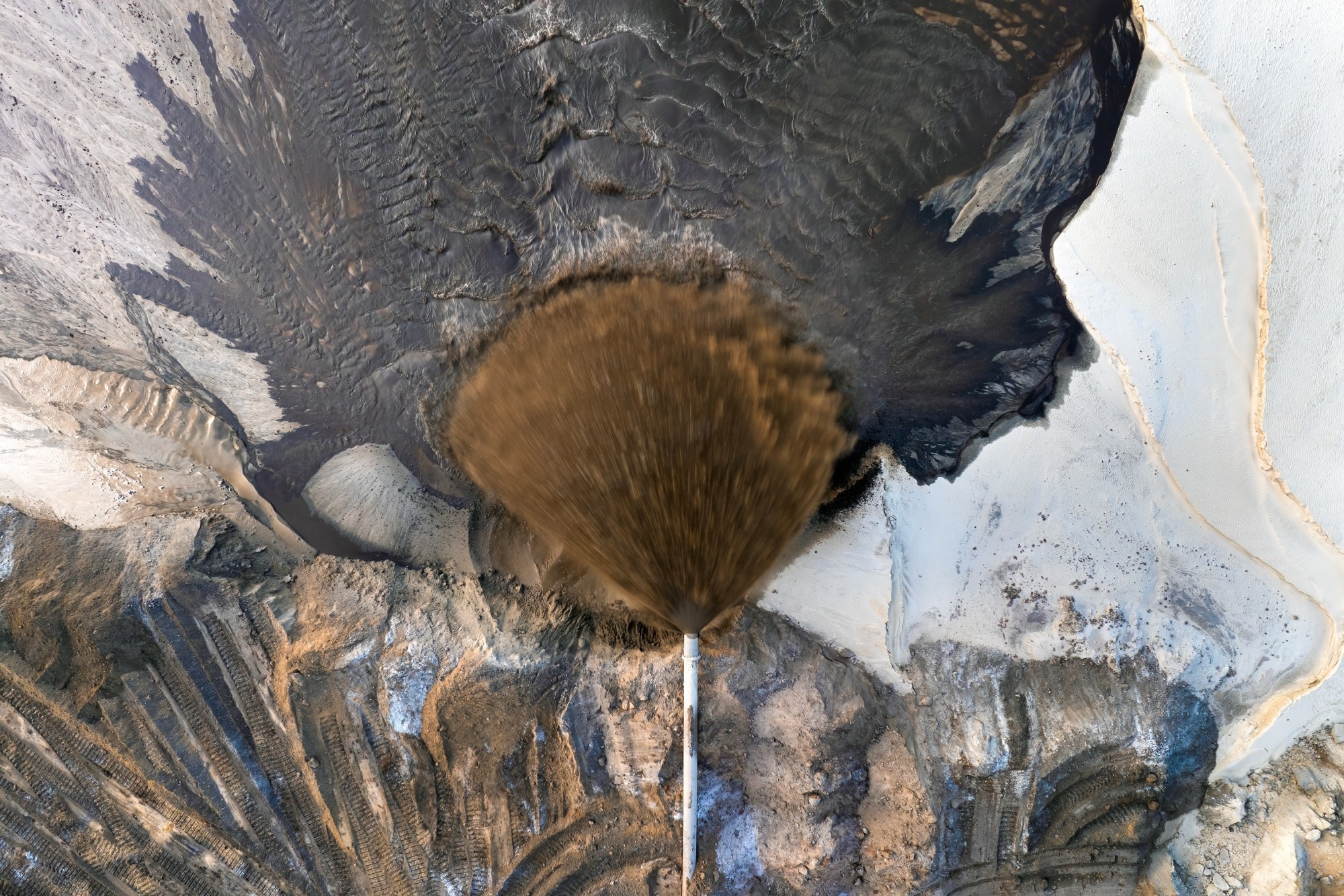 Study: Phosphate mining byproduct-derived PHI-type zeolite with intrinsic Mg2+ ions for enhanced Cd2+ removal from water. Image Credit: Bilanol/Shutterstock.com
Phosphate Mining Waste Offers a New Route to Cadmium Removal
Phosphate mining generates large quantities of mineral-rich waste containing silica, alumina, calcium, magnesium, iron, and other elements. Some of these components can serve as raw materials for zeolite synthesis.
However, the complex composition of untreated mining waste can interfere with crystallization and lead to unwanted mineral phases. Converting these residues into useful materials therefore requires careful control of their composition and synthesis conditions.
This study investigates the production of PHI-type zeolite, a crystalline aluminosilicate with a porous framework and exchangeable cations. These structural features make zeolites promising materials for removing heavy-metal ions from contaminated water. The researchers focus on cadmium, a toxic metal that can persist in aquatic environments and threaten ecosystems and human health.
Conventional zeolite synthesis typically relies on purified silica and alumina sources, while functional modifications often require additional chemical reagents. In contrast, phosphate mining waste could provide multiple elements needed for synthesis, including magnesium.
Therefore, the researchers examine whether magnesium naturally present in the waste could be retained within the zeolite's extra-framework cation environment and contribute to improved cadmium adsorption performance.
Although previous studies have explored metal incorporation to modify zeolite properties, they demonstrated that excessive magnesium can disrupt crystallization and promote unwanted secondary phases. To address this challenge, the study explores a waste-derived synthesis approach that uses the magnesium already present in the mineral precursor.
Acid Treatment Unlocks PHI Zeolite Production from Mining Waste
The researchers first characterized the phosphate mining waste using X-ray fluorescence (XRF). The untreated material contained 29.71 wt% silicon dioxide (SiO2), 6.90 wt% aluminum oxide (Al2O3),
19.26 wt% calcium oxide (CaO), and 11.37 wt% magnesium oxide (MgO). The high calcium content is associated with carbonate-rich minerals, posing a challenge for direct zeolite synthesis.
To reduce calcium, the team treated 3 g of mining waste with 100 mL of 3 M hydrochloric acid at 100 °C for 24 hours under continuous stirring. This chemical treatment reduced the calcium content and increased the relative silica concentration. The resulting material contained 74.99 wt% SiO2, 8.04 wt% Al2O3, and 4.05 wt% MgO.
For zeolite synthesis, the researchers mixed 1 g of acid-treated waste with 2 g of sodium hydroxide and heated the mixture at 650 °C for two hours. They then combined the fused material with water, potassium hydroxide, and aluminum hydroxide. Following 24 hours of aging at room temperature, the mixture underwent hydrothermal treatment at 100 °C for six days. This process produced 480 mg of waste-derived PHI zeolite.
For comparative analysis, the team synthesized conventional PHI zeolite using fumed silica, aluminum hydroxide, sodium hydroxide, and potassium hydroxide. They also prepared formulations with different amounts of externally added magnesium oxide to investigate its influence on crystalline phase formation.
The researchers characterized the resulting materials using X-ray diffraction (XRD), scanning electron microscopy (SEM), energy-dispersive X-ray spectroscopy, and surface-area measurements.
Waste-Derived Zeolite Achieves 31% Higher Cadmium Adsorption Capacity
Structural analysis showed that untreated phosphate mining waste could not directly produce the desired PHI zeolite under the tested synthesis conditions. Its high calcium content favored the formation of unwanted calcium-containing mineral phases, making acid pretreatment essential for obtaining the target structure.
X-ray diffraction confirmed the formation of phase-pure PHI zeolite from the acid-treated waste. However, experiments with externally added magnesium oxide revealed that excessive magnesium could disrupt crystallization. At the higher magnesium concentration tested, additional GIS/amicite-type and sodalite (SOD) phases formed, suppressing PHI crystallization.
These findings highlight the importance of controlling magnesium incorporation to preserve the desired zeolite structure.
Download a free copy of this page here!
Microscopic analysis revealed elongated, rod-like crystals with hexagonal-prism and needle-like morphologies. Elemental mapping also showed a relatively uniform magnesium distribution throughout the analyzed material. The resulting zeolite had a silicon-to-aluminum ratio of 1.8, consistent with an aluminosilicate framework containing exchangeable cations.
The waste-derived PHI exhibited substantially improved textural properties compared with conventionally synthesized PHI. Carbon dioxide uptake at 1 bar also increased from 0.70 to 2.05 mmol/g. The researchers attribute these improvements to the magnesium-containing cation environment, which reduces pore obstruction and improves accessibility. However, carbon dioxide accessibility does not necessarily reflect the accessibility of hydrated cadmium ions.
Cadmium adsorption experiments further demonstrated the material's potential. The Langmuir model estimated a maximum adsorption capacity of 99.80 mg/g for waste-derived PHI, compared with 76.33 mg/g for conventional PHI, representing an improvement of 31%. The model fitted both materials well, with coefficients of determination of 0.99 and 0.98, respectively.
The adsorption kinetics followed a pseudo-second-order model, while intraparticle diffusion contributed after the initial rapid uptake. Regeneration tests demonstrated that the material's reusability depended on the chemical treatment applied. When regenerated using sodium sulfate, the waste-derived PHI retained more than 95% of its cadmium adsorption efficiency after five adsorption–desorption cycles. However, sodium chloride regeneration reduced performance to 40–50% of its initial level after four cycles.
Reusable Zeolite Shows Promise for Sustainable Wastewater Treatment
This study demonstrates how phosphate mining waste can serve as a valuable precursor for producing functional PHI zeolite with improved cadmium adsorption performance.
The developed material has enhanced surface area, greater adsorption capacity, and strong regeneration performance. Acid leaching removed calcium-rich components that interfered with crystallization, while excessive external magnesium addition promoted unwanted secondary phases.
The findings offer a potential route for advancing circular-economy strategies by converting mining residues into higher-value materials and reducing dependence on purified commercial precursors.
However, the reported performance comes from controlled laboratory experiments. Further research must establish how the material performs in real wastewater containing competing ions and other contaminants.
Continuous-flow treatment studies are also needed to assess its suitability for practical applications. In addition, researchers must evaluate long-term structural stability, regeneration requirements, and the environmental and economic costs of acid leaching and alkaline fusion.
Overall, this waste-derived synthesis strategy connects mining-waste valorization with the development of porous materials for heavy-metal removal. Its practical potential will depend on successful validation under realistic water-treatment conditions.
Journal Reference
El Mghaimimi, I., et al. (2026). Phosphate mining byproduct-derived PHI-type zeolite with intrinsic Mg2+ ions for enhanced Cd2+ removal from water. Scientific Reports. DOI: 10.1038/s41598-026-80152-6. https://www.nature.com/articles/s41598-026-80152-6.
Disclaimer: The views expressed here are those of the author expressed in their private capacity and do not necessarily represent the views of AZoM.com Limited T/A AZoNetwork the owner and operator of this website. This disclaimer forms part of the Terms and conditions of use of this website.